
Pruning
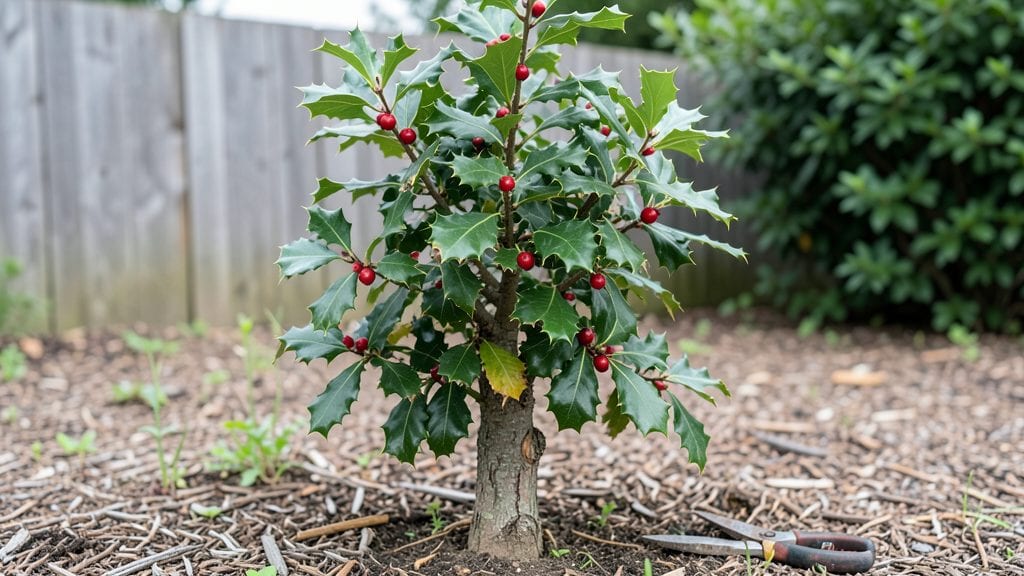
My holly tree care routine starts with one simple rule: prune when the tree is dormant, not when it's full of berries. ✨ I learned this the hard way after butchering a perfectly good specimen by cutting too late in the season—now my trees stay lush year-round with minimal stress.
The key is timing, sharp tools, and knowing exactly where to cut to encourage dense growth and those signature spiky leaves.
You’ll need basic pruning tools—a sharp pair of bypass pruners, loppers for thicker branches, and a small saw if you’re dealing with stubborn wood—and a clear day to work.
Most hollies tolerate pruning well, but the goal is to remove no more than 25% of the foliage in any one season. Focus on shaping the tree’s natural form while opening up the center to improve airflow, which prevents fungal diseases that love damp holly leaves.
What you’ll end up with is a holly that looks like it belongs in a Christmas card all year long—deep green leaves, glossy as new pennies, and clusters of bright red berries that birds adore but won’t strip overnight.
The best part? A well-pruned holly grows stronger each year, resisting pests and drought better than neglected trees. By summer, you’ll notice new growth filling in any gaps, and the tree’s structure will look effortlessly balanced.
This works for both English hollies (with their smooth leaves) and American hollies (the spiky classics), though the latter need more patience—they’re slower to recover from heavy cuts. Whether you’re shaping a young tree or cleaning up an overgrown veteran, the same principles apply. Let’s get those branches looking intentional!
📚 In This Guide
- What you need
- Instructions
- Tips and common mistakes
- Wrapping up and next steps
What you need
- ● Pruning shears: Bypass pruners (for cuts up to ½ inch thick) or anvil pruners (for thicker branches). Tip: Choose sharp, corrosion-resistant blades for clean cuts! 🔪
- ● Loppers: 8–10-inch bypass loppers for branches ¾–2 inches in diameter.
- ● Pruning saw: Curved-tooth saw for branches 2+ inches thick (e.g., Felco or Fiskars).
- ● Gloves: Heavy-duty, cut-resistant gloves (e.g., Mechanix or gardening-specific).
- ● Ladder: Extendable aluminum ladder (20–30 ft) for tall holly trees. Safety first!
- ● Disinfectant: 70% isopropyl alcohol or 10% bleach solution to sterilize tools between cuts (prevents disease spread).
- ○ Sealing wax: Pruning sealant (optional but helpful for large cuts > ½ inch).
- ● Trash bags: Heavy-duty contractor bags (20–30 gallon) for debris.
- ● Hand pruners: Compact bypass pruners for precision trimming.
- ● Pole saw: For high branches (15–25 ft reach).
- ● Work gloves: Lightweight for comfort during extended pruning.
- ● Tree tie: Soft fabric straps for temporary branch support if needed.
- ● Notebook/pencil: To sketch pruning plans or track growth.
- ● Weather check: Prune on a calm, dry day (avoid frost or rain within 24 hours).
- ● Safety gear: Closed-toe shoes, long sleeves, and eye protection.
- ● Tree knowledge: Identify your holly type (e.g., Ilex opaca vs. Ilex aquifolium)—some varieties bleed sap!
- ● Local regulations: Check if your area requires permits for large tree work.
Step-by-step guide to pruning holly trees for year-round beauty
Here's my go-to pruning system that keeps holly trees lush, healthy, and full of berries—no guesswork involved.
✂️ Step 1: Time Your Pruning for Best Results
Prune holly trees in late winter or early spring—just as new growth begins—when the tree is still dormant but about to wake up. This timing ensures you remove dead wood while leaving healthy buds intact. Avoid pruning in fall, as new growth won’t harden off before winter, making it vulnerable to frost damage.
I always prune after the worst winter storms pass but before March 15 in my zone. You’ll know it’s the right time when you see tiny green buds swelling along the branches. If you miss this window, wait until late spring—just don’t prune after June, or you’ll risk losing next year’s berries.
✂️ Step 2: Remove Dead, Diseased, or Crossing Branches
Start by scanning the tree for dead branches—they’ll be dry, brittle, and snap easily when bent. Next, look for diseased wood (mushy, discolored, or oozing sap) and crossing branches rubbing against each other. Use clean, sharp pruning shears to make 45-degree cuts just outside the branch collar (the swollen area where the branch meets the trunk).
I always cut back to a healthy bud or branch, never leaving a stub. If a branch is thicker than ½ inch, use loppers instead of shears to avoid tearing the bark. Remove no more than 25% of the tree’s foliage in one session—holly trees are slow to recover from heavy pruning.
✂️ Step 3: Shape the Tree for Balance and Airflow
Step back and visualize the tree’s natural shape. Holly trees grow best with a rounded, open canopy that lets sunlight reach the inner branches. Focus on thinning out rather than just cutting back. Remove branches growing inward or downward to improve airflow and reduce disease risk.
For formal hedges, use hand pruners to trim evenly along the edges, keeping the shape symmetrical. For natural-looking trees, let some branches grow wild—holly berries thrive on mature wood, so avoid over-pruning. I like to leave a few lower branches for character, especially on older trees.
✂️ Step 4: Encourage New Growth and Berry Production
After shaping, look for overcrowded areas where branches are too dense. Thin these spots by cutting back some of the smaller, inner branches to half their length. This opens the tree up and encourages stronger growth on the remaining branches.
If your holly isn’t producing berries, it might need more sunlight. Prune to remove any shade-casting branches blocking light from the center. Female holly trees need cross-pollination—if you only have one, plant a male variety nearby. I always prune male holly trees lightly to keep them compact and flowering.
⏰ Step 5: Clean Up and Monitor for Recovery
After pruning, sterilize your tools with rubbing alcohol to prevent spreading disease. Rake up and dispose of all clippings—never leave them under the tree, as they can harbor pests. Water the base of the tree deeply to help it recover, especially if you’ve removed a lot of foliage.
Watch for new growth within 4-6 weeks. Healthy holly trees will sprout fresh, bright green leaves from the pruned areas. If you see yellowing leaves or wilting branches, you may have over-pruned. In that case, wait until next year to do minimal maintenance pruning.
Tips & tricks for pruning holly trees like a pro
These game-changing tips will help you avoid common mistakes and get the most out of your pruning session.
Timing is Everything: Don't rush into pruning just because it's spring! The ideal window is when you see those tiny green buds starting to swell—usually right around March 15 in most zones. I've learned this the hard way after seeing new growth get frostbitten when pruning too early. If you miss this window, wait until late spring but never after June—that's when you'll sacrifice next year's berries.
The 25% Rule: Holly trees are sensitive to heavy pruning. Never remove more than 25% of the foliage in one session, as this can stress the tree and reduce berry production. I've seen people cut back too aggressively and end up with sparse trees that take years to recover. Focus on removing dead or diseased branches first, then shape carefully.
Cutting Technique Matters: Always make your cuts at a 45-degree angle just outside the branch collar—the swollen area where the branch meets the trunk. This promotes proper healing and prevents water from pooling where disease can take hold. For branches thicker than ½ inch, use loppers instead of shears to avoid tearing the bark. I've ruined several cuts trying to use the wrong tool—don't make my mistake!
Recovery Check: After pruning, watch for new growth within 4-6 weeks. Healthy holly trees will sprout fresh, bright green leaves from the pruned areas. If you see yellowing leaves or wilting branches, you may have over-pruned. In that case, wait until next year for minimal maintenance pruning. This visual check is your best indicator of whether you've done the right amount of pruning.
Pro Tips for Holly Tree Care
- These game-changing tips will help you avoid common mistakes and get the most out of your pruning session.
- Timing is Everything: Don't rush into pruning just because it's spring!
- The 25% Rule: Holly trees are sensitive to heavy pruning.
Frequently asked questions
about holly tree care—because even the toughest plants need a little guidance! Here are answers to the most common questions to keep your holly thriving.When is the best time to prune a holly tree?
Prune mature holly trees in late winter or early spring (before new growth starts) to avoid disturbing nesting birds. For young hollies, light shaping can happen in early summer. Avoid heavy pruning in fall—it stresses the tree and leaves it vulnerable to winter damage. Pro tip: Never prune after mid-summer if you want berries—they need time to develop!
Can I prune a holly tree at any time of year?
While light maintenance pruning (like removing dead branches) can be done anytime, avoid heavy cuts in fall or winter. Pruning too late in the season can stimulate tender new growth that may freeze or invite pests. If you must prune in summer, do it early and keep cuts minimal to protect the tree’s energy reserves. Timing is everything!
Will pruning my holly tree affect its berries?
Yes! Holly berries form on old wood, so avoid heavy pruning in late summer or fall. If you prune too late, you may reduce or eliminate berries the following year. For berry production, focus on structural shaping in winter and light thinning in early summer to balance form and fruit. Balance is key!
What if my holly tree isn’t growing after pruning?
Slow growth could signal underwatering, poor soil, or over-pruning. Check for yellowing leaves (overwatering) or brown, crispy edges (underwatering). If you pruned too aggressively, give the tree 1-2 years to recover. Fertilize with acidic, slow-release granules in spring and ensure it gets 6+ hours of sunlight. Patience and proper care make all the difference!
Are there holly alternatives that are easier to prune?
If holly’s thorny nature or berry timing feels tricky, consider skimmia, boxwood, or pyracantha. Skimmia has fragrant flowers and fewer thorns, while pyracantha produces bright red berries and tolerates heavier pruning. Boxwood is low-maintenance and dense, perfect for hedges. Just remember—no plant replaces holly’s classic charm!
Wrapping up and next steps
Caring for your holly tree doesn’t have to be overwhelming—just a little pruning know-how and consistency go a long way! 🌿 With the right tools, timing, and techniques, you’ll keep your tree lush, healthy, and stunning year-round.
Whether you’re trimming for shape, berries, or disease prevention, your efforts will pay off in vibrant foliage and a thriving landscape.
Ready to take the next step? Grab your pruners and start small—even a few well-placed cuts can make a difference. For extra confidence, watch a pruning tutorial or consult a local arborist. Your holly tree will thank you with beauty and resilience!