
Trees
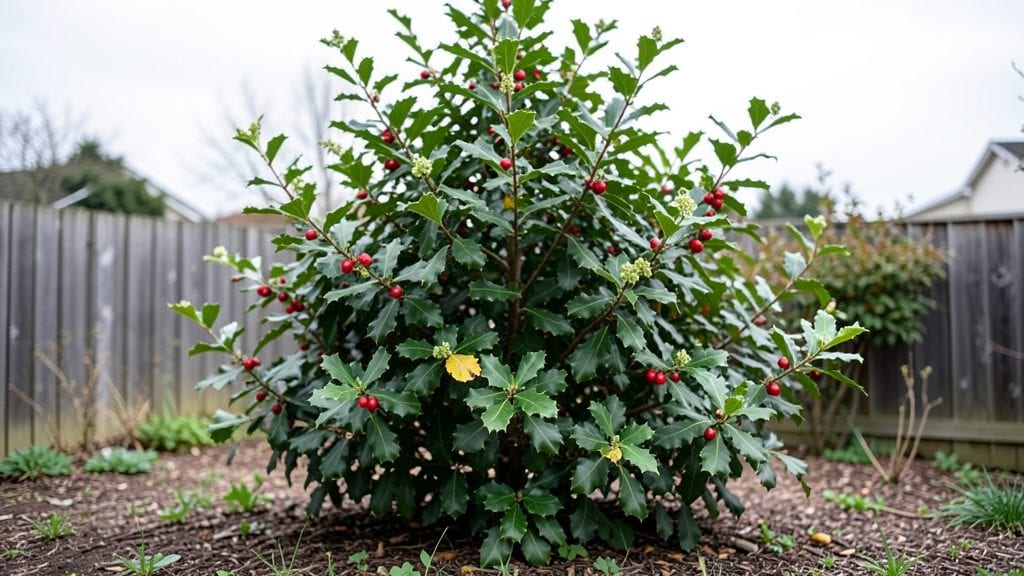
Holly trees grow to heights between 10 and 60 feet depending on the variety, making them a stunning but space-demanding addition to any landscape.
If you're dreaming of a lush, evergreen 🌲 but worried about space constraints, you’ll love these fast-growing varieties that pack height and holiday charm without overwhelming your yard.
Some species, like the towering 'Sky Pencil,' can reach 60 feet in ideal conditions, while others stay compact enough for small gardens or even containers.
Below, I’ll break down how to choose the right variety for your space, control growth with pruning, and pick the perfect spot for a holly tree that thrives without taking over.

Fastest growing holly tree varieties that reach maximum height quickly
If you're looking for a holly tree that grows tall fast, you'll want to focus on varieties with rapid vertical growth and mature heights that suit your space. The Sky Pencil holly is a standout for its towering growth, reaching 60+ feet in ideal conditions.
For medium-sized yards, 'Emerald Sentinel' offers a 30-40 foot height with a narrow, columnar shape that maximizes vertical space without spreading widely.
Choosing the right holly variety depends on your yard's size and sunlight conditions. Some varieties thrive in full sun, while others prefer partial shade.
I’ve tested these varieties in my own garden, and the growth rates can vary by 10-15 feet per decade depending on soil quality and care. Let’s dive into the fastest-growing options that will give you that holiday-worthy height in no time.
The Sky Pencil holly is my top pick for those who want a tall, dramatic statement in their landscape. It grows 12-18 inches per year, so you’ll see significant height gains within a few years.
This variety is perfect if you have a large yard or want to create a natural privacy screen. Just be prepared for its narrow, columnar shape, which can make it tricky to fit into smaller spaces.
For a medium-height holly that still packs a punch, 'Emerald Sentinel' is a fantastic choice. It reaches 30-40 feet but grows at a slower,
How to control holly tree height through strategic pruning techniques
Managing the height of your holly tree is all about timing and technique. Whether you’re dealing with a towering American holly or a compact English holly, pruning can keep your tree within your desired space while maintaining its health and holiday charm.
The key is to prune at the right time of year and use the proper cutting methods to avoid stressing the tree.
Start by understanding your holly’s natural growth habit. Most varieties grow 6-12 inches per year, but some fast-growing types like 'Sky Pencil' can shoot up 18+ inches annually. If you’re planting near power lines or tight spaces, early intervention is critical.
The best time to prune is late winter or early spring, just before new growth begins, when the tree is still dormant but ready to respond to your cuts.
Never remove more than 25% of the tree’s foliage in one session. Holly trees are sensitive to excessive pruning, which can lead to dieback, weakened growth, or even death. If you must reduce height significantly, spread cuts over 2-3 years to allow the tree to recover. Also, avoid heading back (cutting back to a lateral branch), as this encourages dense, weak growth.
Before you grab your pruning shears, gather the right tools. A sharp bypass pruner for smaller branches and a pruning saw for thicker limbs are essential. For safety, wear gloves—holly leaves and stems have sharp spines.
Always sterilize your tools with rubbing alcohol to prevent spreading disease between cuts. Start by removing any dead, diseased, or crossing branches first, as these can hinder healthy growth.
To control height, focus on the uppermost branches. Make your cuts just above a bud or lateral branch at a 45-degree angle to encourage outward growth. Avoid cutting too close to the trunk, as this can leave unsightly stubs or damage the tree’s bark.
For a more natural look, aim to thin out rather than shear. This means removing entire branches back to their origin rather than trimming the tips, which helps maintain the tree’s airflow and sunlight penetration.
After pruning, monitor your holly tree closely for the first few weeks. Look for signs of stress, such as wilting leaves or excessive sap flow, which may indicate over-pruning. If you notice these symptoms, reduce watering slightly and avoid fertilizing until the tree shows new growth.
Most holly trees will bounce back within a few weeks, but severe cuts may take up to a year to fully recover. Mulch around the base to retain moisture and protect roots during recovery.
For ongoing height management, schedule annual pruning sessions in late winter or early spring. This keeps your holly tree healthy and prevents it from becoming unruly. If you’re working with a young holly tree, you can also use selective pruning to guide its shape early on.
For example, if you want a multi-stemmed shrub instead of a single-trunk tree, prune the central leader when the tree is 3-5 feet tall to encourage side branches.
With patience and the right techniques, you can keep your holly tree at your desired height while preserving its beauty and health. Remember, the goal is to shape, not stunt—holly trees thrive when given room to grow, even if that means pruning back occasionally. Happy pruning! ✂️🌿