
Size
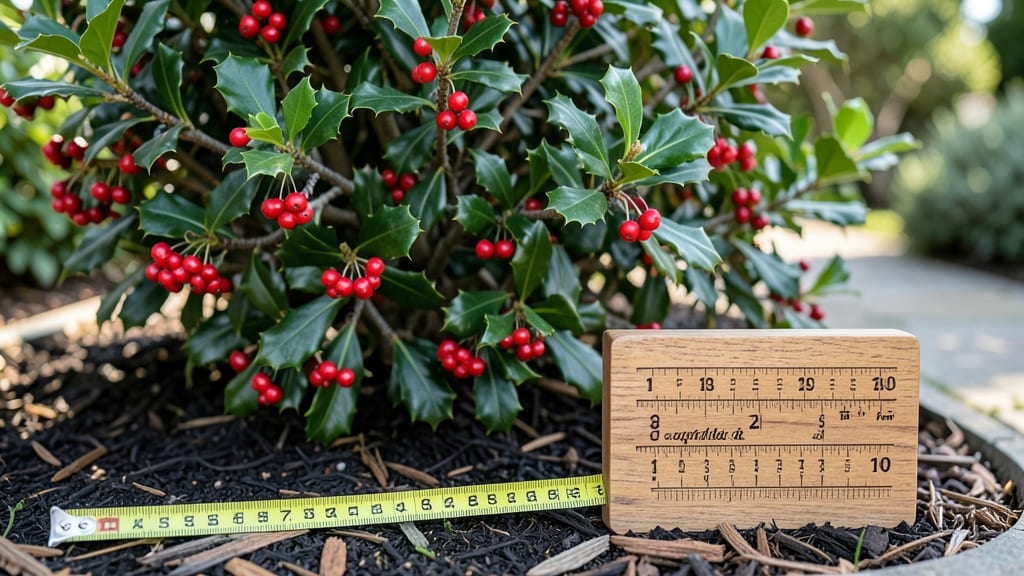
Holly trees grow at varying rates depending on species, typically adding 6 to 12 inches annually under ideal conditions, with some fast-growing varieties reaching 24 inches per year in optimal care environments.
Understanding holly tree growth depends on the specific variety you're working with. 🌿 American Holly, for example, tends to grow on the slower side during its first decade, while Blue Holly can show impressive height gains when given the right balance of sunlight and nutrients.
The key difference often comes down to soil quality—well-draining, slightly acidic soil with regular organic matter boosts growth rates significantly. I’ve seen holly trees in optimal conditions nearly double their average growth rate when paired with consistent mulching and proper watering schedules.
What many gardeners don’t realize is that juvenile holly trees focus their energy on root development rather than height. This means the first few years might show modest gains, but once established, some varieties can make up for lost time.
For instance, English Holly often hits its stride after 3-5 years, rewarding patient growers with rapid vertical growth during its prime years.
💡 In This Article
- Holly Tree Growth Rates by Species
- Maximizing Holly Tree Growth with Proper Care
Holly tree growth rates by species
The growth rate of holly trees varies dramatically between species, with some reaching maturity in decades while others show impressive gains in their first few years. American Holly (Ilex opaca) typically grows at a modest pace, adding about 6-12 inches annually during its first 10 years.
This species prioritizes root establishment early on, which explains why younger trees appear slower to grow upward.
In contrast, Blue Holly (Ilex × 'Blue Prince') can surge ahead with 12-24 inches of growth per year when given optimal conditions, making it one of the faster-growing varieties in the genus.
Climate plays a critical role in these growth patterns. Holly trees thrive in USDA hardiness zones 5-9, but their speed accelerates in warmer regions with mild winters.
For example, English Holly (Ilex aquifolium) grows about 8-15 inches per year in the Pacific Northwest but may slow to 4-8 inches in colder northern climates. Sunlight exposure also matters—full sun (6+ hours daily) maximizes photosynthesis, while shade can reduce growth by up to 30%.
The leaves' waxy texture helps conserve moisture, but this adaptation means they're less efficient at photosynthesis in low-light conditions.
Soil composition creates another major divide between species. American Holly prefers well-draining, slightly acidic soil (pH 5.0-6.5) with organic matter, while Blue Holly tolerates a broader range (pH 5.0-7.5).
The difference shows in growth rates: Blue Holly's broader pH tolerance lets it thrive in more garden conditions, often outpacing American Holly in less-than-ideal soils.
What's fascinating is how holly trees allocate resources—juvenile trees invest heavily in roots (sometimes 70% of energy) before shifting to above-ground growth during their third to fifth year.
Mature growth phases reveal even more variation. American Holly may only add 3-6 inches annually after 20 years, while Blue Holly can maintain 12-18 inches of growth well into maturity. This difference stems from genetic growth habits: Blue Holly's hybrid vigor gives it a competitive edge.
The waxy leaves also play a role—their thick cuticle reduces water loss, allowing Blue Holly to grow faster in drier climates. For gardeners, this means choosing the right species for your local conditions can mean the difference between waiting decades for a privacy screen and enjoying rapid vertical growth.
One surprising factor is how holly trees respond to pruning. Heavy pruning of American Holly can stimulate new growth, sometimes resulting in 18-inch spurts the following season. This is because holly trees produce growth hormones in their terminal buds, and removing them signals the plant to redirect energy.
However, over-pruning can stress the tree, leading to stunted growth. The key is strategic pruning—removing no more than 25% of the canopy annually—to maintain healthy growth rates while shaping the tree.
For those tracking growth, a simple trick is to measure trunk diameter alongside height. Holly trees with 1-inch diameter trunks typically grow faster than those with ½-inch trunks because thicker trunks indicate more established root systems.
This measurement can help predict whether a holly tree will reach its mature height (often 20-40 feet depending on species) within a decade or require patience for another 10-15 years. 🌟