
Size
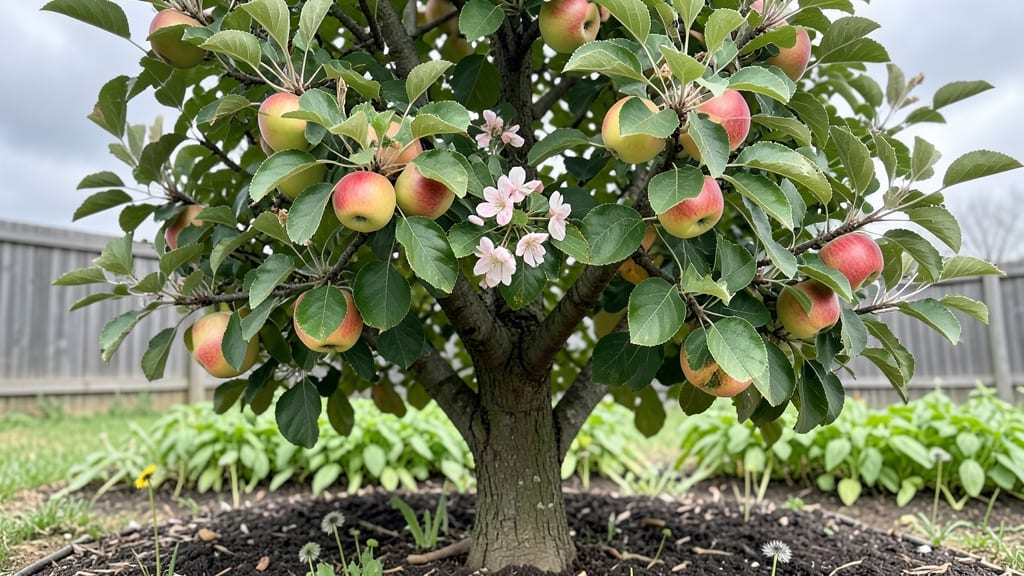
Honeycrisp apple trees grow to a mature height of 15–25 feet with a spread of 10–15 feet—that’s taller than most two-story homes and wide enough to shade a small patio.
If you’re dreaming of growing Honeycrisp apple trees in your backyard, knowing their mature size is crucial—because these trees aren’t small, and planting them too close to fences or structures can lead to pruning headaches (or worse, lost fruit!).
That means you’ll need to plan for at least 15 feet of space in all directions, or risk crowded branches that struggle to produce fruit. The good news? With the right pruning and dwarf varieties, you can still enjoy Honeycrisp apples in smaller gardens.
Below, I’ll break down how to manage their size—whether you’re working with a sprawling orchard or a tight urban yard—so you can grow a thriving tree without sacrificing space or fruit.
Honeycrisp apple tree mature size: height, spread, and growth rate
When planning your backyard orchard, understanding the mature size of a Honeycrisp apple tree is essential. These trees grow to an impressive 12–16 feet tall with a spread of 10–15 feet, making them perfect for spacious yards but challenging for small gardens.
Their rapid growth rate means they can reach half their mature height in just 3–5 years, so proper spacing from day one is critical.
Without regular pruning, Honeycrisp trees can easily exceed these dimensions, creating shade issues and making fruit harvesting difficult. The canopy width alone can stretch up to 15 feet, so planting them near fences, driveways, or other structures requires careful planning.
For urban gardeners, this is where dwarf varieties become a game-changer, offering the same delicious fruit in a fraction of the space.
Here’s a quick reference for Honeycrisp apple tree dimensions at maturity, including root depth and spacing needs for optimal growth:
| Metric | Standard Variety | Dwarf Variety |
|---|---|---|
| Mature Height | 12–16 ft | 6–8 ft |
| Canopy Spread | 10–15 ft | 8–10 ft |
| Root Depth | 3–5 ft | 2–3 ft |
| Growth Rate (Annual) | 2–3 ft/year | 1–2 ft/year |
| Spacing from Structures | 10–15 ft | 6–8 ft |
| Spacing from Other Trees | 15–20 ft | 8–12 ft |
The root depth of a Honeycrisp apple tree typically reaches 3–5 feet, which means you’ll need to dig a hole at least 2–3 times wider than the root ball when planting. This ensures the roots can spread comfortably without competing with nearby plants or structures.
If you’re planting in containers, opt for dwarf varieties—their shallower roots make them easier to manage in pots.
Growth rates vary based on soil quality, sun exposure, and watering consistency. In ideal conditions, a Honeycrisp tree can grow 2–3 feet per year during its first decade. However, if your tree isn’t getting enough sunlight or nutrients, its growth may slow significantly.
Always plant in a location with at least 6–8 hours of direct sunlight daily to encourage healthy, vigorous growth.
For small gardens or urban yards, consider a semi-dwarf Honeycrisp, which tops out at 8–10 feet tall while still producing full-sized fruit. These trees strike a balance between manageable size and high yields, making them ideal for backyards with limited space.
Just be sure to prune regularly to maintain their compact shape and prevent overcrowding.
If you’re planting multiple Honeycrisp trees, keep them 15–20 feet apart to allow for proper airflow and sunlight penetration. This spacing reduces the risk of diseases like apple scab and ensures each tree has enough room to develop a strong structure.
In contrast, planting them too close can lead to stunted growth and poor fruit production due to competition for resources.
One common mistake gardeners make is underestimating the canopy spread of Honeycrisp trees. Even if your yard has enough height clearance, the horizontal reach can make harvesting difficult if the tree is planted near walkways or patios.
Always measure your space carefully before planting, and leave extra room for future growth—especially if you plan to keep the tree unpruned.
For those with container gardening in mind, dwarf Honeycrisp varieties are your best bet. These trees thrive in large pots (at least 18–24 inches in diameter) and can be moved seasonally to optimize sunlight.
Just remember that container-grown trees will need more frequent watering and fertilization to compensate for their limited root space.
🍎
Best Honeycrisp apple tree varieties by size: dwarf vs. semi-dwarf vs. standard
Choosing the right size of Honeycrisp apple tree depends entirely on your space. A standard tree can reach 15–25 feet, while dwarf varieties stay compact at 6–10 feet. If you’re working with a small urban yard, dwarf or semi-dwarf options save space without sacrificing fruit quality.
But if you have a large orchard plot, standard trees thrive with more room to grow.
Each size category has unique benefits—dwarf trees mature faster and produce fruit sooner, while standard trees yield more apples over time. The key is matching the tree size to your available space and pruning commitment. Let’s break down the pros and cons of each to help you decide.
| Variety Type | Mature Height | Mature Spread | Best For | Spacing Needs | Fruit Production |
|---|---|---|---|---|---|
| Dwarf | 6–8 ft | 4–6 ft | Small gardens, containers, urban yards | 8–10 ft apart | Smaller yield, earlier fruiting |
| Semi-Dwarf | 8–10 ft | 6–8 ft | Backyards, patio gardens, small orchards | 10–12 ft apart | Moderate yield, balanced growth |
| Standard | 15–25 ft | 10–15 ft | Large orchards, rural properties | 15–20 ft apart | Highest yield, long-term production |
For small gardens, dwarf Honeycrisp trees are my top recommendation—they fit neatly in containers or tight spaces while still producing sweet, crisp apples. Semi-dwarf trees strike a balance, offering more fruit without overwhelming a backyard patio. Meanwhile, standard trees are ideal for large properties where you can dedicate ample space to their sprawling canopies.
Don’t forget to consider pruning requirements when choosing a size. Dwarf trees need regular pruning to maintain shape and encourage airflow, while standard trees require more aggressive pruning to keep them manageable.
If you’re new to pruning, a semi-dwarf might be the easiest compromise—it grows slower than standard trees but faster than dwarfs.
Another factor is rootstock type. Dwarf trees are grafted onto dwarfing rootstock like M.9 or B.9, while semi-dwarf trees often use MM.106 or MM.111. Standard trees grow on seedling rootstock, which allows them to reach their full height.
If you’re buying a tree, always check the rootstock to ensure you’re getting the size you expect.
Finally, think about fruit access. Smaller trees make it easier to pick apples without a ladder, which is a game-changer if you have limited mobility or just prefer convenience.
No matter which size you choose, planting Honeycrisp trees is a rewarding investment—just make sure you’ve got the space (and patience) for their growth!