
Blooming
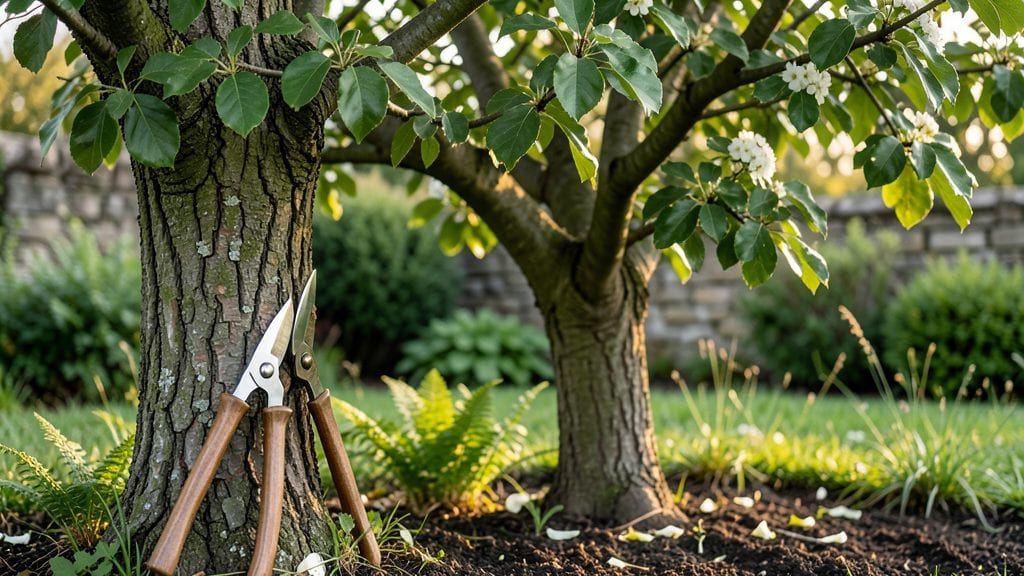
How long pear trees live depends on their variety and care, spanning from 10 to 150+ years—dwarf types usually last 10 to 20 years, while heirloom orchard specimens can thrive for centuries with proper maintenance.
Pear trees are surprisingly resilient, with some varieties like the Asian pear or European pear families surpassing 100 years when planted in ideal conditions. 🌳 The secret lies in their root systems and adaptability—older trees develop deeper roots that access water and nutrients more efficiently, while consistent pruning keeps them healthy.
Heritage orchards often feature century-old specimens that continue producing fruit well into their later years, proving that patience pays off in orchard management.
What sets these long-lived trees apart is their ability to recover from seasonal stress, pests, and even minor diseases. Unlike fast-growing fruit trees, pears mature slowly, building structural integrity over decades.
For example, a Bartlett pear tree might peak at 25 years but still yield fruit for another 50 years if well-maintained. This makes them a favorite among homesteaders and commercial growers alike.
💡 In This Article
- Factors Influencing Pear Tree Longevity
- Oldest Pear Trees and Historic Orchard Varieties
Factors influencing pear tree longevity
Here's what actually determines how long a pear tree thrives: rootstock selection is the foundation. Most commercial varieties graft onto quince rootstock (for dwarf trees) or seedling pear rootstock (for standard sizes), with the rootstock contributing 10-30% of the tree's overall lifespan.
For example, Pyrus communis rootstocks often outlive grafted varieties by 30-50 years because they develop deeper, more resilient root systems that resist drought and soil compaction.
The soil microbiome plays a surprising role too. Healthy mycorrhizal fungi networks—visible as white, thread-like structures in the soil—can extend a tree's life by improving nutrient uptake.
Studies show trees with active mycorrhizal connections live 20-40% longer than those without. 🌱 In clay-heavy soils, adding organic matter (like composted leaves or well-rotted manure) prevents waterlogging, which causes root rot—a leading cause of premature death in pear trees.
The ideal soil pH for longevity sits between 6.0 and 7.0, where micronutrient availability peaks.
Pruning practices directly impact lifespan by controlling stress. Open-center pruning (common in European pears) promotes airflow, reducing fungal diseases like fire blight (Erwinia amylovora), which can kill a tree in weeks.
What most people don't realize is that over-pruning weakens the tree's structural integrity—each cut removes permanent vascular tissue. For long-lived specimens, limit annual pruning to 15-20% of the canopy and avoid removing more than 3-4 branches per year to maintain the tree's energy reserves.
Climate suitability matters more than growers often realize. Pear trees thrive in USDA Zones 5-9, but winter chilling requirements vary by variety. For instance, Asian pears need 300-500 hours below 45°F, while European pears require 500-800 hours.
In warmer climates, insufficient chilling leads to poor fruit set and accelerated decline. Conversely, extreme cold (below -15°F) can damage the cambium layer, causing dieback. The oldest pear trees often grow in microclimates where temperatures fluctuate gently, like near large bodies of water or on south-facing slopes.
Disease resistance is the final critical factor. Varieties like Seckel pears or Moonglow have genetic resistance to pear scab (Venturia nashicola), a fungus that shortens lifespan by 15-25 years in susceptible trees.
Ironically, some heirloom varieties (like Beurre Bosc) lack this resistance but compensate with thicker bark that resists mechanical damage from wind or hail. Regular dormant-season sprays with copper fungicides can add 10-15 years to a tree's life by preventing latent infections.
One often-overlooked detail is pollination consistency. Trees that rely on cross-pollination (like Bartlett) live longer when planted near compatible varieties because fruit production stress weakens them over time.
Self-pollinating varieties (such as Kieffer) avoid this issue entirely, potentially adding 5-10 years to their lifespan by reducing metabolic strain. 🌿 For maximum longevity, pair trees with complementary bloom times—early, mid, and late-season varieties ensure continuous pollination without overburdening any single tree.