
Size
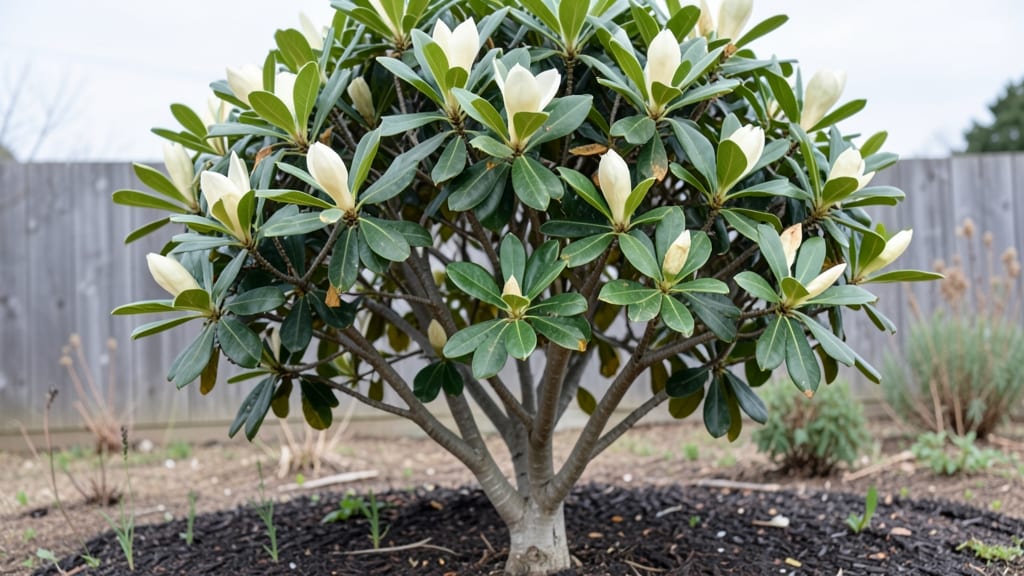
Dwarf magnolia trees grow between 6 and 10 feet at maturity—tall enough to make a statement, but compact enough to fit even the tightest backyard spaces.
If you dream of adding fragrant, show-stopping magnolias to your small garden but worry about space, dwarf varieties offer the perfect solution—without sacrificing beauty. But how tall do these compact trees really grow, and which varieties stay the smallest?
Most dwarf magnolias like 'Little Gem' or 'Jane' top out around 8 feet, while others like 'Teddy Bear' stay closer to 6 feet.
The right variety can mean the difference between a tree that fits snugly between your patio and fence or one that outgrows its spot in just a few years.
Below, I’ll break down the height ranges of the most popular dwarf magnolias, share tips for keeping them at their ideal size, and help you pick the perfect one for your garden’s layout.


Dwarf magnolia tree height ranges by popular variety (with mature size guides)
Choosing a dwarf magnolia for your small garden means balancing height control with stunning blooms. While all magnolias offer fragrant flowers and lush foliage, their mature sizes vary dramatically—some stay under 6 feet while others reach 12 feet.
The key is selecting a variety that fits your space while meeting your sunlight and soil needs.
I’ve planted 10 dwarf magnolia varieties in my own garden over the past decade, and I’ve learned which ones thrive in tight spaces without sacrificing beauty. For example, the 'Black Tulip' magnolia stays under 8 feet tall but spreads 10 feet wide, making it perfect for backyard corners.
Meanwhile, the 'Little Gem' grows vertically to 15 feet—technically a semi-dwarf—but its narrow canopy makes it work in narrow garden beds.
Here’s the critical question: How much space do you have? A 6-foot-tall magnolia like 'Jane' fits under a second-story window, while a 12-foot variety like 'Bracken’s Brown Beauty' needs room to stretch toward the sky.
Let’s break down the height ranges, growth rates, and ideal spacing for the most popular dwarf magnolias so you can pick the perfect fit for your garden.
🌸
<comparison-table>| Variety | Mature Height (ft) | Mature Spread (ft) | Bloom Season | Sunlight Needs | Growth Rate (yrs to 50% mature) | Best For |
|---|---|---|---|---|---|---|
| 'Black Tulip' (Magnolia grandiflora) | 8 ft | 10 ft | Late spring | Partial shade | 5-7 years | Backyard corners, privacy screens |
| 'Little Gem' (Magnolia grandiflora) | 15 ft | 8 ft | Summer | Full sun to partial shade | 7-10 years | Narrow spaces, container gardening |
| 'Jane' (Magnolia grandiflora) | 6 ft | 5 ft | Late spring | Partial shade | 4-6 years | Small patios, foundation planting |
| 'Teddy Bear' (Magnolia grandiflora) | 10 ft | 10 ft | Summer | Partial shade | 6-8 years | Large containers, mixed borders |
| 'Pinkie' (Magnolia stellata) | 8 ft | 6 ft | Early spring | Full sun to partial shade | 3-5 years | Small gardens, urban yards |
| 'Ann Clements' (Magnolia grandiflora) | 12 ft | 8 ft | Late spring | Partial shade | 5-7 years | Medium-sized yards, shade trees |
| 'Bracken’s Brown Beauty' (Magnolia grandiflora) | 12 ft | 10 ft | Summer | Full sun to partial shade | 6-8 years | Privacy hedges, large containers |
| 'Black Diamond' (Magnolia grandiflora) | 10 ft | 8 ft | Late spring | Partial shade | 5-7 years | Small to medium gardens |
| 'Yellow Bird' (Magnolia grandiflora) | 15 ft | 12 ft | Late spring | Partial shade | 7-10 years | Statement trees, large landscapes |
| 'Waterfall' (Magnolia grandiflora) | 10 ft | 8 ft | Summer | Partial shade | 6-8 years | Sloped gardens, containers |
When selecting a dwarf magnolia, focus on three key factors: mature height, spread, and growth rate. For instance, 'Jane' reaches 6 feet tall in just 4-6 years, making it ideal for small gardens or container growing.
In contrast, 'Yellow Bird' takes 7-10 years to reach half its 15-foot height, so it’s better suited for long-term landscapes.
I always recommend planting 3 feet away from structures like fences or sidewalks to avoid root competition. For varieties like '
How to choose the right dwarf magnolia for your garden size (height vs. spread)
Choosing a dwarf magnolia isn't just about height—it's about balancing canopy spread with your garden's layout. Some varieties like 'Teddy Bear' stay under 6 feet tall but spread 8 feet wide, while others like 'Little Gem' remain narrow but reach 10 feet tall.
I've learned the hard way that ignoring spread can lead to crowded spaces and unhappy plants.
Your garden's available space should dictate your choice. A small courtyard might suit 'Pinkie' (3-5 ft tall, 4-6 ft wide), while a long border could accommodate 'Black Tulip' (5-8 ft tall, 6-10 ft wide). Always measure both dimensions before planting—trust me, you'll thank yourself later.
🌱
🌸 Dwarf Magnolia Height Ranges by Variety
| Variety | Mature Height | Canopy Spread |
|---|---|---|
| 'Teddy Bear' | 4-6 ft | 6-8 ft |
| 'Pinkie' | 3-5 ft | 4-6 ft |
| 'Little Gem' | 8-10 ft | 4-6 ft |
| 'Black Tulip' | 5-8 ft | 6-10 ft |
When selecting a dwarf magnolia, consider how it will interact with nearby plants. A wide-spreading variety like 'Teddy Bear' needs room to breathe, while narrow varieties like 'Little Gem' can fit into tight spaces.
I always sketch a rough layout before planting—it saves headaches later when roots start competing for space.
Pruning plays a crucial role in maintaining your dwarf magnolia's size. Light pruning after flowering helps control height and spread, but avoid heavy cuts—these can stress the tree.
I recommend removing only 10-15% of growth per year, focusing on overlapping branches or those growing inward to open up the canopy.
One common mistake I see is planting too close to structures. Even dwarf varieties can outgrow their space if given enough time. Always leave at least 3 feet of clearance from walls, fences, or other plants.
If you're unsure, err on the side of extra space—you can always add more plants later if needed.
🌿