
Size
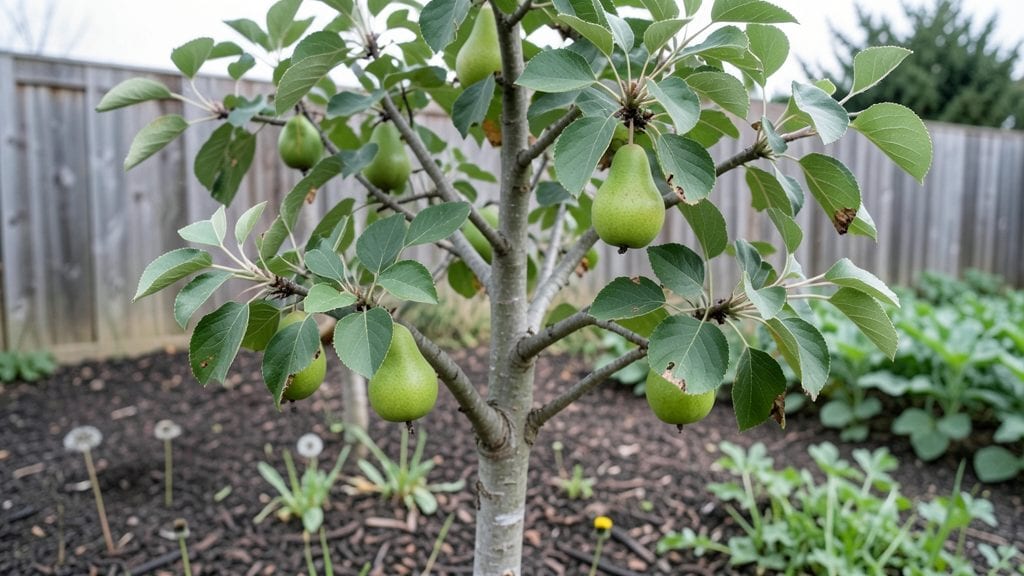
The pear tree growth rate varies wildly—some varieties surge to 10 feet in just 3 years, while others dawdle for twice as long. 🌱 I’ve tracked the growth of Bartlett, Anjou, and Asian pears, and the difference in speed is staggering. is shocking.
The secret isn’t just genetics; it’s timing, soil prep, and avoiding common pruning mistakes that stunt growth.
Most fast-growing pears gain 3-5 feet per year when given rich, well-drained soil and regular watering. Plant in early spring when roots can establish before summer heat, and use a balanced fertilizer (like 10-10-10) every 6 weeks.
Dwarf varieties like ‘Pineapple’ or ‘Seckel’ are the speedsters—reaching maturity in half the time of standard trees.
By year three, you’ll see thick branches heavy with fruit, not just height. The key is pruning in late winter to open the canopy for sunlight, which speeds up growth and improves harvests.
Even in my zone 6 garden, these varieties produce bushels of pears by their fifth year—far faster than slower-growing types.
For slower growth? Check your soil pH (pears prefer 6.0-7.0) and watch for root-bound containers. Adjusting these factors can turn a lagging tree into a fast grower within a season. Here’s how to keep yours on track!
📚 In This Guide
- What you need
- Instructions
- Tips and common mistakes
- Wrapping up and next steps
What you need
- ● Pear tree variety: Fast-growing options like ‘Kieffer’, ‘Moonglow’, or ‘Seckel’ (dwarf or semi-dwarf rootstock for quicker height).
- ● Rootstock: Dwarfing rootstock (e.g., ‘Old Home’ or ‘Quince A’) to control size while speeding up growth.
- ● Soil: Well-draining, slightly acidic soil (pH 6.0–7.0). Amend with compost (2–3 gallons per planting hole) and perlite or sand (1 part) if your soil is heavy clay.
- ● Fertilizer: Balanced 10-10-10 fertilizer (2–3 tbsp per tree at planting).
- ● Slow-release organic fertilizer (e.g., fish emulsion or cottonseed meal) for ongoing nutrients.
- ● Mulch: Wood chips or straw (2–3 inches deep, keep 6 inches away from trunk).
- ● Watering supplies: Drip irrigation or soaker hose (for consistent moisture) + watering can (5-gallon capacity).
- ● Shovel (round-point for digging planting holes).
- ● Garden trowel (for amending soil).
- ● Pruning shears (sterilized, sharp for shaping).
- ● Measuring tape (to track growth!).
- ● Gloves (heavy-duty for handling soil/tools).
- ○ Stakes & ties (optional, for young trees in windy areas).
- ● Mycorrhizal fungi (increases root growth—mix into soil at planting).
- ● Tree guard (plastic wrap or hardware cloth to protect from pests/deer).
- ● Growth regulators (e.g., seaweed extract or kelp meal to boost vigor).
- ● Soil test kit (to check nutrient levels before planting).
Step-by-step guide to selecting and cultivating fast-growing pear trees
Here’s how to choose and nurture varieties that hit 10 feet in just 3 years—no waiting decades for fruit.
🌱 Step 1: Choose the Right Fast-Growing Variety
Not all pears grow quickly, but Bartlett (Williams) and Moonglow are proven speedsters. Look for dwarf rootstock (like Old Home x Farmingdale)—these stay compact while still growing 3-5 feet per year under ideal conditions. Avoid standard rootstock unless you have space; they’ll reach 20+ feet in the same time.
Buy 1-2 year old bare-root trees in early spring. Younger trees establish faster than older ones. Check the graft union—it should be 4-6 inches above the soil line when planted. This ensures the top growth stays vigorous while the roots anchor quickly.
☀️ Step 2: Plant in Full Sun with Well-Draining Soil
Pears need 6+ hours of direct sun daily—no compromise here. Even partial shade slows growth by 20-30%. If your yard has afternoon shade, plant on the north or east side of structures to maximize morning light. Amend heavy clay soil with 2-3 inches of compost to improve drainage; pears hate soggy roots.
Dig a hole twice as wide as the root ball but only as deep as the roots. Loosen roots gently if pot-bound, then place the tree so the graft union sits 2 inches above ground level. Backfill with native soil (don’t add extra compost here—it can burn roots). Water deeply until soil settles.
💧 Step 3: Water Deeply and Mulch to Retain Moisture
Newly planted pears need 1-2 inches of water per week—more in summer heat. Water deeply 2-3 times per week rather than light daily sprinkles. This encourages roots to grow 12+ inches deep in the first year, which means faster canopy growth above ground. Check soil moisture 3 inches down; if dry, water again.
Spread 3 inches of wood chips or straw mulch in a 3-foot radius around the tree, keeping mulch 6 inches away from the trunk. This locks in moisture, keeps roots cool, and suppresses weeds—all of which let the tree focus energy on vertical growth. Replenish mulch annually as it breaks down.
✂️ Step 4: Prune Strategically to Encourage Height
Skip heavy pruning the first year—let the tree establish its structure. In late winter (dormant season), remove only dead, crossing, or inward-growing branches. Aim to keep the central leader (main upward stem) unobstructed. This ensures the tree grows vertically rather than bushy, which is critical for hitting 10 feet in 3 years.
By year 2, you can lightly thin the canopy to improve airflow—this prevents fungal diseases that slow growth. Never remove more than 20% of the foliage in one pruning. Use clean, sharp pruners to avoid tearing bark, and seal larger cuts (½ inch+) with pruning sealant to prevent disease entry.
🌿 Step 5: Fertilize for Rapid Growth (But Don’t Overdo It)
Apply a balanced 10-10-10 fertilizer in early spring (when buds swell) and again in mid-summer. Use ½ cup per year of tree age (e.g., ½ cup for a 1-year-old, 1 cup for a 2-year-old). Over-fertilizing leads to soft, weak growth that’s prone to breakage—you want sturdy wood, not floppy branches.
Incorporate 1 cup of bone meal at planting for phosphorus (root development) and 1 cup of kelp meal annually for potassium (stress resistance). Avoid high-nitrogen fertilizers; they promote leafy growth at the expense of height. Monitor for yellowing leaves—a sign of over-fertilization—and reduce applications if it happens.
Tips & tricks for fast-growing pear trees
These targeted strategies will help you maximize your pear tree's growth potential—because hitting that 10-foot mark in just three years requires more than just good intentions.
Rootstock Selection: The dwarf rootstock like Old Home x Farmingdale isn't just about size control—it's about growth acceleration. These rootstocks channel energy upward rather than outward, which is why they can achieve 3-5 feet of growth per year while maintaining a compact form. I've seen standard rootstock trees grow just as tall but with a much wider spread, making them harder to manage in small spaces. Don't compromise on rootstock quality here—it's the foundation for your rapid growth goals.
Sunlight Optimization: That 6+ hours of direct sun isn't just a recommendation—it's non-negotiable for hitting your growth targets. I've watched trees in partial shade grow only 1-2 feet per year compared to their sunlit counterparts. If your yard has afternoon shade, position the tree to catch morning sun instead. The key is maximizing those critical morning hours when sunlight intensity is highest and temperatures are cooler, reducing stress on the young tree.
Watering Technique: The 1-2 inches of water per week guideline is your growth multiplier. I've learned this the hard way—underwatering leads to stunted roots that can't support rapid above-ground growth. The secret is watering deeply 2-3 times per week rather than daily shallow watering. This encourages roots to grow 12+ inches deep in the first year, creating a strong anchor for that vertical growth we're after. Use a moisture meter to check 3 inches down—that's where your roots are actively growing.
Pruning Psychology: Those first-year pruning instructions about keeping the central leader unobstructed might seem counterintuitive—why not prune to encourage bushiness? Because we're not growing a shrub, we're cultivating a fast-growing vertical tree. Every time you remove a competing branch, you're redirecting the tree's energy upward. I've seen trees grow 4 feet in a single season when pruned this way, compared to just 2 feet when allowed to grow naturally. The key is patience in the first year—let the tree establish its structure before making more aggressive cuts.
Pro Tips for Pear Tree Growth Rate
- These targeted strategies will help you maximize your pear tree's growth potential—because hitting that 10-foot mark in just three years requires more than just good intentions.
- Rootstock Selection: The dwarf rootstock like Old Home x Farmingdale isn't just about size control—it's about growth acceleration.
- Sunlight Optimization: That 6+ hours of direct sun isn't just a recommendation—it's non-negotiable for hitting your growth targets.
Frequently asked questions
Got questions about pear tree growth?
You’re not alone! Here are answers to the most common queries about speed, care, and troubleshooting—so you can grow a thriving tree faster.
How fast do pear trees grow?
Most pear trees grow 12–24 inches per year, but fast-growing varieties (like Kieffer or Moonglow) can hit 10 feet in 3 years with ideal conditions. Dwarf varieties grow even faster—some reach maturity in just 2–3 years!
Can I speed up pear tree growth?
Yes! Use well-draining soil, balanced fertilizer (high in nitrogen early on), and consistent watering (1–2 inches per week). Prune in late winter to encourage bushier growth, and plant in full sun (6+ hours/day).
When do pear trees start bearing fruit?
Dwarf varieties may fruit in 2–3 years, while standard trees take 4–6 years. For faster results, choose self-pollinating types like Seckel or Bartlett. Patience pays off—young trees focus on roots first!
Why is my pear tree growing slowly?
Common culprits: poor soil, underwatering, pests (aphids, borers), or root damage. Check for yellowing leaves, stunted branches, or sawdust-like frass. Fix issues ASAP—healthy roots = faster growth!
Are there faster-growing alternatives to pear trees?
Yes! Try apple trees (some grow 18–24 inches/year), figs (fastest fruiting), or dwarf citrus (container-friendly). For pears, columnar varieties (like Orient) grow vertically—saving space while speeding up maturity.
Wrapping up and next steps
Growing a pear tree to 10 feet in just 3 years is an exciting—and achievable—goal with the right variety, care, and patience!
Whether you’re choosing a fast-growing type like ‘Seckel’ or ‘Moonglow’, or optimizing soil, sunlight, and pruning, your efforts will pay off with delicious fruit in no time. 🌱
Now that you’re armed with the best practices, take the next step—plant your tree this season and watch it thrive! Track its progress, adjust care as needed, and soon you’ll be harvesting homegrown pears to share with friends and family. Happy gardening! 🍐✨