
Watering
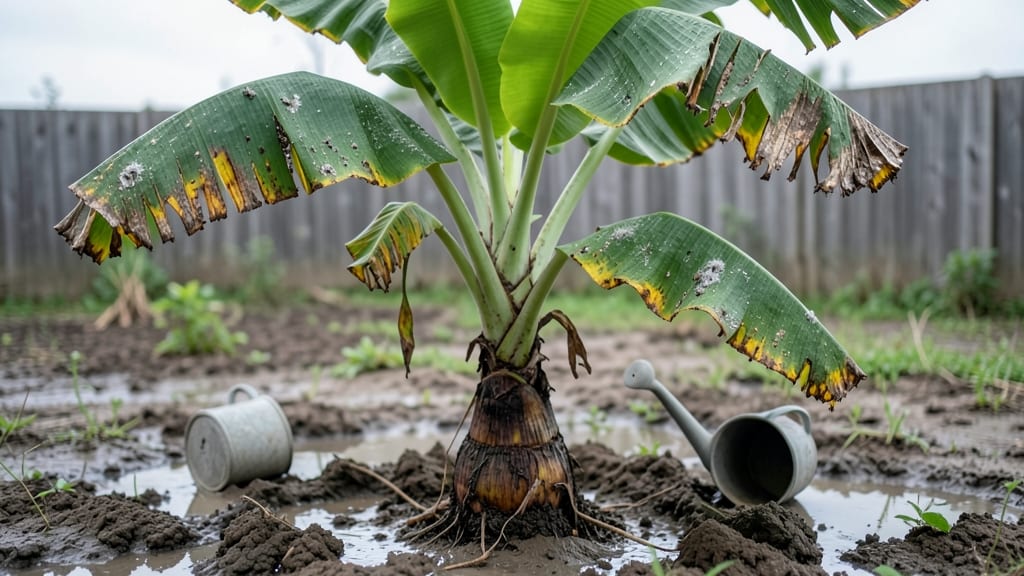
An overwatered banana tree turns your tropical corner into a soggy swamp—yellowing leaves, mushy stems, and roots drowning in their own misery. 🌱 I’ve pulled more than a few of these plants back from the brink, and the fix isn’t as dramatic as it seems: it’s all about cutting water, improving airflow, and giving those roots room to breathe.
The first sign you’ve overdone it? Leaves that flop like wet dishrags or stems that ooze when you touch them.
Here’s the hard truth: banana trees hate soggy feet more than they love frequent drinks. Most people assume these thirsty-looking plants need constant water, but they’re actually drought-tolerant once established.
The rescue starts with draining the soil—dig a trench around the base to let excess water escape, then prune away any blackened or mushy stems. Think of it like giving your plant a spa day: less water, more air, and a good trim to stop the rot from spreading.
Within 2-3 weeks, you’ll see new growth pushing through, and those once-slouchy leaves will perk up like they’ve been given a second chance.
The key is adjusting your watering routine: wait until the top 6 inches of soil feel dry before adding more, and always use pots with drainage holes if you’re growing in containers.
Trust me, your banana tree will thank you with bold new fronds and a comeback that’s almost as dramatic as its original drama.
This works for both backyard plants and container-grown bananas—just scale the drainage fixes to your setup. Once you’ve got the hang of it, you’ll spot the early warning signs before they turn into full-blown emergencies. Now, let’s get those roots back in balance.
Root Rot’s Silent Invitation
When your banana tree starts wilting despite a perpetually damp soil profile, the culprit is often excessive moisture—a condition that turns lush foliage into a sad, soggy mess.
But why does this happen? Let’s break down the science behind why your banana tree might be drowning in its own downfall.
Banana trees thrive in well-draining soil, but compacted or heavy clay soils act like a sponge, trapping water around the roots. When water can’t escape, it creates an anaerobic (oxygen-free) environment—a death sentence for roots.
Without oxygen, beneficial microbes that break down organic matter slow down, and harmful anaerobic bacteria take over, releasing toxins that rot the roots.
🔍 Key signs:
- Soil stays muddy for days after watering
- Water pools on the surface instead of absorbing
- Roots appear black, mushy, or smell foul
💡 Fix it: Amend soil with perlite, coconut coir, or sand to improve aeration. If planting in containers, use a mix designed for tropical plants with 30-50% organic matter.
Banana trees are heavy drinkers, but that doesn’t mean they want a bathtub. Frequent shallow watering—especially in small pots—keeps the topsoil soggy while the roots suffocate. Worse, if you water on a schedule without checking soil moisture, you’re essentially running a root-rot factory.
📊 Science alert: Banana roots need 15-20% oxygen to function. Waterlogged soil drops oxygen levels to <1%, triggering:
- Hydrogen sulfide buildup (rotten egg smell)
- Ethylene gas production (a plant stress hormone that accelerates decay)
- Fungal invasions like Pythium or Phytophthora, which feast on oxygen-starved roots
💡 Fix it: Water only when the top 2-3 inches of soil are dry. Use the finger test: Stick your finger in—if it’s damp, wait. For containers, ensure drainage holes exist and aren’t clogged.
If your banana tree is outdoors, excessive rainfall or poor airflow can mimic overwatering. Heavy downpours saturate the soil, while dense shade slows evaporation, keeping moisture trapped. Even windbreaks that block airflow can create a humid microclimate where fungi thrive.
🌡️ Temperature matters too: Cooler weather (<60°F/15°C) reduces root activity, making them more susceptible to rot. If your tree is in a low-light, damp corner, it’s essentially sweating in a wet towel.
💡 Fix it:
- Move potted trees to a sheltered but breezy spot during rainy seasons.
- Prune nearby plants to improve air circulation around the base.
- Use a rain gauge to track outdoor watering—banana trees need 1-2 inches of water per week, but drainage must offset excess.
Banana trees in small or plastic containers dry out faster on top but stay wet at the bottom. Since roots can’t escape, they circle the pot, creating a root-bound, waterlogged mess. Plastic pots, in particular, trap moisture longer than terracotta.
🔥 Danger zone: A 5-gallon pot for a mature banana tree is a recipe for disaster—roots outgrow the space, leading to compacted, anaerobic soil.
💡 Fix it:
- Upgrade to a minimum 15-gallon container with drainage holes.
- Use fabric grow bags for better airflow if repotting isn’t an option.
- Check for root girdling—if roots wrap around the pot, it’s time to loosen and repot.
Fixing Overwatered Soil Step by Step
Now that you’ve identified the signs of an overwatered banana tree—yellowing leaves, mushy stems, or foul-smelling soil—it’s time to take action. The good news? With the right steps, your banana tree can bounce back to health.
Here’s how to diagnose and treat the problem based on its root cause, plus tips to keep it thriving long-term.
Cause: Excessive moisture suffocates roots, leading to rot. Fix:
- Pause all watering for at least 3–5 days to let the soil dry out. This gives roots a chance to recover before they drown.
- If the ground is completely saturated, wait even longer—up to a week—especially in humid climates.
- Pro Tip: 🌡️ Use your finger to test soil moisture. If the top 2–3 inches feel damp, hold off on watering.
Cause: Compacted or clay-heavy soil traps water, worsening root rot. Fix:
- Loosen the soil around the base (but avoid damaging roots) with a fork or trowel. Aim for 6–12 inches deep to encourage airflow.
- Add organic matter like compost, coconut coir, or well-rotted manure to break up clay and improve drainage. Mix it into the top 6 inches of soil.
- Raised beds or mounds: If your soil is perpetually soggy, consider planting the banana tree on a slightly elevated bed (6–12 inches high) with fast-draining soil.
Cause: Overzealous watering or lack of knowledge about banana tree needs. Fix:
- Water deeply but infrequently: Banana trees prefer 1–2 inches of water per week, delivered in deep soakings (not frequent light sprinkles).
- Morning watering is key: Water in the early morning so excess moisture evaporates by night, reducing fungal risks.
- Check the pot (if potted): If your banana tree is in a container, ensure it has drainage holes and a cache pot (a tray under the pot to catch excess water).
- Pro Tip: ✨ Mulch properly—use straw or wood chips (not plastic) to retain moisture without suffocating roots. Keep mulch 2–3 inches away from the trunk.
Cause: Rot spreads from roots to leaves, weakening the plant. Fix:
- Remove yellow or blackened leaves with sterilized pruners (wipe with rubbing alcohol between cuts).
- Cut back to healthy green growth—this redirects the plant’s energy to recovery.
- Avoid over-pruning: Never remove more than 20–30% of the foliage at once, or you’ll stress the tree further.
Cause: Fungal infections (like Fusarium or Phytophthora) thrive in waterlogged soil. Fix:
- Apply a fungicide if you see black, mushy roots or a musty odor. Use a copper-based fungicide or neem oil spray (follow label instructions).
- For severe cases: Soak the roots in a 1:10 water-to-hydrogen peroxide solution (3%) for 10 minutes to kill fungi before replanting.
- Prevention: 💡 Rotate crops if you’re growing bananas in the same spot yearly—this reduces soil-borne pathogen buildup.
Cause: Some areas (like low-lying spots or after heavy rain) never dry out. Fix:
- Move your banana tree to a sunnier, well-draining location if possible. Bananas love full sun (6+ hours/day) and fast-draining soil.
- If potted: Repot into a larger container with perlite or orchid bark mixed into the soil for better aeration.
- Pro Tip: 🌞 Choose the right spot—banana trees hate soggy feet! Avoid planting near downspouts or in depressions where water pools.
Once your banana tree recovers, prevent future overwatering with these habits: - Test your soil: Use a moisture meter or the finger test before watering.
If the soil is still damp 1–2 inches down, wait. - Upgrade your soil: Amend heavy clay soil with sand, perlite, or compost to improve drainage permanently. - Monitor weather: Adjust watering during rainy seasons—banana trees in pots may need less water if left outdoors in wet climates. - Know your banana type: Dwarf bananas (like ‘Lady Finger’) tolerate slightly more moisture than large varieties (like ‘Cavendish’), which need excellent drainage.
Final Thought: 🌱 With patience and the right fixes, an overwatered banana tree can recover—sometimes even regrowing new leaves within weeks! The key is drainage, moderation, and observation. Keep an eye on your tree’s progress, and soon you’ll be enjoying healthy, productive growth (and maybe even fruit!).
Frequently asked questions about soggy banana trees
How do I know if my banana tree is overwatered vs. underwatered?
Check the soil first—stick your finger 2-3 inches deep. If it feels damp, you’re likely overwatering. Overwatered trees show yellowing leaves, mushy stems, and blackened roots that smell foul. Underwatered trees have crispy brown edges and dry, brittle leaves. The key difference? Overwatered soil stays soggy for days; underwatered soil feels dry at the same depth.
Can I save a banana tree with completely rotted roots?
It depends on how much healthy root remains. If you find any white or firm roots when inspecting, prune away the blackened sections and repot in fresh, fast-draining soil with perlite. For severe cases, propagate from a healthy stem cutting instead. If the entire root ball is mush, the tree is likely beyond saving—but don’t give up on the variety!
Why does my banana tree need so much water but still get root rot?
Banana trees love moisture, but they hate soggy soil. The issue isn’t thirst—it’s poor drainage. Clay soil or containers without holes trap water, suffocating roots. Fix it by amending soil with 30% perlite or coconut coir and watering only when the top 3 inches feel dry. Think of it like a sponge: squeeze out excess before adding more!
How long does it take to recover an overwatered banana tree?
With proper care, you’ll see improvement in 2-4 weeks. Start by stopping water for 5-7 days to dry the soil, then resume with deep but infrequent waterings. New growth should appear within 3-6 weeks if the roots are salvageable. Patience is key—banana trees are resilient but need time to recover their balance!
Can I use coffee grounds to fix overwatered banana trees?
Coffee grounds can actually worsen drainage when used in excess—they’re acidic and compact over time. Instead, mix in coarse sand or orchid bark to improve airflow. For a quick fix, spread a thin layer of wood chips around the base (not touching the trunk) to help soil dry faster. Focus on drainage first, then add amendments!