
Watering
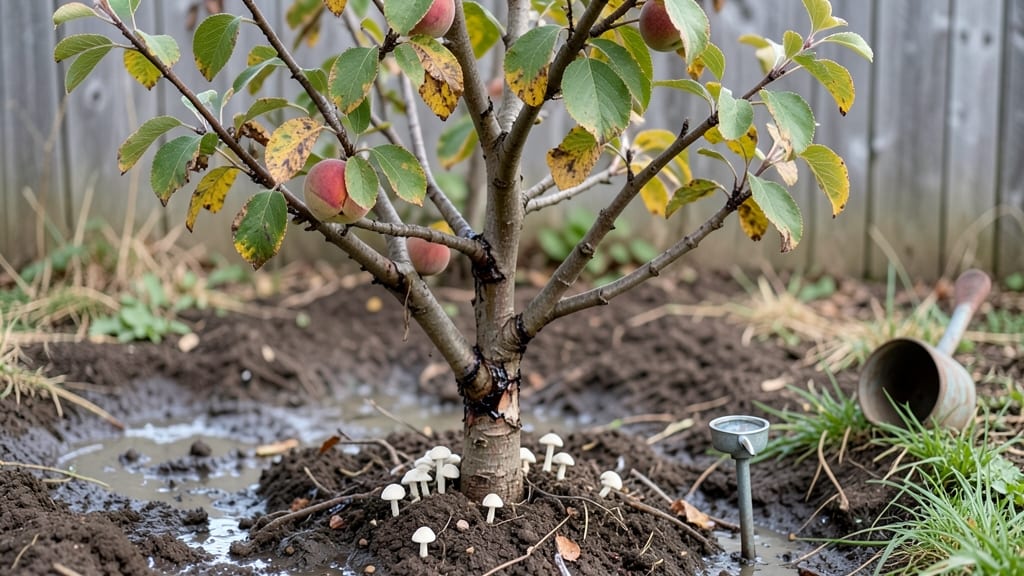
When your fruit tree's leaves turn yellow and the soil stays soggy for weeks, you're dealing with overwatered roots that can't breathe. 🌱 I’ve nursed back peach trees with root rot and saved citrus from drowning—here’s how to diagnose the problem and give your tree a second chance.
The first step isn’t more water; it’s often cutting back entirely until the soil dries out.
Most gardeners overestimate how thirsty fruit trees really are. Apple trees need deep watering once a week in summer, while citrus thrives on drought-like conditions once established. The key signs?
Mushy brown roots, leaves that wilt despite wet soil, or a foul smell when you dig near the trunk. Don’t panic—these trees are tougher than they look.
You’ll start by improving drainage: aerate compacted soil, add organic matter like composted leaves, and consider raised beds if your yard stays waterlogged. Within 2-4 weeks, you’ll see new green growth as roots recover.
For severe cases, prune back dead branches and adjust your watering schedule to match your tree’s needs—not your schedule.
This works for peaches, apples, citrus, and even figs—just match the solution to your tree’s size and soil type. The goal isn’t perfection; it’s giving your tree the chance to bounce back. Let’s get those roots breathing again.
Root Causes Of Overwatering
When your fruit tree starts showing signs of distress—yellowing leaves, wilting branches, or a soggy soil surface—it’s often a cry for help. But why does this happen in the first place?
Overwatering isn’t just about pouring too much water; it’s a chain reaction triggered by environmental, soil, and even human factors. Let’s break down the key reasons your fruit tree might be drowning in its own moisture.
Not all soil is created equal, and some types hold onto water like a sponge that refuses to let go. Clay-heavy or compacted soils are notorious for trapping excess moisture, preventing roots from breathing and accessing oxygen.
When water sits in the root zone for too long, it displaces air, suffocating the roots and leading to anaerobic conditions—a toxic environment for your tree.
Even well-draining soils can become problematic if they’re overworked or lack organic matter.
Amendments like compost or perlite can improve aeration, but if your soil is already dense, water will pool instead of draining. Test your soil by digging a small hole near the tree’s drip line—if water collects in the hole after irrigation, drainage is likely the culprit.
It’s easy to fall into the trap of thinking “more water = happier tree,” but fruit trees are surprisingly resilient and often don’t need daily hydration. Common mistakes include:
- Watering on a schedule instead of checking soil moisture—even if it hasn’t rained.
- Using a sprinkler that soaks the entire canopy, leading to surface evaporation and wasted water.
- Ignoring weather conditions, like watering heavily during rainy seasons or after storms.
- Not accounting for tree maturity—young trees need less water than established ones with deep root systems.
💡 Pro Tip: Stick your finger 1-2 inches into the soil before watering. If it’s damp, wait. If it’s bone-dry, it’s time—but even then, deep watering (slowly soaking the root zone) is better than shallow, frequent sprinkles.
Mulch isn’t just for looks—it’s a critical barrier that regulates soil temperature and moisture levels. Without it, soil dries out too quickly or stays soggy for days. A thick layer (3-4 inches) of organic mulch (like wood chips or straw) helps:
- Prevent water evaporation from the surface.
- Encourage deep root growth by keeping the soil cooler.
- Improve soil structure over time as it breaks down.
If your mulch is too thin, missing, or made of impermeable materials (like plastic), water will pool around the trunk, leading to rot. Worse, mulch piled against the tree’s trunk (a practice called volcano mulching) can trap moisture directly against the bark, inviting fungal diseases.
Sometimes, overwatering is a collateral damage of nature’s whims. Consider these scenarios:
| Factor | How It Causes Overwatering | Solution |
|---|---|---|
| 🌧️ Heavy or frequent rainfall | Natural watering can saturate the soil faster than roots can absorb it, especially in low-lying areas. | Install a French drain or plant on a slight slope to improve runoff. |
| 🏢 Poor landscape design | Trees planted in depressions or near downspouts collect excess water, mimicking a swamp. | Raised beds or berms can redirect water away from the base. |
| 🌡️ High humidity or low sunlight | Slow evaporation rates keep soil damp longer, delaying drying between waterings. | Adjust watering frequency—less often but deeper. |
🌡️ Pro Tip: If your area gets consistent rain, skip watering entirely for 2-3 days after a downpour. Use a moisture meter to avoid guesswork.
Even well-meaning gardeners can accidentally drown their fruit trees. Here’s how:
- Using the wrong irrigation method: Drip irrigation is ideal, but automatic timers set too long can flood the roots.
- Planting too deeply: Burying the graft union (the bulge near the base) or planting in low spots forces roots to sit in water.
- Ignoring root health: Damaged or circling roots from poor planting can’t absorb water efficiently, leading to buildup.
- Over-fertilizing with nitrogen: Excess nitrogen promotes leafy growth but weakens roots, making them more susceptible to waterlogging.
✨ Quick Fix: If you suspect root damage, gently fluff the soil around the base to improve aeration—just avoid disturbing roots further.
Reviving Your Drowned Fruit Tree
If your fruit tree is struggling from too much water, don’t panic—it can bounce back with the right care. The key is to drain excess moisture, improve soil health, and adjust your watering habits to prevent future damage. Below, we’ll break down the fixes based on the most common causes of overwatering, along with simple prevention tips to keep your tree thriving.
If the roots are suffocating in soggy soil, they can’t absorb oxygen or nutrients. Here’s how to rescue them:
🔥 Drain the Excess Water
Before you can fix the roots, you need to remove standing water around the tree. If your yard has poor drainage, try these steps:
- Dig shallow drainage channels (6–12 inches deep) around the tree’s drip line (the outer edge of the canopy). Angle them slightly downward to redirect water away.
- Use a garden hose to gently flush out compacted soil. Aim the water at the base and let it run until it flows freely from the channels.
- For severe cases, consider installing a French drain—a buried pipe surrounded by gravel—to pull water away from the roots.
🍳 Aerate the Soil
Compacted soil blocks airflow, so loosen it up to help roots breathe:
- Use a garden fork or broadfork to gently break up the top 12 inches of soil around the tree (but avoid damaging roots).
- Mix in organic matter like compost, coconut coir, or well-rotted manure to improve drainage and structure.
- For heavy clay soil, add perlite or coarse sand (up to 20% of the soil volume) to create air pockets.
💡 Prevention Tip:
Test your soil’s drainage before the next watering. Dig a 12-inch hole near the tree, fill it with water, and time how long it takes to drain. If it’s slower than 4–6 hours, your soil needs amendments.
If you’ve been watering too frequently or in large amounts, your tree’s roots may be struggling to recover. Reset the moisture balance with these steps:
👨🍳 Adjust Your Watering Schedule
Fruit trees prefer deep, infrequent watering over shallow, frequent soaks. Follow this rule:
- Water deeply 1–2 times per week (depending on climate), soaking the soil to a depth of 12–18 inches.
- Check soil moisture before watering: Stick your finger 2–3 inches into the soil. If it’s damp, wait. If it’s dry, water.
- Avoid wetting the leaves—use drip irrigation or soaker hoses to deliver water directly to the roots.
⏰ Let the Soil Dry Out Between Waterings
Overwatering often happens when gardeners water on a strict schedule without checking soil conditions. Instead:
- Wait until the top 2–3 inches of soil are dry before watering again.
- In hot climates, you may need to water more often, but always prioritize deep saturation over surface moisture.
- Use a moisture meter for accuracy, especially for heavy or clay soils.
🔥 Prevention Tip:
Mulch around the tree’s base (but keep it 3–4 inches away from the trunk) to retain moisture and regulate soil temperature. Use wood chips or straw—avoid thick layers, which can suffocate roots.
If overwatering has led to root rot or fungal infections, act fast to save your tree:
🔪 Prune Affected Roots (If Necessary)
For severe cases, you may need to trim damaged roots:
- Gently dig around the tree’s root zone (be careful not to harm healthy roots).
- Look for dark, mushy, or smelly roots—these are rotten and must be removed with sterilized pruners.
- Dip pruners in rubbing alcohol between cuts to prevent spreading disease.
🌡️ Apply Fungicide & Improve Airflow
To combat fungal growth:
- Spray the soil and lower trunk with a copper-based or sulfur fungicide (follow label instructions).
- Thin out dense foliage to increase airflow around the tree.
- Remove any fallen leaves or debris near the base, as these can trap moisture and fungi.
✨ Prevention Tip:
If your tree is in a shaded or low-lying area, consider pruning nearby plants or relocating the tree to a sunnier spot with better drainage. Fungi thrive in damp, dark conditions.
With these steps, your fruit tree should start recovering within 4–6 weeks. Stay consistent with soil checks and watering adjustments, and your tree will be back to producing delicious fruit in no time! 🍒🍊
Frequently asked questions
How can I tell if my fruit tree is overwatered vs. underwatered?
Check the soil first—stick your finger 2-3 inches deep. If it's soggy and smells foul, you're overwatering. Look for yellowing leaves, wilting despite wet soil, or mushrooms growing at the base. Underwatered trees have crispy brown edges on leaves and dry, cracked soil. The key difference? Overwatered roots smell rotten, while underwatered roots feel dry and brittle.
Can I save my fruit tree if the roots are already rotting?
Yes, but act fast! Trim away mushy, dark roots with sterilized pruners, then improve drainage by adding compost or perlite. Reduce watering immediately and apply a copper-based fungicide to prevent spread. With proper care, healthy roots can regrow in 4-6 weeks, though severely damaged trees may take longer to recover.
What's the best way to adjust watering for different fruit trees?
Citrus and peach trees need deep watering every 7-10 days once established, while apples prefer weekly deep soaks in summer. Young trees need less—water only when the top 1-2 inches of soil are dry. Use drip irrigation to avoid wetting leaves, which can encourage fungal diseases. Always match watering to your tree's size and soil type.
Will my fruit tree produce less fruit after overwatering?
Temporarily, yes—stressed trees focus on survival, not fruiting. However, once roots recover (typically 2-3 months), production should return to normal. Overwatering damages root systems, which directly affects nutrient uptake needed for fruit development. The good news: With proper care, your tree will bounce back stronger than before.