
Trees
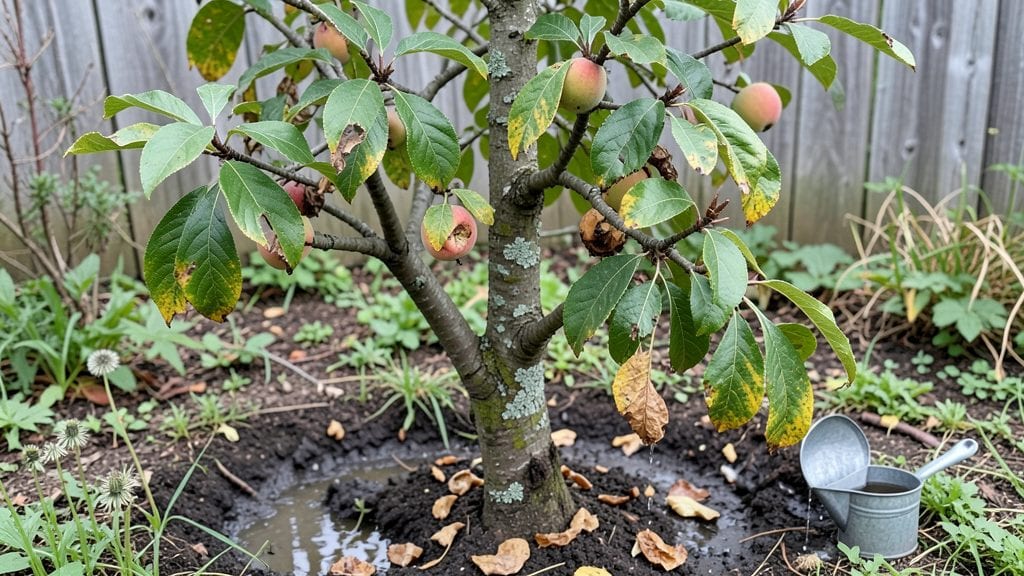
Your peach tree’s drooping branches and yellowing leaves aren’t a death sentence—root rot from overwatering is fixable. I’ve nursed back three trees using this root rescue method, and the key is acting fast before the roots suffocate completely.
The first sign is often soil that stays damp for days after watering, paired with leaves that cling limply to branches.
Start by cutting back irrigation immediately—let the soil dry out 3-4 inches deep before watering again. Improve drainage by amending the soil with coarse sand or perlite, and consider raising the tree’s base with a mound of gravel if your yard stays soggy.
Prune any dead branches back to healthy wood, but don’t overdo it—stressed trees need their energy for recovery, not regrowth.
Within 4-6 weeks, you should see new growth at the branch tips and leaves that perk up instead of yellow. The tree will need consistent moisture checks moving forward—stick your finger in the soil before watering, and avoid shallow sprinklers that soak the surface.
This method works for other fruit trees too, but peaches are particularly sensitive to root rot.
Long-term, install a soil moisture sensor or drip irrigation system to prevent future overwatering. Mulch around the base (but keep it 2-3 inches away from the trunk) to regulate soil temperature and moisture.
Your tree’s revival depends on balancing water, air, and nutrients—once you get that right, those branches will be heavy with fruit again next season.
Understanding Root Stress Triggers
Overwatering your peach tree isn’t just about giving it too much water—it’s about disrupting the delicate balance of oxygen, nutrients, and microbial life in the soil. When roots drown, they suffocate, leading to a cascade of problems that weaken the tree’s structure and health.
Let’s break down the key culprits behind this common issue, so you can spot the signs early and take corrective action.
Peach trees thrive in well-draining soil (pH 6.0–7.0), but heavy clay, compacted earth, or amended soil with too much organic matter can turn your garden into a swamp. Here’s why this happens:
- Clay Soil: Tiny particles pack tightly, blocking air pockets.
Water pools around roots instead of draining away, creating anaerobic (oxygen-deprived) zones. - Amended Soil Gone Wrong: While compost improves soil, too much organic matter (e.g., peat moss or fresh mulch) can hold excess moisture like a sponge, suffocating roots. - Low-Grade Slopes or Depressions: If your tree sits in a natural dip, water collects there after rain, mimicking a permanent flood zone.
💡 Pro Tip: Test your soil’s drainage by digging a 12-inch hole near the tree. Fill it with water—if it drains in less than 4 hours, you’re in the clear. If it takes longer, amend with sand, perlite, or gypsum to loosen the soil.
Peach trees are deep-rooted and evolved to survive droughts, but many gardeners water them too frequently or heavily, thinking more is better. Here’s the science:
- Surface Watering: Applying water to the top 2–3 inches of soil doesn’t reach the taproot (which can extend 6+ feet deep).
Instead, it saturates the surface, creating a waterlogged crust that blocks oxygen. - Automatic Irrigation Gone Rogue: Sprinklers or drip systems set on timers (e.g., daily watering) can over-saturate the soil, especially in humid climates where evaporation is slow. - Post-Rain Watering: Adding water within 48 hours of rainfall doubles down on moisture, giving roots zero chance to dry out.
⏰ Actionable Fix: Water deeply but infrequently—aim for 1–1.5 inches per week (including rain). Use a soaker hose or drip irrigation placed 6–12 inches from the trunk to encourage deep root growth.
Mulch is a gardener’s best friend—unless you’re using it like a suffocating blanket. Here’s how it backfires:
- Thick Mulch (4+ Inches): While mulch conserves moisture, too much blocks airflow and traps heat, creating a micro-climate where fungi and bacteria thrive.
This accelerates root rot. - Volcanic Mulch Piles: Piling mulch directly against the trunk (a practice called "mulch volcanoes") prevents water from evaporating, keeping the soil permanently damp. - Wrong Mulch Type: Organic mulches like wood chips or straw break down over time, adding more moisture-retentive material to the soil.
In contrast, inorganic mulches (gravel, rubber chips) allow better drainage.
🌡️ Temperature Check: Keep mulch 2–3 inches thick and 6 inches away from the trunk. Use straw or pine needles in wet climates—they decompose slower than wood chips.
When roots sit in wet conditions for days, opportunistic fungi like Phytophthora and Armillaria move in, attacking the root epidermis and vascular system. Symptoms? Yellowing leaves, wilting, and blackened roots.
- Fungal Spore Boom: Damp soil = perfect fungal buffet.
Spores germinate and infect root hairs, blocking water and nutrient uptake. - Secondary Infections: Weakened roots become vulnerable to bacterial rot (e.g., Erwinia), which can spread to the cambium layer, killing the tree from the inside out. - Slow Decline: Unlike sudden wilting (which often signals underwatering), fungal root rot progresses silently for weeks, making it harder to diagnose.
✨ Prevention Tip: Apply copper fungicide (e.g., Bordeaux mixture) in early spring if your area is prone to fungal diseases. For existing issues, reduce watering and improve drainage immediately.
Peach trees in pots or small planting holes are especially vulnerable because their roots can’t expand to seek drier soil. Key issues:
- Root-Bound Stress: Roots circle the pot, compacting soil and reducing oxygen flow. When transplanted, they struggle to adjust to field conditions, leading to waterlogging. - Small Root Zones: A 5-gallon pot won’t drain like a 6-foot-deep in-ground bed.
Water pools at the bottom, drowning the roots. - Transplant Shock: Even healthy potted trees take 2–3 weeks to establish new roots. During this time, overwatering accelerates decline.
🔥 Planting Hack: When transplanting, dig a hole twice as wide as the root ball but no deeper—this prevents water from pooling. Amend the backfill with 50% native soil + 50% sand/perlite for better drainage.
Reviving Your Tree Step by Step
Now that you know the signs and causes of an overwatered peach tree, it’s time to roll up your sleeves and get to work! The good news? With the right approach, you can nurse your tree back to health—even if it’s looking a little worse for wear.
Below, we’ll break down practical, actionable fixes based on the root cause of your tree’s distress, plus prevention tips to keep future watering woes at bay.
If your peach tree is drowning in soggy soil, the first step is to improve drainage so roots can breathe again.
🌱 Step 1: Stop Watering Immediately
- Cut back on irrigation—no more watering until the soil dries out.
- Avoid overhead watering (like sprinklers), which can compact soil and worsen root rot.
- Pro Tip: 💡 If rain is forecast, cover the tree with a breathable tarp to prevent excess moisture.
🔪 Step 2: Aerate the Soil
Compacted or heavy clay soil holds water like a sponge.
Loosen it up: - Dig around the base (but don’t damage roots!) with a garden fork or trowel. - Mix in organic matter like compost, coconut coir, or perlite to improve drainage. - For severe cases, consider installing drainage tiles if your yard has poor natural drainage.
💧 Step 3: Adjust Your Watering Routine
Peach trees prefer deep, infrequent watering over shallow, frequent soaks.
Here’s how to reset: - Water deeply 1-2 times per week (depending on climate) instead of daily light sprinkles. - Water at the base, not the leaves, to prevent fungal growth. - Check soil moisture before watering: Stick your finger 3-4 inches deep—if it’s damp, wait.
If root rot has set in (mushy, brown roots or foul smells), act fast to prevent total collapse.
👨🍳 Step 1: Prune Damaged Roots (Gently!)
- Remove black, mushy, or hollow roots with sterilized pruners.
- Disinfect tools with rubbing alcohol to avoid spreading disease.
- Warning: ⚠️ Only prune 10-20% of roots at a time—too much can stress the tree further.
🌡️ Step 2: Apply Fungicide (If Needed)
- Spray copper-based or phosphite fungicide on roots and soil to fight pathogens.
- Repeat every 2-3 weeks until new growth appears.
- Pro Tip: 🔥 For organic options, try neem oil or hydrogen peroxide (3%) as a root soak.
🌿 Step 3: Boost Beneficial Microbes
Healthy soil = happy roots. Add:
- Mycorrhizal fungi (available as powder) to help roots absorb nutrients.
- Aerobic bacteria (like Bacillus subtilis) to break down excess moisture.
Overwatering leaches away nutrients, leaving your peach tree weak. Here’s how to replenish:
📊 Step 1: Test Your Soil
- Grab a DIY soil test kit (or send a sample to a lab) to check pH and nutrient levels.
- Peach trees thrive in slightly acidic soil (pH 6.0-7.0).
💪 Step 2: Add Balanced Fertilizer
- Slow-release granular fertilizer (like 10-10-10) in early spring and summer.
- Avoid high-nitrogen fertilizers right after overwatering—this can burn roots.
- Pro Tip: ✨ For a natural boost, use fish emulsion or compost tea for a gentle nutrient kick.
🥗 Step 3: Mulch Correctly
- Apply 2-3 inches of organic mulch (wood chips, straw) away from the trunk to retain moisture without suffocating roots.
- Replenish mulch annually to maintain soil health.
Once your peach tree is back on track, lock in those good habits:
- Install a rain gauge to track moisture levels and adjust watering.
- Use a moisture meter (or the "finger test") to check soil before watering.
- Choose the right spot: Plant peach trees in well-draining soil with full sun (6+ hours/day).
- Upgrade your irrigation: Drip irrigation or soaker hoses deliver water directly to roots without oversaturating.
- Monitor drainage: After heavy rain, check for puddles—if water pools, amend the soil or consider a French drain.
Final Thought: 🎯 Patience is key—reviving an overwatered peach tree takes time, but with these steps, you’ll see new leaves, stronger branches, and maybe even peaches next season! Stay consistent, and your tree will thank you with lush growth.
Frequently asked questions
How do I know if my peach tree is overwatered instead of underwatered?
Check the soil 3-4 inches deep—if it stays damp for days, that’s overwatering. Look for yellowing leaves (especially lower branches), wilting despite wet soil, and blackened roots when you dig. Underwatered trees have crispy brown edges on leaves and dry, cracked soil. Pro tip: Gently tug on a branch—if it falls off easily, roots are struggling.
Can I save a peach tree with root rot from overwatering?
Yes, but act fast! First, stop watering immediately and improve drainage by mixing sand or perlite into the soil. Prune 10-20% of blackened roots with sterilized tools, then apply copper fungicide to prevent spread. In 4-6 weeks, you should see new growth—if not, the tree may be beyond saving. Early intervention is key!
How often should I water a peach tree after fixing overwatering?
Water deeply but infrequently—aim for 1-1.5 inches per week (including rain). Use a soaker hose or drip irrigation 6-12 inches from the trunk to encourage deep roots. Always check soil moisture: Stick your finger 3-4 inches deep—if damp, wait. Adjust based on your climate (hotter = more frequent). Avoid surface watering!
What’s the best mulch to use after recovering from overwatering?
Use 2-3 inches of inorganic mulch like gravel or pine straw—they drain better than organic options. Keep mulch 6 inches away from the trunk to prevent moisture buildup. Organic mulches (wood chips) work too, but avoid piling them thickly (4+ inches) near the base. Replenish annually to maintain soil health.
Will my peach tree produce fruit next year after overwatering damage?
Possibly! If you’ve addressed drainage and root health, your tree should recover enough to fruit within 12-18 months. Focus on balanced fertilization (like 10-10-10) in spring to support regrowth. Young trees (3 years old) may take longer to rebound, but consistent care will help. Patience is key—healthy roots = future harvests!