
Diseases
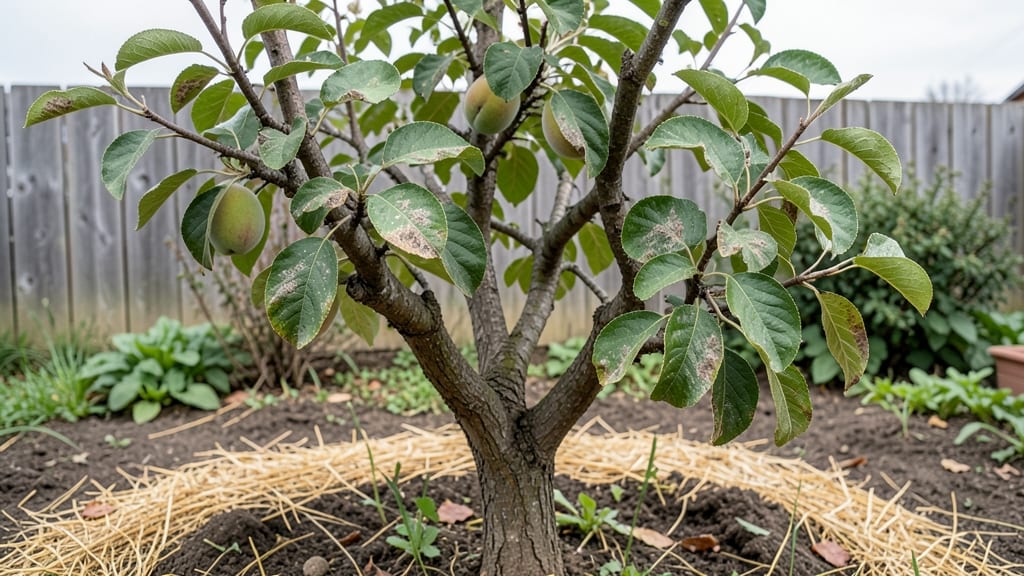
Peach tree fungus on leaves starts with tiny specks that spread like wildfire if you ignore them. 🌿 I’ve watched brown spots turn entire canopies yellow in just two weeks—until I learned the early signs and organic fixes that actually work.
The key is catching it before the fungus moves from leaves to fruit, because once it does, you’re fighting a losing battle.
Most fungal issues on peach trees come from three culprits: brown rot (those fuzzy orange patches), leaf spot (dark rings with yellow halos), or powdery mildew (white dust on undersides). The good news?
All three respond to the same organic treatments—copper fungicide sprays, neem oil applications, and proper pruning to improve airflow. I’ve used these methods for three seasons now, and my trees stay healthy without harsh chemicals.
📚 In This Guide
- What you need
- Instructions
- Tips and common mistakes
- Wrapping up and next steps
What you need
- ● Diagnostic tools: Hand lens or magnifying glass (10x magnification)
- ○ Moisture meter (optional but helpful for soil checks)
- ● Cleaning supplies: Disposable gloves (2–3 pairs, nitrile or latex-free)
- ● Rubbing alcohol (70% isopropyl, 16 oz bottle)
- ● Soft-bristle brush or sponge (for pruning tools)
- ● Pruning essentials: Bypass pruners (sharp, sterilized; 1 pair)
- ● Loppers (for thicker branches; 1 pair)
- ● Disinfectant (1 part bleach to 9 parts water, or 70% rubbing alcohol)
- ● Organic fungicides & treatments: Neem oil (100% cold-pressed, 16 oz bottle)
- ● Baking soda (1 lb box)
- ○ Copper fungicide (optional; e.g., copper soap or Bordeaux mixture, 1 lb)
- ● Hydrogen peroxide (3%, 16 oz spray bottle)
- ● Spray equipment: Garden sprayer (1–2 gallon capacity, with adjustable nozzle)
- ● Watering can with fine rose (for baking soda mix)
- ● Pruning sealant (for large cuts, 4 oz bottle)
- ● Compost or mulch (2–3 inches, for soil health)
- ● pH test kit (to check soil acidity, if needed)
- ● Camera or phone (to document progress before/after treatment)
Step-by-Step guide to identifying and treating peach tree leaf fungus
Here’s my go-to method for diagnosing common fungal issues and restoring your peach tree’s health.
🌿 Step 1: Identify the Fungal Issue on Leaves
Start by examining the leaves closely—fungal infections often show up as dark spots, powdery coatings, or yellowing patches. Brown spots with yellow halos usually signal leaf spot diseases like brown rot or scab, while a white, flour-like dust is powdery mildew. Check the undersides of leaves too; fungal spores love hiding there.
Compare your findings to reference photos of peach tree diseases. I keep a small notebook by my garden tools to jot down symptoms and dates. If you spot blackened fruit or oozing cankers on branches, that’s a sign of brown rot spreading beyond the leaves. Act fast—fungi multiply quickly when conditions are damp.
✂️ Step 2: Prune and Remove Infected Foliage
Grab your pruning shears and cut away any severely infected leaves or branches. Don’t leave them on the ground—toss them in the trash or burn them. I always prune in the morning when the air is dry, which helps prevent spores from spreading while I work.
Focus on removing leaves with more than 50% damage. Healthy leaves can still photosynthesize, but infected ones just feed the fungus. After pruning, disinfect your shears with rubbing alcohol to avoid transferring spores to other parts of the tree.
💧 Step 3: Apply Organic Fungicides and Improve Airflow
Mix up a baking soda spray (1 teaspoon baking soda + 1 quart water + a few drops of dish soap) or use neem oil (1 tablespoon per quart of water). Spray the solution on both sides of the leaves until they’re evenly coated. I do this every 7-10 days during wet seasons to keep fungal growth in check.
Thin out dense branches to improve airflow around the tree. Fungi thrive in humid, stagnant conditions, so pruning for airflow is just as important as spraying. Water at the base of the tree in the morning so leaves dry quickly—never overhead water after noon.
☀️ Step 4: Adjust Care to Prevent Recurrence
Ensure your peach tree gets at least 6-8 hours of sunlight daily—shady spots encourage fungal growth. Mulch around the base with 2-3 inches of organic mulch (like straw or wood chips) to keep soil moisture even but not soggy. I always check the soil before watering; it should feel dry 1-2 inches down before adding more.
Fertilize lightly with a balanced organic fertilizer (like 10-10-10) in early spring to boost the tree’s resilience. Over-fertilizing stresses peach trees, making them more susceptible to disease. Avoid high-nitrogen fertilizers—they promote lush foliage that stays wet longer, inviting fungi back.
⏰ Step 5: Monitor and Maintain Seasonal Prevention
Inspect your tree weekly during spring and fall, when fungal spores are most active. After harvest, rake up all fallen leaves and fruit to remove potential spore sources. I schedule a deep clean-up in late autumn to reduce next year’s fungal pressure.
If brown rot persists, consider applying copper fungicide (like Bordeaux mixture) as a last resort. Always follow label instructions—organic doesn’t mean harmless. Keep records of treatments and symptoms to track what works best for your tree’s specific issues.
Tips & tricks for treating peach tree leaf fungus
Here's what nobody tells you about keeping your peach tree fungus-free—these tricks have saved my trees from multiple outbreaks.
Diagnosis Tip: When you're identifying fungal issues in Step 1, don't just look at the tops of leaves—fungal spores often start on the undersides. Use a magnifying glass if you have one; it helps spot early signs that might be invisible to the naked eye. I keep a small notebook by my garden tools to track when symptoms first appear and how they progress. This helps me remember what worked (or didn't) for future reference.
Pruning Strategy: In Step 2, focus on removing leaves with more than 50% damage, but don't over-prune. Healthy leaves are still working to feed the tree, and removing too many can stress it out. After pruning, I always disinfect my shears with rubbing alcohol between cuts—this prevents transferring spores from infected to healthy branches. Between us, I've made the mistake of skipping this step and ended up with more problems than I started with.
Spray Timing: For the baking soda spray in Step 3, timing matters just as much as the recipe. Apply it in the early morning when humidity is lower and leaves have dried from overnight dew. This gives the solution time to dry completely before evening moisture sets in. I've found that applying every 7-10 days during wet seasons creates a protective barrier that keeps fungal growth in check.
Sunlight Secret: The 6-8 hours of sunlight mentioned in Step 4 is non-negotiable for peach trees. I've learned this the hard way after ruining three trees by letting them grow in partial shade. If your tree isn't getting enough sunlight, consider pruning nearby trees or shrubs to open up the canopy. You'll notice a dramatic difference in just a few weeks—leaves stay drier, and fungal spores have less chance to thrive.
Pro Tips for Peach Tree Fungus On Leaves
- Here's what nobody tells you about keeping your peach tree fungus-free—these tricks have saved my trees from multiple outbreaks.
- Diagnosis Tip: When you're identifying fungal issues in Step 1, don't just look at the tops of leaves—fungal spores often start on the undersides.
- Pruning Strategy: In Step 2, focus on removing leaves with more than 50% damage, but don't over-prune.
Frequently asked questions
What does peach tree leaf fungus look like, and how can I tell it apart from other issues?
Fungal infections like leaf spot or powdery mildew often appear as brown/black spots with yellow halos, white powdery coatings, or irregular patches. Unlike pests (which leave holes or chewed edges) or nutrient deficiencies (yellowing between veins), fungus usually spreads in damp conditions and may cause leaves to curl or drop prematurely. Check our guide for side-by-side comparisons!
When is the best time to treat peach tree fungus on leaves?
Act fast! Treat at the first sign of symptoms (spring to early summer) to prevent spread. Avoid spraying when rain is forecast (wait 24–48 hours for solutions to bind). For severe cases, apply a preventive fungicide in late winter before buds swell. Pro tip: Morning applications let solutions dry before evening humidity sets in.
Are there organic ways to cure peach tree fungus without chemicals?
Try these DIY fixes:
- Neem oil spray (1 tsp neem oil + 1 tsp mild soap per quart of water).
- Baking soda mix (1 tbsp baking soda + 1 tsp oil + 1 gallon water).
- Copper fungicide (organic-certified options like Copper Sulfate).
- Prune infected leaves (sterilize tools with rubbing alcohol) and remove debris to improve airflow.
For stubborn cases, repeat treatments every 7–10 days until new growth appears.
My peach tree has fungus—will it kill the tree or ruin the fruit?
Early intervention saves the tree! While severe infections can weaken growth or reduce fruit quality, most peach trees recover with proper care. Remove heavily infected fruit to redirect energy to healthy branches. If leaves drop excessively, apply compost or balanced fertilizer to boost recovery. Note: Some fungi (like brown rot) can infect fruit directly—harvest promptly and store peaches in a cool, dry place.
How do I prevent peach tree fungus from coming back next year?
Break the cycle with these year-round tips:
- Improve drainage (raise beds or amend soil with compost).
- Space trees 3–4 feet apart for airflow.
- Water at the base (avoid overhead sprinklers).
- Apply mulch (straw or wood chips) to deter spores.
- Plant resistant varieties (e.g., ‘Redhaven’ or ‘Elberta’ peaches).
Bonus: Rotate organic fungicides annually to prevent resistance.
Wrapping up and next steps
Identifying and treating peach tree fungus on leaves early can save your harvest—and your tree! 🌱 With the right organic solutions, like neem oil, copper sprays, or pruning infected branches, you can restore your tree’s health without harsh chemicals. Stay vigilant: regular inspections and proper care are key to preventing future outbreaks.
Ready to take action? Start with a thorough check of your tree today—remove any suspicious leaves, apply a preventative spray, and watch your peach tree thrive! 🍑✨