
Featured
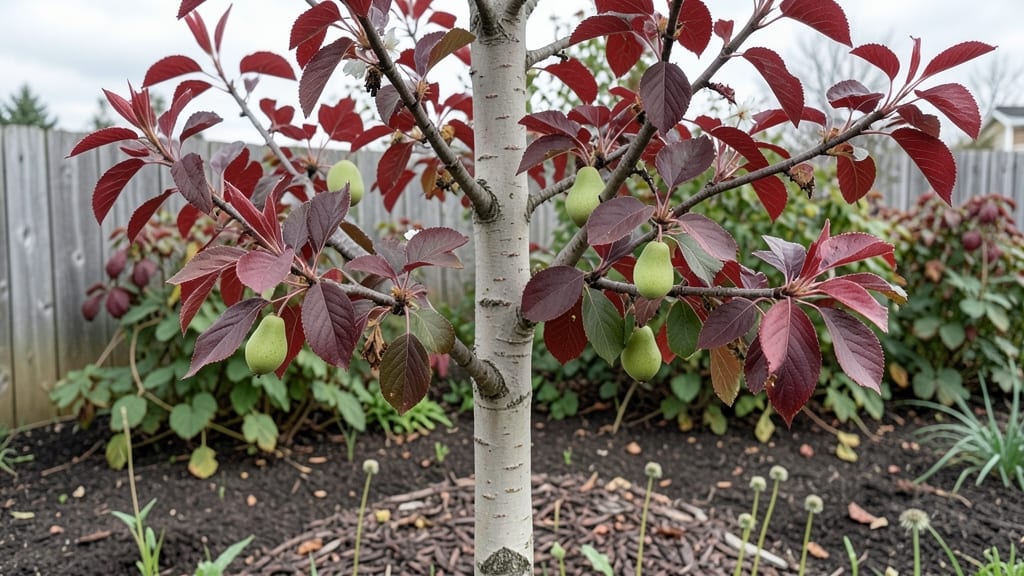
When your pear tree sports red leaves instead of green, it’s not just a seasonal quirk—it’s a message from your tree about what’s missing or stressing it out. 🌿 I’ve seen this happen after a harsh winter, during droughts, or when soil nutrients get out of balance, and each case needs a different fix.
The good news? Most causes are easy to spot once you know what to look for.
Red leaves often mean your tree is either starving for key nutrients like magnesium or potassium, or it’s struggling with environmental factors like inconsistent watering or temperature swings. Spider mites or fungal infections can also turn leaves red, especially if you notice tiny webs or spots alongside the color change.
The first step is checking the leaves’ pattern—uniform redness usually points to nutrient issues, while patchy red spots suggest pests or disease.
You can turn this around fast with a soil test to pinpoint deficiencies, a deep watering schedule to stabilize moisture, and targeted treatments like neem oil for pests or balanced fertilizer for nutrients.
Within a few weeks, those leaves will start regaining their normal green hue, and your tree will look healthier than ever. The key is acting before the problem spreads.
This works for both young saplings and mature trees, and the fixes adapt to different climates—just adjust watering based on your local rainfall patterns. Let’s get your pear tree back to its vibrant best.
Why it happens
Your pear tree’s vibrant red leaves aren’t just a seasonal fluke—they’re a biological response to environmental and physiological factors. While some varieties naturally blush with autumn hues, others react dramatically to stress or nutrient shifts.
Understanding these triggers helps you decide whether to embrace the color or take corrective action. Let’s break down the science behind those fiery foliage transformations.
When temperatures dip and daylight shortens, pear trees (like many deciduous species) trigger a cascade of chemical changes. Chlorophyll—the green pigment responsible for photosynthesis—breaks down, revealing anthocyanins, the red and purple pigments that dominate in fall.
These compounds act as sun screens, protecting leaves from excess light exposure as photosynthesis slows. In pear trees, varieties like ‘Kieffer’ or ‘Seckel’ often showcase this effect more intensely due to higher anthocyanin production.
Actionable insight: If your tree’s red leaves appear only in autumn, it’s likely a natural process. Mulch with organic matter (like wood chips) to extend the season’s vibrancy by moderating soil temperature.
Extreme temperatures—whether a sudden frost or a heatwave—can shock pear trees into producing red pigments as a survival mechanism. Cold stress triggers abscisic acid (ABA), a hormone that signals leaves to slow water loss and protect cellular damage.
The reddening is a visual warning: the tree is conserving energy. Heat stress, meanwhile, can disrupt chlorophyll production, leaving underlying anthocyanins visible.
Signs to watch for:
- Red edges on leaves during hot, dry spells (heat stress).
- Uniform reddening after a late-spring frost (cold shock).
- Leaves that curl or wilt alongside the color change (severe stress).
🌡️ Pro tip: If heat is the culprit, drip irrigation or shade cloth can reduce stress. For frost damage, cover young trees with frost blankets before predicted drops below 28°F (-2°C).
Pear trees thrive on a balanced diet, but nutrient deficiencies or excesses can trigger red leaves as a distress signal. The most common culprits:
| Nutrient Issue | Leaf Symptoms | Why It Causes Red |
|---|---|---|
| ❄️ Phosphorus Deficiency | Dark red/purple leaf veins, especially in new growth. | Phosphorus fuels energy transfer. Without it, the tree recycles nutrients from old leaves, concentrating anthocyanins. |
| 💧 Potassium Deficiency | Red/brown edges or tips, often with yellowing between veins. | Potassium regulates water and enzyme activity. A shortage leads to oxidative stress, triggering red pigments as a protective measure. |
| 🌿 Nitrogen Toxicity | Bright red stems and new leaves (unusual for pears). | Excess nitrogen disrupts chlorophyll and promotes rapid, weak growth. The tree “overproduces” anthocyanins to compensate for poor light absorption. |
| 🔥 Magnesium Deficiency | Red interveinal areas with yellow veins (reverse of phosphorus). | Magnesium is central to chlorophyll. Without it, leaves lose green pigment first in older tissues, exposing red hues. |
✨ Fix it: Test your soil (pH 6.0–7.0 is ideal for pears) and amend with:
- For phosphorus: Bone meal (spring application).
- For potassium: Wood ash (use sparingly—test pH first!).
- For nitrogen: Slow-release organic fertilizer (avoid synthetic spikes).
Some pests and pathogens inhibit chlorophyll or disrupt nutrient flow, leading to reddened leaves as a secondary effect. Common offenders:
- Spider Mites: Tiny arachnids that pierce leaves, causing stippling and reddening due to water stress. Check undersides of leaves for fine webbing.
- Scale Insects: Sap-sucking pests that clog leaf pores, starving tissues of nutrients. Look for brown bumps on stems/leaves.
- Fire Blight (Bacterium):strong> A bacterial infection that blackens and wilts leaves, often preceded by reddish-purple margins. Prune infected branches 6 inches below the damage.
- Root Rot (Fungal):strong> Overwatered or poorly drained soil leads to oxygen-starved roots, causing leaves to turn red/yellow. Soil will smell musty.
💡 Early action: Treat mites/scale with neem oil or horticultural oil. For fire blight, sterilize pruners with rubbing alcohol between cuts. Improve drainage with gravel or sand amendments.
Revive Your Pear Tree’s Vibrancy
If your pear tree’s leaves have turned a striking red—and you’re not sure whether it’s a natural beauty or a distress signal—don’t panic! Most causes of red leaves in pear trees can be addressed with simple, garden-friendly fixes.
Below, we’ve mapped out the most common culprits and the steps to restore your tree’s health (or enhance its seasonal charm).
Red leaves often signal a lack of essential nutrients. Here’s how to diagnose and fix it:
🔥 Iron Chlorosis (Yellow Veins, Reddish Leaves)
- Fix: Apply chelated iron (like iron sulfate or iron chelate) to the soil or use a foliar spray. For severe cases, inject iron directly into the root zone.
- Prevention:
- Test soil pH (ideal: 6.0–7.0). High alkalinity locks out iron—add elemental sulfur to lower pH gradually.
- Mulch with compost to improve nutrient availability.
- Plant iron-accumulating companion plants (e.g., marigolds) nearby.
🍳 Nitrogen Starvation (Pale Green/Red Leaves, Stunted Growth)
- Fix: Use a balanced fertilizer (10-10-10) or a slow-release nitrogen source like blood meal or alfalfa meal. Apply in early spring.
- Prevention:
- Avoid over-fertilizing with high-phosphorus blends (they can worsen deficiencies).
- Top-dress with well-rotted manure annually for organic nitrogen.
👨🍳 Magnesium or Potassium Shortage (Red Edges, Weak Branches)
- Fix:
- Magnesium: Sprinkle Epsom salt (magnesium sulfate) around the base (1 tbsp per gallon of water, applied monthly).
- Potassium: Use a potassium-rich fertilizer (like greensand) or banana peel tea (steep peels in water for 2 weeks).
- Prevention:
- Conduct a soil test every 2–3 years to monitor micronutrient levels.
- Avoid overwatering, which leaches potassium from the soil.
Too much or too little water can stress pear trees, triggering red leaves. Here’s how to get it right:
🥘 Drought Stress (Wilted, Crispy Red Leaves)
- Fix:
- Deep water the tree 1–2 times per week (1–2 inches of water per session). Use a soaker hose to avoid runoff.
- Mulch heavily (3–4 inches of wood chips or straw) to retain moisture.
- Prevention:
- Install drip irrigation for consistent moisture, especially in hot climates.
- Water early morning to reduce evaporation.
🌡️ Overwatering (Yellowing Leaves, Mushy Roots)
- Fix:
- Let the top 2–3 inches of soil dry out between waterings.
- Improve drainage by amending soil with perlite or coarse sand.
- If roots are waterlogged, prune affected branches and apply fungicide (like copper fungicide) to prevent root rot.
- Prevention:
- Plant pear trees in well-draining soil (avoid clay-heavy areas).
- Avoid watering at night to prevent fungal growth.
Red leaves can also be a sign of pests or pathogens. Act fast to protect your tree:
🔪 Spider Mites or Aphids (Stippled Red Leaves, Webbing)
- Fix:
- Blast off pests with a strong water spray (early morning).
- Apply neem oil or insecticidal soap (follow label rates).
- Introduce beneficial insects (ladybugs, lacewings) for long-term control.
- Prevention:
- Install fine mesh netting over young trees to block pests.
- Prune infested branches and dispose of them in sealed bags.
✨ Fungal Infections (Red Spots, Powdery Mildew)
- Fix:
- Prune infected leaves/branches and sterilize tools with rubbing alcohol.
- Spray with baking soda solution (1 tsp baking soda + 1 quart water + a drop of dish soap) or copper fungicide.
- Prevention:
- Space trees for airflow (fungi thrive in humidity).
- Water at the base (avoid wetting foliage).
Not all red leaves are bad—some varieties (like Pyrus calleryana ‘Chanticleer’) naturally turn fiery hues in fall/winter. If your tree is healthy but just showing off:
- Enhance the color: Apply a light layer of mulch with red-tinted wood chips for a seasonal pop.
- Prune strategically: Thin out dense branches to let sunlight penetrate and deepen the red tones.
- Celebrate the change: Red-leaved pear trees attract pollinators and add winter interest to your landscape!
Pro Tip: 🌡️ Monitor your tree weekly—catch issues early by checking leaves (top, bottom, new growth) and soil moisture. A happy pear tree is a colorful pear tree!
Frequently asked questions
Are red leaves on my pear tree always a sign of trouble?
Not necessarily! Some pear varieties naturally develop red or burgundy leaves in fall/winter as part of their seasonal color change. Look for these clues: if the red appears only in cooler months, the tree seems healthy otherwise, and the leaves aren't curling or dropping prematurely, it's likely just a stunning natural display. Varieties like 'Chanticleer' or 'Redspire' are known for this trait.
How can I tell if my pear tree's red leaves are from pests vs. nutrient issues?
Check the leaf pattern and tree health: pests often cause red leaves with stippling, webbing, or tiny spots (like spider mites), while nutrient deficiencies create more uniform reddening—often on older leaves first. Also examine stems for sap-sucking insects (scale) or check soil moisture. If leaves are crispy or curling alongside the red, pests are likely the culprit.
What's the fastest way to fix magnesium deficiency in my pear tree?
Use Epsom salt (magnesium sulfate) for immediate results. Mix 1 tablespoon per gallon of water and apply directly to the soil around the tree's drip line. For faster absorption, add a few drops of liquid dish soap as a surfactant. Repeat every 4-6 weeks until new green growth appears, usually within 4-6 weeks. Pair this with a soil test to address underlying pH issues.
Will pruning help my pear tree with red leaves?
Yes, but strategically! Remove only the most severely affected branches (especially those with blackened tips or fungal signs) using clean, sharp pruners. For nutrient issues, prune to improve airflow and light penetration—thin out dense growth by 20-30%. Sterilize tools with rubbing alcohol between cuts to prevent disease spread. Never prune more than 15% of the canopy at once.
Can I still harvest fruit from a pear tree with red leaves?
Yes, but monitor the tree closely. Red leaves from nutrient deficiencies or mild stress won't harm fruit quality, though yields may decrease. If redness comes from pests or disease (like fire blight), treat immediately—infected fruit may drop prematurely. For severe cases, harvest any ripe fruit first, then focus on tree recovery before next season's crop.