
Pruning
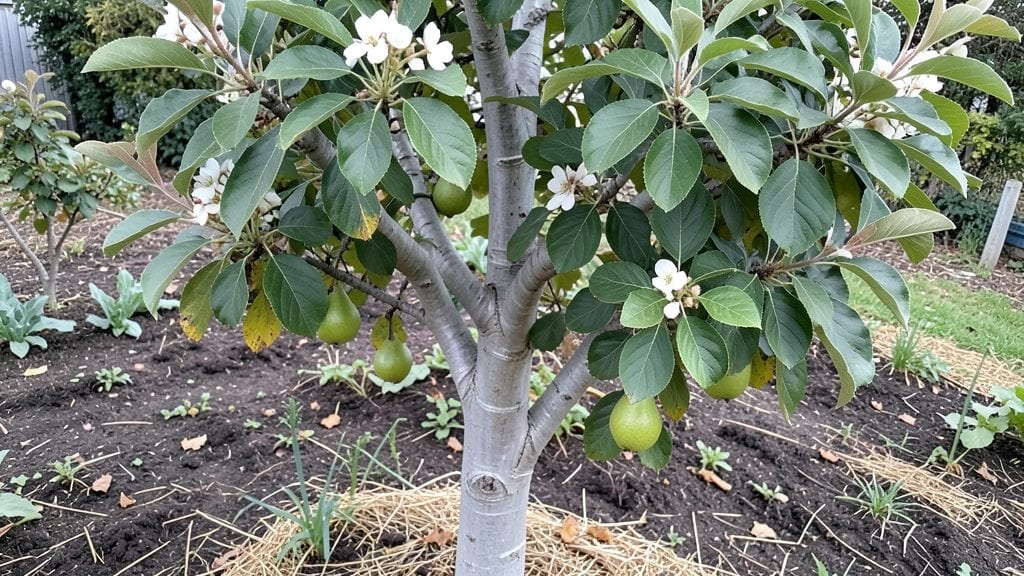
Your pear tree size will determine whether you’re picking fruit in 10 years or 20—and whether it fits in your yard at all.
Wondering how much space your dream pear tree needs to thrive? Choosing the wrong variety for your yard could mean stunted growth, poor fruit production, or even structural damage to your home—so let’s break down the exact space requirements for each type.
From dwarf varieties that stay under 12 feet to towering standard trees reaching 50 feet, the right size depends on your space, goals, and patience. A semi-dwarf in Zone 6a might be perfect for a suburban backyard, while a full-size tree belongs in a rural orchard.
Here’s how to pick the right size, manage growth through pruning, and avoid costly mistakes that shrink your harvest—or your tree.


Mature pear tree size by variety: space needs for full growth
Choosing the right pear tree size for your space is critical—whether you're dreaming of a backyard orchard or a single ornamental tree. Standard varieties like Bartlett pears can tower over 30 feet, while dwarf Asian pears stay compact at just 8 feet.
Without proper spacing, you risk root competition, reduced fruit yield, or even structural damage to nearby structures. Let’s explore the exact mature dimensions and root zone requirements for each type to help you plan your garden like a pro.
Understanding canopy spread and root depth is key. A standard pear tree can spread 20-30 feet wide, while a dwarf variety might only reach 6-10 feet. The root system of larger trees extends even further—often 3-5 feet deep and 2-3 times the canopy width horizontally.
Planting too close can lead to nutrient theft and disease spread, so let’s dive into the specifics for popular varieties.
| Variety | Type | Mature Height (ft) | Canopy Spread (ft) | Root Zone Depth (ft) | Root Spread (ft) | Best For |
|---|---|---|---|---|---|---|
| Bartlett | Standard | 30-50 | 20-30 | 4-6 | 30-40 | Orchards, large yards |
| Anjou | Standard | 25-40 | 18-25 | 4-5 | 25-35 | Suburban yards, orchards |
| Seckel | Semi-Dwarf | 12-18 | 12-15 | 3-4 | 15-20 | Small yards, containers |
| Asian Pear (e.g., Hosui) | Dwarf | 8-12 | 6-10 | 2-3 | 8-12 | Urban gardens, patios |
| Moonglow | Dwarf | 8-10 | 6-8 | 2-3 | 7-10 | Containers, small spaces |
| Kieffer | Semi-Dwarf | 15-20 | 15-20 | 3-4 | 20-25 | Medium yards, orchards |
If you’re planting a standard pear tree like Bartlett, allocate at least 30 feet in all directions from the trunk. This ensures the root system and canopy spread have room to grow without crowding other plants or structures.
For example, a 30-foot-tall tree with a 25-foot spread needs a 50-foot diameter planting area to thrive. Skimping on space can lead to poor air circulation, increasing the risk of fungal diseases like fire blight.
For semi-dwarf varieties like Seckel or Kieffer, space them 15-20 feet apart. These trees strike a balance between fruit production and yard size, making them ideal for suburban gardens. I once planted a Seckel pear tree just 12 feet from my fence, and while it survived,
How to choose a pear tree size based on your yard layout
Selecting the right pear tree size depends entirely on your yard’s dimensions and your long-term goals. A standard pear tree can tower over 25 feet, while dwarf varieties stay compact at 8-12 feet.
Misjudging space leads to overcrowding, poor airflow, and reduced fruit quality—so let’s match your yard to the perfect tree.
Start by measuring available space, including overhead clearance for branches and root zones. Urban gardens may only accommodate dwarf or semi-dwarf varieties, while suburban yards or orchards can handle larger trees. Pruning plays a critical role in managing growth, but even pruned trees need adequate space to thrive.
🌱 Styled List: Pear Tree Size Guide by Yard Type
-
🏡 Urban Gardens (Small Yards)
- Size: Dwarf (6-10 ft) or Semi-Dwarf (10-15 ft)
- Spacing: 8-12 ft apart (single tree) or 10-15 ft in containers
- Best for: Patio planting, small orchards, or espalier training
-
🌳 Suburban Yards (Medium Spaces)
- Size: Semi-Dwarf (12-18 ft) or Standard (up to 25 ft)
- Spacing: 15-20 ft apart (single tree) or 20-25 ft for multiple trees
- Best for: Backyard orchards, privacy screens, or mixed landscapes
-
🌾 Large Orchards (Commercial Spaces)
- Size: Standard (25-50 ft) or larger varieties
- Spacing: 25-35 ft apart (single tree) or 30-50 ft for rows
- Best for: High-yield fruit production, windbreaks, or agroforestry
For multiple pear trees, spacing is critical to prevent competition. Plant dwarf varieties at least 8 feet apart, while standard trees need 25-35 feet of space. If planting in rows, leave 30-50 feet between trees to ensure airflow and sunlight penetration—both essential for fruit quality.
Pruning is your best tool for managing growth. Annual pruning in late winter or early spring helps control size, shape, and fruit production. Focus on removing dead or crossing branches and thinning out overcrowded areas to improve airflow.
For dwarf varieties, prune lightly to maintain compactness, while standard trees may need heavier pruning to control height.
Consider your pear tree’s mature height when planning nearby structures. A 25-foot standard tree planted too close to a house risks damaging roofs or siding during storms. Always leave 10-15 feet of clearance between trees and buildings, fences, or driveways to avoid future conflicts.
Finally, think about root zone depth. Pear trees develop extensive root systems, so avoid planting near septic tanks, underground utilities, or other trees with competing roots. Amend your soil with compost or organic matter to encourage deep root growth and stability—especially for larger varieties.