
Planting
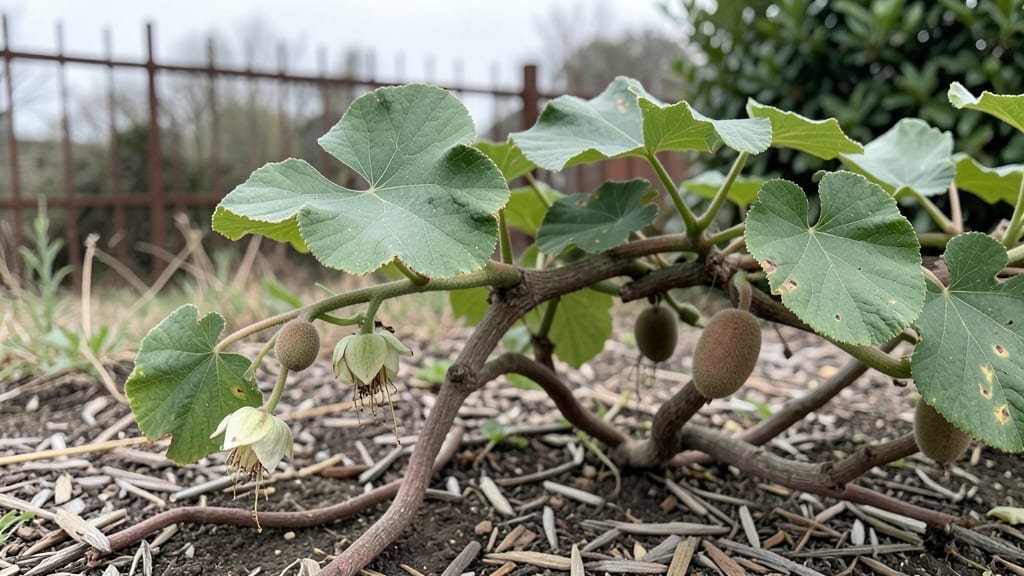
Planting a kiwi tree isn’t just about growing fruit—it’s about transforming your yard into a year-round harvest of tart-sweet treats. 🌱 I’ve grown hardy varieties like ‘Issai’ and ‘Ken’s Red’ in Zone 5, and they thrive where other kiwis would freeze.
The secret lies in choosing the right spot, soil, and companion plant to ensure pollination, even if you’re working with limited space.
You’ll need a sunny, sheltered location with well-draining soil rich in organic matter—think compost mixed into the top 12 inches. Kiwi vines are vigorous climbers, so provide a sturdy trellis or fence at least 8 feet tall.
Most hardy varieties aren’t self-pollinating, so planting two different gender vines (male and female) guarantees fruit set, though some like ‘Issai’ produce without a partner.
By late spring, you’ll see fast-growing vines with glossy leaves, and within 2-3 years, you’ll have your first harvest. The fruit ripens in fall, but hardy kiwis stay crisp into winter if picked at the right stage.
Pruning in early spring keeps the plant manageable and boosts fruit production—just remove dead wood and thin crowded growth.
This method works in Zones 4-8, making it adaptable to most climates. Whether you’re a first-time gardener or a seasoned grower, kiwi vines reward patience with bold flavors and lush foliage that outshines store-bought varieties. Let’s get those roots in the ground!
📚 In This Guide
- What you need
- Instructions
- Tips and common mistakes
- Wrapping up and next steps
What you need
- ● Kiwi tree (Actinidia arguta or Actinidia kolomikta): 1–2 plants (ensure at least one male and one female for pollination, unless selecting a self-pollinating variety like Issai). Choose cold-hardy varieties (zones 4–8) from a reputable nursery (e.g., Ken’s Red, Ananasnaya, or Issai).
- ● Well-draining soil mix (60% topsoil + 30% compost + 10% perlite/sand) or potting soil (for container growing).
- ● Organic fertilizer (balanced 10-10-10 or citrus-specific fertilizer like Espoma Citrus-Tone).
- ○ Mulch (wood chips, straw, or shredded bark to retain moisture). 🔧 Tools & Equipment Garden trowel or transplant spade. Pruning shears (sterilized with rubbing alcohol). 5-gallon bucket (for watering or seed-starting mix). Garden gloves (to protect from thorns!). Optional but helpful: Trellis or sturdy fence (kiwis need vertical support—4–6 ft tall). Drip irrigation system (for consistent moisture). Soil pH test kit (ideal range: 5.5–6.5). Mycorrhizal fungi (boosts root health—sprinkle at planting).
Step-by-step instructions for planting cold-hardy kiwi trees
Here's the foolproof method I've used to establish thriving kiwi vines in zones 4-7.
🪴 Step 1: Select and Prepare the Planting Site
Kiwi trees need a sheltered location with 6 hours of morning sun and afternoon shade—too much afternoon heat scorches tender leaves. Choose a spot where vines can climb a sturdy trellis or fence at least 12 feet tall. The soil should drain well but retain moisture; amend heavy clay with 2 inches of compost mixed into the top 12 inches of soil.
Test your soil's pH—kiwi thrives in slightly acidic to neutral (6.0-7.0). If your soil runs alkaline, add sulfur according to package instructions. I always dig a 2-foot wide, 1-foot deep planting hole and let it sit uncovered for a week to allow native soil microbes to recolonize.
🌱 Step 2: Plant Bare-Root Vines at the Right Time
Plant dormant bare-root vines in early spring (after last frost) or fall (6 weeks before first frost). Soak the roots in lukewarm water for 2 hours before planting to rehydrate them. Position the vine so the crown sits 1-2 inches above soil level—burying it too deep causes rot.
Spread the roots outward in the hole and backfill with native soil mixed with 1 cup of bone meal (for phosphorus) and 1 cup of mycorrhizal fungi. Water deeply until soil is evenly moist to 12 inches deep. I always install a drip irrigation line at planting to ensure consistent moisture during establishment.
☀️ Step 3: Install Support and Train Young Vines
Attach the main stem to the trellis with soft garden twine at a 45-degree angle to encourage strong upward growth. Kiwi vines need structural support—use 3-4 horizontal wires spaced 3 feet apart for lateral branches. Prune any side shoots until the main stem reaches 6 feet tall to establish a strong leader.
Here's the thing—kiwi vines are dioecious, meaning male and female plants must be planted within 50 feet of each other for pollination. I always plant one male vine for every 5-6 female vines in my garden. Watch for new growth in 4-6 weeks after planting; this signals successful root establishment.
💧 Step 4: Maintain Moisture and Fertility
Water deeply once weekly during the first growing season, ensuring soil stays consistently moist but not soggy. Kiwi roots are shallow and drought-sensitive—you'll know moisture is right when the top 2 inches of soil feel damp but not wet. Mulch with 3 inches of wood chips to retain moisture and suppress weeds.
Fertilize in early spring with 1/2 cup of 10-10-10 granular fertilizer spread over the root zone. Side-dress with 1/4 cup of composted manure in mid-summer to boost organic matter. I've found that kiwi vines respond well to foliar sprays of seaweed extract every 4 weeks during growing season for stress resistance.
✂️ Step 5: Prune for Structure and Fruit Production
Prune dormant vines in late winter to remove dead, crossing, or weak branches. Keep the strongest 4-6 canes per vine, cutting back to 2-3 buds from the main stem. This encourages fruit-bearing spurs and prevents overcrowding. Kiwi vines produce fruit on second-year wood, so avoid heavy pruning until the plant is 3 years old.
Watch for suckers at the base—remove these immediately as they divert energy from fruit production. You'll see first harvests in 3-4 years if you maintain this pruning schedule. Thin fruit clusters to 3-4 kiwis per vine in early summer to ensure larger, higher-quality fruit.
Tips & tricks for perfect kiwi tree planting
These hard-earned insights will help you establish thriving kiwi vines that produce fruit for decades.
Site Selection Nuance: That 6 hours of morning sun is non-negotiable—kiwi leaves burn easily in afternoon heat. I've learned the hard way that even partial afternoon shade makes all the difference in leaf health. Also, position your trellis to catch prevailing winds; kiwi vines appreciate some natural air movement to prevent fungal diseases. The 12-foot minimum height is crucial—kiwi vines grow aggressively and need vertical space to develop properly.
Root Preparation Secret: Don't skip that 2-hour root soaking! I've seen vines planted without this step struggle for months to establish. Use lukewarm water (not cold) to avoid shocking the roots. Pro tip: Add a tablespoon of honey to the water—this provides instant energy for the roots while they're vulnerable. After planting, maintain that even moisture to 12 inches deep by checking with your finger; soil should feel like a damp sponge, not wet cement.
Pollination Strategy: The 50-foot pollination radius is strict—kiwi pollen doesn't travel far. I recommend planting your male vine slightly uphill from the females to take advantage of natural wind patterns. For guaranteed pollination, consider hand-pollinating with a small paintbrush in early spring when flowers first appear. Watch for those first leaves in 4-6 weeks—they should be vibrant green and slightly waxy, signaling healthy root establishment.
Pruning Precision: When pruning dormant vines in late winter, make clean cuts just above a bud that faces outward. I always sterilize my pruners with rubbing alcohol between cuts to prevent spreading disease. The 3-4 kiwi thinning rule might seem extreme, but it's worth it—larger fruit develops better flavor and texture. Remember, kiwi vines produce on second-year wood, so be patient with your first few harvests.
Pro Tips for Plant Kiwi Tree
- These hard-earned insights will help you establish thriving kiwi vines that produce fruit for decades.
- Site Selection Nuance: That 6 hours of morning sun is non-negotiable—kiwi leaves burn easily in afternoon heat.
- Root Preparation Secret: Don't skip that 2-hour root soaking!
Frequently asked questions
Got questions about growing your own kiwi tree?
You’re not alone! Here are answers to the most common queries—from planting to harvest—so you can grow cold-hardy kiwis with confidence.
What’s the best time of year to plant a kiwi tree?
Plant kiwi trees in early spring (after the last frost) or fall (4–6 weeks before the first frost). This gives roots time to establish before extreme temperatures hit. Avoid planting in summer heat or winter cold, as stress can stunt growth. Choose a day with overcast skies to reduce transplant shock.
Do I need both male and female kiwi trees to get fruit?
Yes! Most kiwi varieties (like Actinidia arguta) are dioecious, meaning you need one male and one female tree for pollination and fruit production. Plant them within 30–50 feet of each other for optimal cross-pollination. Some self-pollinating varieties exist, but they’re rare—always check the label!
How cold-hardy are kiwi trees, and how do I protect them in winter?
Cold-hardy kiwi varieties (like Issai or Ken’s Red) tolerate down to -15°F (-26°C), but young trees or tender varieties need extra care. Mulch heavily (4–6 inches of straw or wood chips) around the base, wrap the trunk in burlap, and cover with frost cloth during hard freezes. Prune in late winter to remove dead wood and improve airflow.
How long does it take for a kiwi tree to bear fruit?
Patience is key! Most kiwi trees take 2–3 years to mature enough for fruit, with full production at 4–5 years. Dwarf varieties may fruit slightly sooner (1–2 years), but consistent care—watering, fertilizing, and pruning—speeds up the process. Male trees won’t produce fruit but are essential for pollination, so plant one even if you’re impatient!
Can I grow kiwi trees in containers, or do they need a garden?
Yes! Dwarf kiwi varieties (like Issai) thrive in large containers (15+ gallons) with well-draining soil. Use a balanced fertilizer (10-10-10) and place the pot in full sun. Containers limit root growth, so repot every 2–3 years and winterize indoors (60°F+ temps) if you live in a cold climate. Just ensure the pot has drainage holes!
What pests or diseases should I watch for, and how do I treat them?
Kiwi trees are generally low-maintenance, but watch for:
- Kiwi vine borers: Tiny holes in bark or sawdust-like frass. Prune infested branches and treat with neem oil.
- Powdery mildew: White fungal spots. Improve airflow and spray with baking soda solution (1 tsp baking soda + 1 quart water + drop of soap).
- Aphids: Sticky residue on leaves. Blast off with water or use insecticidal soap.
Wrapping up and next steps
Growing your own cold-hardy kiwi tree is a rewarding journey that brings sweet, tangy rewards straight from your backyard! 🌱 Whether you’re a beginner gardener or a seasoned green thumb, these varieties offer resilience and delicious fruit—perfect for year-round enjoyment.
With the right care, you’ll soon be harvesting homegrown kiwis to share with family and friends.
Ready to take the next step? Start by selecting your preferred variety (like ‘Issai’ or ‘Arctic Kiwi’) and gather your supplies. Then, follow the planting guide to get your tree thriving. Happy growing—your future harvest is waiting! 🍈✨