
Size
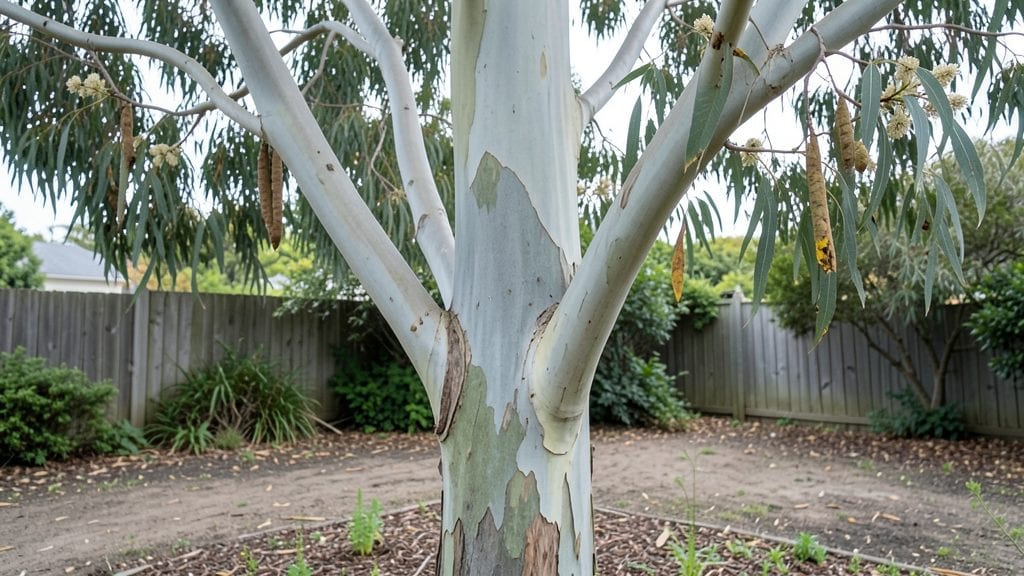
Planting tall eucalyptus trees is like inviting a living skyscraper into your yard—one that delivers privacy, shade, and dramatic beauty in just a decade. I’ve watched mine transform from saplings to towering sentinels, their silvery-blue leaves rustling like ocean waves against a windbreak.
These aren’t just trees; they’re architectural statements that reshape outdoor spaces overnight.
The key to making them work lies in placement and spacing. Give them 20-30 feet apart for full privacy screens, and position them where they’ll cast shade over patios or play areas by midday.
Their rapid growth (up to 3 feet per year) means you’ll see results faster than with slower-growing alternatives. Just pair them with drought-tolerant ground covers like lavender or creeping thyme—they’ll thrive under the eucalyptus canopy.
Imagine stepping into a secluded courtyard where sunlight filters through 100-foot-tall trunks, their peeling bark adding texture like a natural tapestry. The fragrance alone—minty and crisp—turns your backyard into a sensory retreat.
With minimal pruning (just remove dead branches), these trees reward patience with year-round interest, from spring blooms to winter silhouette drama.
Best for zones 8-11, they’re foolproof once established—just avoid planting near foundations (roots spread wide). For cooler climates, opt for the slightly smaller ‘Gunnii’ variety. The trade-off? You’ll trade a few extra inches of height for hardiness. Either way, your privacy screen will outshine anything you’ve tried before.
Nature’s Growth Superchargers
Tall eucalyptus trees don’t just grow—they soar, reaching heights of 150+ feet in a decade. But why do these giants shoot up so fast? The answer lies in a mix of genetic, environmental, and ecological factors that turn eucalyptus into nature’s vertical rockets.
Let’s break down the science behind their skyward sprint.
Eucalyptus trees are hardwired for speed, thanks to their fast-growing genetics. Unlike slow-and-steady species like oaks, eucalyptus prioritize height over width, a trait called determinate growth. Here’s how their biology fuels their ascent:
- Efficient Photosynthesis: Eucalyptus leaves are packed with chlorophyll and have a high surface area, absorbing sunlight like solar panels. Their C3 photosynthetic pathway (unlike C4 plants like corn) maximizes carbon capture, even in cooler climates.
- Water-Wise Leaves: Their sclerophyll leaves (thick, leathery, and waxy) reduce water loss, allowing them to thrive in drought-prone areas while still growing aggressively. Think of them as desert-speed demons.
- Deep Root Systems: Eucalyptus roots can plunge 100+ feet deep, tapping into underground water reserves that shallow-rooted trees can’t access. This gives them a hydration advantage even in dry spells.
💡 Pro Tip: If you’re planting eucalyptus for speed, choose Eucalyptus globulus (blue gum) or Eucalyptus camaldulensis (river red gum)—these species are growth champions, often doubling in height within 5–7 years.
Eucalyptus trees don’t just grow fast—they love conditions that let them grow even faster. Here’s what makes them thrive:
| Factor | Why It Matters | Ideal Range |
|---|---|---|
| Sunlight | Eucalyptus are heliophytes—they crave full sun to fuel photosynthesis. Even partial shade slows their vertical climb. | 6+ hours of direct sun daily |
| Temperature | They thrive in warm but not scorching climates. Extreme heat stresses them, while cold snaps can stunt growth (though many species are frost-tolerant). | 50–90°F (10–32°C) |
| Water | While drought-resistant, eucalyptus grow fastest with consistent moisture. Deep watering (1–2x weekly in dry climates) mimics their natural habitat near rivers or wetlands. | 1–2 inches of water per week (more in extreme heat) |
| Soil | They prefer well-draining, slightly acidic soil (pH 5.0–7.0). Heavy clay or waterlogged soil can suffocate their roots, slowing growth. | Loamy or sandy soil with organic matter |
⚠️ Warning: Avoid planting eucalyptus in urban areas with restricted root zones (like sidewalks). Their aggressive roots can crack pavement, and stunted growth leads to weaker, less stable trees.
Eucalyptus trees aren’t picky eaters, but a nutrient-rich diet turns their growth into hyperdrive. Here’s what fuels their ascent:
- Nitrogen (N): The growth hormone of trees. Eucalyptus respond well to slow-release nitrogen fertilizers (like blood meal or composted manure) in early spring. 🌱 Too much nitrogen = weak wood—balance is key!
- Phosphorus (P): Boosts root development and energy transfer. A bone meal or rock phosphate application at planting helps young trees establish deep roots faster.
- Potassium (K): Strengthens drought resistance and disease defense. Use wood ash or greensand to keep potassium levels optimal.
- Micronutrients: Zinc, manganese, and iron (often lacking in sandy soils) can be added via chelated fertilizers to prevent yellowing leaves and stunted growth.
💡 Pro Tip: Test your soil before planting! A simple $20 home test kit reveals deficiencies. If your soil is nutrient-poor, amend it with compost or aged manure before planting.
Eucalyptus trees don’t just grow fast—they dominate their space. Here’s how they outmaneuver other plants:
- Alleopathic Chemicals: Eucalyptus release phenolic compounds into the soil, inhibiting the growth of nearby plants (like weeds or shrubs). This natural weed killer ensures they get all the sunlight and nutrients.
- Fire Adaptations: Many eucalyptus species thrive after wildfires because their seeds germinate best in post-fire conditions. While this isn’t a growth hack for homeowners, it shows their resilience in competitive environments.
- Pioneer Species: Eucalyptus are early colonizers in disturbed areas (like clear-cuts or abandoned fields). Their fast growth lets them claim territory quickly, shading out slower competitors.
✨ Bonus: If you’re planting eucalyptus as a privacy screen, their alleopathic traits mean less weeding for you! Just be mindful of nearby gardens—keep them 50+ feet from other plants.
When you combine genetics, ideal conditions, and a little human help, eucalyptus trees don’t just grow—they launch into the sky. With the right care, your 10-foot sapling could be a 100-foot privacy giant in a decade.
Fixing Your Towering Privacy Screen
Tall eucalyptus trees may seem like a dream come true—until they start causing headaches like overgrown branches, root damage, or even power line hazards. The good news? Most issues have simple, practical fixes.
Below, we’ll break down common problems and how to solve them, along with tips to keep your towering trees thriving without the drama.
Cause: Fast growth, poor pruning, or lack of maintenance can turn your eucalyptus into a tangled mess, blocking sunlight, damaging roofs, or even falling onto structures.
Fix It:
- 🔪 Trim Strategically – Use sharp, sterilized pruning shears or a pole saw to remove dead, weak, or overhanging branches. Focus on:
- Branches growing toward your home, power lines, or driveways.
- "Water sprouts" (shoots growing straight up from the trunk).
- Crossed or rubbing branches that can create entry points for pests.
- 🌿 Thin the Canopy – Instead of just cutting tips, selectively remove smaller branches from the inside of the tree to improve airflow and sunlight penetration. This encourages a stronger structure.
- 📅 Schedule Regular Pruning – Aim for late winter or early spring (before new growth) to avoid stressing the tree. Avoid heavy pruning in summer or fall.
Prevention Tips: ✨ Start young – Train your eucalyptus early by pruning lower branches to encourage upward growth. ✨ Hire a pro – For trees over 30 feet, consult an ISA-certified arborist to avoid damaging the tree or voiding home insurance. ✨ Use the "3-cut method" for larger branches to prevent tearing bark.
Cause: Eucalyptus roots spread aggressively, seeking water and nutrients. If planted too close to foundations, sidewalks, or septic systems, they can lift driveways, crack pipes, or destabilize structures.
Fix It:
- 🚜 Adjust Irrigation – Overwatering encourages root spread. Water deeply but infrequently (1–2 times per week in dry climates) and direct water away from the house.
- 🔨 Install Root Barriers – Bury hard plastic or metal barriers (like RootGuard) 2–3 feet deep around the perimeter of your property to deflect roots. Plant the tree at least 20–30 feet from structures.
- 🌿 Mulch Correctly – Apply 2–4 inches of mulch (wood chips or bark) in a 3-foot ring around the base, but keep mulch away from the trunk to prevent rot and pest attraction.
- 💧 Professional Root Pruning – If roots are already invasive, an arborist can sever aggressive roots near foundations using specialized tools.
Prevention Tips: 💡 Test soil depth – Plant eucalyptus in areas with well-draining soil and avoid low-lying spots where roots pool. 💡 Choose dwarf varieties – If space is limited, opt for Eucalyptus cinerea (Argyle Apple) or Eucalyptus vernicosa, which grow 20–30 feet tall but have less aggressive roots.
Cause: Eucalyptus wood is brittle, and high winds or storms can snap branches—especially if the tree is top-heavy, diseased, or improperly pruned.
Fix It:
- 🛠️ Emergency Cleanup – Remove hanging or broken branches immediately to prevent injury or further damage. Use a chain saw with proper safety gear (gloves, goggles, helmet).
- 🌳 Structural Pruning – Reduce the weight of the canopy by removing large, weak branches from the top third of the tree. Aim for a balanced, vase-like shape.
- 🪵 Stake Young Trees – If your eucalyptus is still establishing, stake it temporarily during storms to prevent uprooting.
Prevention Tips: ✨ Plant in sheltered spots – Avoid open areas with prevailing winds; group with other trees for windbreak support. ✨ Inspect annually – Look for deadwood, cracks, or fungal growth (like eucalyptus rust) and prune before storm season. ✨ Consider tree ties – For very tall trees, dynamic tree ties (not rigid wire) can help stabilize the trunk.
Cause: Eucalyptus trees are generally low-maintenance, but psyllids, borers, or fungal diseases (like phytophthora root rot) can weaken them, leading to dieback or death.
Fix It:
- 🐜 Treat Pests Early –
- Psyllids (sap-sucking insects): Spray with neem oil or insecticidal soap in early spring.
- Borers: Apply borax-based treatments or invite woodpeckers (natural predators) to your yard.
- 🌿 Improve Drainage – If roots are waterlogged, amend soil with compost and avoid overwatering.
- 🍄 Fungal Issues – Remove infected leaves/debris and treat with copper fungicide if needed.
Prevention Tips: 🌡️ Monitor moisture – Eucalyptus hate soggy soil; ensure proper drainage. 🎯 Space trees properly – Overcrowding increases humidity, promoting fungal growth.
If your eucalyptus is beyond saving (e.g., hollow trunk, severe disease, or structural failure risk), removal may be the safest option. Hire a licensed arborist to:
- 🪓 Use proper rigging to lower large sections safely.
- 🌱 Replace with a less invasive species (like leucadendron or magnolia) if needed.
Final Thought: With the right care, your tall eucalyptus can remain a privacy powerhouse for decades. Stay proactive—prune, monitor, and adapt—and you’ll enjoy its sky-high benefits without the headaches! 🌿✨
Frequently asked questions
How close can I plant tall eucalyptus trees to my house?
Keep eucalyptus at least 20-30 feet from your foundation to prevent root damage. Their roots spread aggressively, potentially cracking driveways or lifting sidewalks. For smaller varieties like 'Argyle Apple,' 15 feet may suffice, but always check local planting regulations.
Do tall eucalyptus trees lose their leaves in winter?
Most eucalyptus varieties are evergreen, retaining their silvery-blue foliage year-round. However, some species like 'Snow Gum' may drop leaves in extreme cold. Their fragrance and texture remain stunning even in winter, making them ideal for year-round privacy screens.
Can I grow tall eucalyptus in containers?
While possible, eucalyptus thrive best with unrestricted root space. For container growth, choose dwarf varieties like 'Gunnii' in 15-gallon pots or larger. Expect slower growth and more frequent repotting. Container-grown trees also need consistent watering and protection from wind.
What's the fastest-growing eucalyptus variety?
The Blue Gum (Eucalyptus globulus) grows 3-5 feet per year, reaching 100+ feet in ideal conditions. For quicker privacy, plant 3-5 trees spaced 10 feet apart—they'll form a dense screen in 5-7 years. Just ensure you have space for their mature size!
Are eucalyptus trees safe around pets?
Eucalyptus leaves and oils contain eucalyptol, which is toxic to pets if ingested in large amounts. While occasional leaf contact is usually harmless, keep pets away from chewed leaves or oil residues. Opt for pet-safe alternatives like leucadendron if concerned.