
Trees
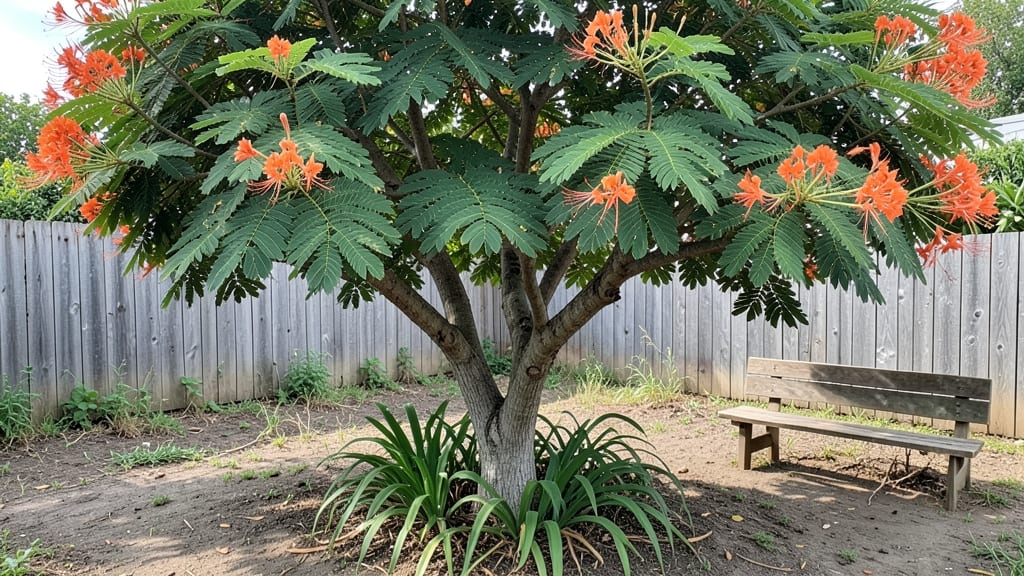
Tropical ornamental trees transform landscapes with bold colors and dense foliage, requiring minimal upkeep while thriving in warm climates. Varieties like the Royal Poinciana, Frangipani, and Bird of Paradise deliver striking flowers and rapid growth for instant visual impact.
These eye-catching plants thrive in USDA zones 10-12 but can often survive brief dips into cooler climates with proper protection. 🌺 Their secret lies in their adaptability—most prefer well-draining soil with slightly acidic to neutral pH, though some like the Bird of Paradise tolerate alkaline conditions.
The key to their rapid growth is consistent moisture during establishment, followed by occasional deep watering once established. I’ve seen some species double in height within a single growing season when given ideal conditions!
For best results, plant them in full sun where they’ll receive at least 6-8 hours of direct sunlight daily. This maximizes their vibrant blooms and lush foliage. The trade-off? They’ll need more frequent watering in extreme heat, and their roots appreciate mulch to retain moisture.
Pruning after flowering encourages bushier growth, while removing dead branches keeps them healthy and encourages new blooms.
💡 In This Article
- Climate and Soil Needs for Tropical Trees
- Planting and Maintenance Tips for Fast Growth
Climate and soil needs for tropical trees
Tropical ornamental trees flourish in environments that mimic their native habitats—typically USDA hardiness zones 10-12, where temperatures rarely drop below 30°F.
The Royal Poinciana, for instance, thrives in zones 10-11 and can't tolerate frost, while the Frangipani extends slightly cooler with protection down to zone 9b. Their rapid growth (up to 3 feet per year) occurs when daytime temps stay between 75-95°F and nights remain above 60°F.
This temperature range triggers hormonal responses that accelerate photosynthesis and flowering.
The soil requirements vary but generally demand excellent drainage to prevent root rot—a common issue in heavy clay soils. Most prefer a slightly acidic to neutral pH (6.0-7.5), though the Bird of Paradise tolerates alkaline soils up to pH 8.0.
The key is loose, well-amended soil with 20-30% organic matter, like compost or coconut coir. Sandy soils work best for species like the Poinciana, while loamy soils suit Frangipani's delicate root systems.
Humidity preferences differ too: Poincianas thrive in 40-60% humidity, while Frangipani needs 50-70% to prevent bud drop.
Sun exposure directly impacts bloom intensity and growth rate. The Royal Poinciana demands full sun (6+ hours daily) for its fiery red blooms, while the Bird of Paradise tolerates partial shade (4-6 hours) in hotter climates.
Frangipani strikes a balance with 5-6 hours of morning sun and afternoon shade to prevent leaf scorch. What most gardeners don't realize is that too much shade reduces chlorophyll production by 30-40%, leading to sparse foliage and fewer flowers. The trade-off?
Intense sun can increase water needs by 25-30% during dry spells.
Here's what actually happens when conditions are off: In zone 8 or cooler, tropical trees enter dormancy, shedding leaves and halting growth until spring. Poor drainage causes roots to suffocate within 2-4 weeks, turning leaves yellow.
The pH imbalance stunts nutrient uptake—calcium deficiency (from alkaline soils) causes leaf edges to brown, while iron deficiency (from alkaline conditions) creates yellowing between veins. The solution? Amend soil with sulfur to lower pH gradually, or use chelated iron supplements for alkaline-loving species.
Consider these key factors when choosing your location:
- Temperature extremes: Protect from winds below 40°F with burlap wraps or frost cloth
- Soil texture: Mix in perlite or vermiculite for 20% faster drainage in clay soils
- Humidity boost: Group plants together to create microclimates with 10-15% higher humidity
- Sun angle: South-facing exposures get 10% more intense light than west-facing spots
For maximum impact, plant your tropical trees in well-draining raised beds if your native soil is heavy. The 3-inch layer of mulch (pine bark or straw) retains moisture while preventing weeds. What I've observed is that trees in raised beds grow 20% taller in their first year compared to in-ground plantings. The secret? Roots encounter less compaction and better aeration—critical for species like Frangipani whose roots are shallow and sensitive to waterlogging.
Remember: The most vibrant blooms come from trees that receive consistent care during their establishment phase (first 12-18 months). Once mature, many tropical ornamentals become drought-tolerant, but their early years demand vigilance. 🌿