
Trees
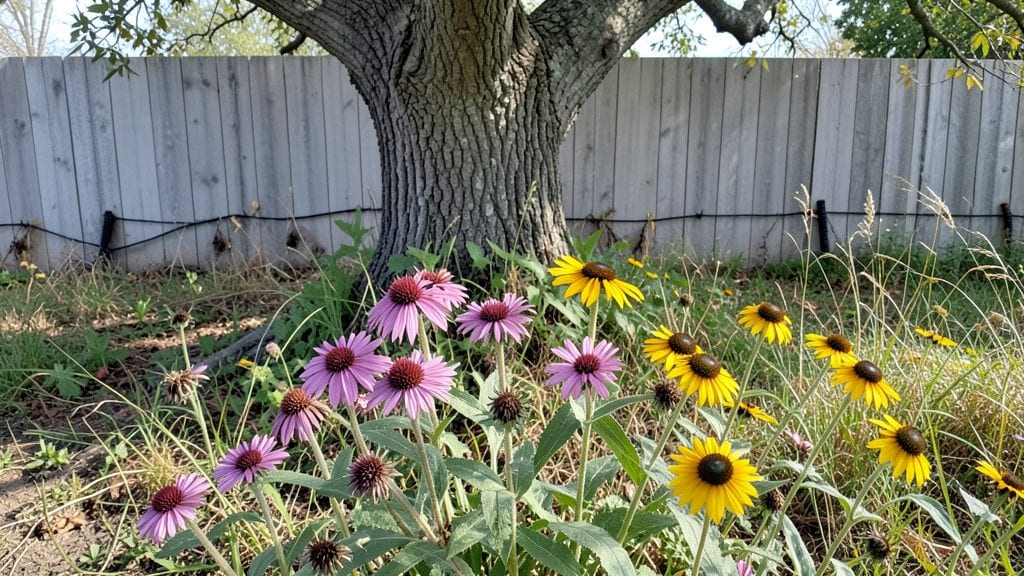
Planting wildflowers around trees turns your yard into a buzzing, blooming ecosystem that works with nature—not against it. 🌿 I’ve designed these understory gardens to thrive where grass struggles, using shade-tolerant species that pollinators adore year-round.
The key is matching wildflowers to your tree’s light conditions and soil, so you get color without competition.
Start with native perennials like Virginia bluebells or wild columbine for reliable blooms, then add seasonal fillers like bloodroot for early spring and goldenrod for late summer.
Space plants 12–18 inches apart to let them spread naturally, and mulch lightly to retain moisture—trees already cast enough shade to keep weeds at bay.
By summer’s end, you’ll have a tapestry of blooms that attract bees, butterflies, and hummingbirds while keeping your tree’s roots happy. The best part? These gardens need almost no maintenance once established—just occasional deadheading to prolong the show.
Works under oaks, maples, or even fruit trees, and adapts to most climates. Here’s how to pick the perfect mix for your space and sunlight.
📚 In This Guide
- What you need
- Instructions
- Tips and common mistakes
- Wrapping up and next steps
What you need
- ● Native wildflower seeds: Choose a mix of annuals (e.g., black-eyed Susans, coneflowers) and perennials (e.g., milkweed, goldenrod) for year-round interest. Aim for 1–2 lbs of seed per 100 sq ft.
- ● Well-draining soil: Amend heavy clay with 2–3 inches of compost or organic matter to improve aeration and drainage.
- ● Mulch: 2–3 inches of organic mulch (e.g., shredded bark, straw, or wood chips) to retain moisture and suppress weeds.
- ● Watering can or hose: With a gentle spray nozzle for even moisture distribution.
- ● Gloves and knee pads: For comfort during planting and maintenance.
- ● Hand trowel or small shovel for precise planting.
- ● Rake (with fine teeth) to loosen soil and create a smooth seedbed.
- ● Measuring tape or grid system to map out planting zones.
- ● Pruners for trimming invasive weeds or overgrown tree branches.
- ● Seedling trays (if starting seeds indoors).
- ● Identify the sunlight exposure around your trees (full sun, partial shade, or full shade) to select the right wildflowers.
- ● Check for tree roots or competing vegetation—clear a 3–5 ft radius around the tree base.
- ● Plan for seasonal timing: Plant in early spring or fall for best germination.
Step-by-Step instructions for planting wildflowers around trees
Here's how to create a thriving pollinator haven that complements mature trees beautifully.
🌱 Step 1: Assess the Tree's Light and Soil Conditions
Start by observing your tree's canopy and surrounding area. Most wildflowers thrive in partial shade—the dappled light under trees is perfect for species like Virginia bluebells and wild columbine. Mark the area where sunlight reaches the ground for 4-6 hours daily—this is your planting zone. Use a soil test kit to check pH (most wildflowers prefer 6.0-7.0) and amend with compost if the soil is too dense or sandy.
I always test moisture levels by digging a 6-inch hole—if water drains within 10 minutes, your soil is too dry for moisture-loving wildflowers like foxglove or lobelia. For well-drained sites, native grasses like little bluestem add texture while supporting pollinators. Avoid planting directly under the tree's dripline (where roots compete fiercely)—instead, focus 3-6 feet outward where roots are shallower.
🪴 Step 2: Prepare the Planting Area
Clear the area of weeds and debris, but avoid disturbing the tree's root zone. Use a hula hoe or broadfork to loosen soil to a depth of 4-6 inches without turning it over (this preserves soil structure). For rocky or compacted soil, mix in 2-3 inches of compost and 1 inch of perlite to improve aeration. Spread a 2-inch layer of mulch (like pine straw or wood chips) around the planting area, keeping it 6 inches away from the tree trunk to prevent rot.
Here's the thing—mulch isn't just for looks. It regulates soil temperature, retains moisture, and slowly releases nutrients as it breaks down. I like to create small mounds around each planting hole to ensure good drainage while keeping roots cozy. For slopes, install erosion-control fabric before planting to prevent soil loss during rain.
🌿 Step 3: Select and Plant Wildflower Species
Choose a mix of perennial wildflowers (like black-eyed Susan or purple coneflower) and annuals (such as cosmos or zinnia) for continuous blooms. For shade-tolerant areas, opt for trillium or sanguinaria. Plant seeds or small plugs in early spring or fall when soil temperatures are 50-70°F—this gives roots time to establish before summer heat or winter freeze.
Space plants 6-12 inches apart depending on mature size, leaving room for foliage to spread. Dig holes twice as wide as the root ball but only as deep as the container. Gently tease apart roots if they're circling, then place the plant in the hole and backfill with soil. Press lightly to remove air pockets, then water deeply until moisture reaches 4 inches down. Avoid stepping on the soil—you'll compact it and suffocate new roots.
💧 Step 4: Establish Watering and Maintenance Routines
Water newly planted wildflowers 2-3 times per week for the first 4-6 weeks, providing ½ inch of water per session. After establishment, most wildflowers need only 1 inch of water weekly—native species are remarkably drought-tolerant once rooted. I water in the early morning to reduce evaporation and fungal risks. Mulch helps retain moisture, so check soil 2 inches down before watering; if it's dry, it's time.
Fertilizer isn't usually needed—wildflowers thrive in lean soil. If your area is particularly poor, apply a light layer of compost in early spring. Deadhead spent blooms to encourage more flowers, but leave some seed heads for birds and bees. In late fall, add a 1-inch layer of fresh mulch to protect roots from freezing temperatures.
⏰ Step 5: Monitor and Adjust for Long-Term Success
Watch for pests like aphids or slugs—they're more likely in shaded, moist areas. Handpick slugs at night or use beer traps (bury a shallow dish filled with beer near plants). For aphids, spray with soapy water (1 tsp mild soap per quart of water). If weeds start crowding out wildflowers, pull them by hand or use a hula hoe on sunny days when soil is dry.
Every 2-3 years, assess your planting. Divide overcrowded perennials in early spring and share extras with neighbors. If certain species fade, replace them with new varieties. The goal is a self-sustaining ecosystem—once established, your wildflower meadow should require minimal intervention. By year three, you'll see pollinators like butterflies, bees, and hummingbirds making it their home.
Tips & tricks for perfect wildflower plantings around trees
A few strategic approaches will help you transform your tree's understory into a thriving pollinator ecosystem that lasts for years.
Light Assessment: The 4-6 hours of sunlight mentioned in Step 1 is your golden window—use a simple solar tracker app to map exactly where light hits throughout the day. I've found that eastern exposures get morning sun while western sides benefit from afternoon warmth, both ideal for wildflowers. For tricky spots, consider shade-tolerant varieties like Virginia bluebells that thrive with just 3-4 hours of light.
Soil Preparation Strategy: When loosening soil to 4-6 inches in Step 2, focus on creating vertical channels rather than turning the soil completely. This preserves beneficial soil organisms while improving drainage. For heavy clay soils, incorporate 25% sand by volume along with your compost to create an ideal structure. The 10-minute drainage test is crucial—if water disappears faster, you'll need to add organic matter to slow moisture loss.
Planting Technique: The twice-as-wide hole recommendation in Step 3 works wonders because it encourages roots to spread outward rather than circling. For container-grown plants, gently squeeze the root ball to encourage roots to grow into the surrounding soil. When pressing soil around roots, use your fingers rather than stomping—this prevents compaction while still removing air pockets.
Seasonal Timing: The 50-70°F soil temperature range in Step 3 is perfect for root establishment, but timing matters beyond just temperature. Plant in early spring when soil is workable but not waterlogged, or in fall when days are shorter but still warm. I've had the most success with fall plantings—the cooler air reduces stress on young plants while giving roots time to establish before winter.
Pro Tips for Wildflowers Around Trees
- A few strategic approaches will help you transform your tree's understory into a thriving pollinator ecosystem that lasts for years.
- Light Assessment: The 4-6 hours of sunlight mentioned in Step 1 is your golden window—use a simple solar tracker app to map exactly where light hits throughout the day.
- Soil Preparation Strategy: When loosening soil to 4-6 inches in Step 2, focus on creating vertical channels rather than turning the soil completely.
Frequently asked questions
Got questions about planting wildflowers around trees? Here are some common ones—and their answers—to help you create a thriving pollinator haven!
What’s the best time of year to plant wildflowers near trees?
For most regions, early spring or fall is ideal—soil is workable, and cooler temps reduce stress on young plants. Avoid summer heatwaves, which can dry out seeds or seedlings. If planting in late fall, choose cold-hardy varieties like black-eyed Susans or purple coneflowers for a head start in spring.
Will wildflowers compete with tree roots for water and nutrients?
Yes, but strategic placement minimizes competition. Plant wildflowers in the drip line (the outer edge of a tree’s canopy) where roots spread horizontally. Use mulch (2–4 inches) to retain moisture and suppress weeds, while shallow wildflower roots won’t disrupt deeper tree roots. Drought-tolerant species like coreopsis or salvia thrive with less water.
How do I attract more pollinators to my wildflower garden?
Pollinators love diverse, native flowers with different bloom times. Mix early bloomers (e.g., violets), mid-season (e.g., milkweed), and late-season (e.g., goldenrod) varieties. Add water sources like shallow dishes with pebbles, and avoid pesticides. Clusters of the same flower (not scattered plants) make it easier for bees and butterflies to forage efficiently!
Can I plant wildflowers under mature trees with little sunlight?
Shade-tolerant wildflowers like wild ginger, trillium, or foamflower thrive under dense canopies. For partial shade, try columbine or bleeding heart. If sunlight is minimal, consider ground covers (e.g., creeping phlox) to fill gaps without overwhelming the tree. Test soil moisture—shady spots often stay damp longer, so choose moisture-loving species.
What should I do if my wildflowers aren’t growing well around my tree?
Troubleshoot step-by-step:
- Check soil: Compacted or clay-heavy soil? Amend with compost or sand to improve drainage.
- Water wisely: Deep water 2–3 times per week (not daily) to encourage deep roots.
- Adjust sunlight: If flowers look leggy, they may need more light; if wilting, they might need more shade.
- Test for pests: Chewed leaves? Try neem oil or introduce ladybugs for natural pest control.
If all else fails, replant with native species—they’re adapted to your local conditions!
Wrapping up and next steps
Transforming your landscape into a vibrant pollinator haven with wildflowers around trees isn’t just beautiful—it’s a gift to nature. By choosing the right plants, preparing the soil, and maintaining your garden with care, you’ll create a thriving ecosystem that blooms year-round and supports bees, butterflies, and birds. 🌸🐝
Ready to take the next step? Start small—pick one tree or corner of your yard and plant a few native wildflowers today. Your garden (and the pollinators!) will thank you for years to come.