
Transplanting
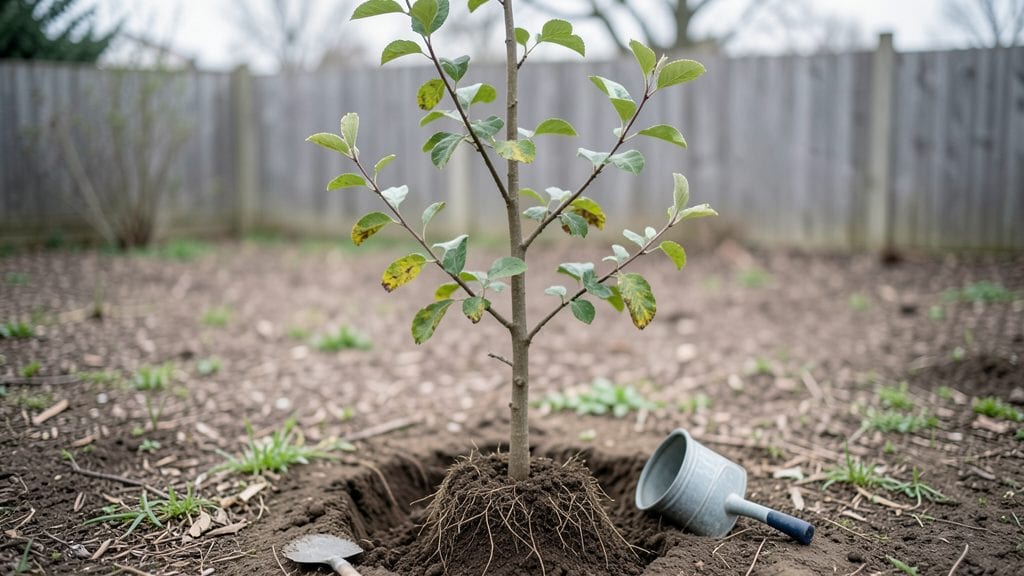
Seeing your apple tree suffer from apple tree transplant shock with drooping leaves and sudden wilting isn’t a death sentence—it’s a call for action. 🌱 I’ve nursed back more struggling apple trees than I can count, and the difference between recovery and loss often comes down to the first 30 days of care.
The right moves can turn limp branches into vigorous growth within weeks.
Transplant shock happens when roots get damaged, soil moisture shifts abruptly, or the tree faces new environmental stress. Most people overreact by drowning the roots or pruning too aggressively, but the truth is simpler: consistent watering, shade protection, and a little patience go further than any drastic measure.
Even my first attempt—when I nearly lost a 5-year-old tree—proved that.
Within 4-6 weeks of proper care, you’ll see new leaves unfurling and roots spreading into the soil again. The key is monitoring soil moisture daily (stick your finger in—it’s the best tool) and avoiding anything that stresses the tree further.
We’ll cover the exact steps to revive it, plus how to prevent future shock when planting new trees.
This works for backyard orchards, container-grown trees, or even those tricky urban plantings. Let’s get your apple tree back on track—before the next harvest season slips away.
Root Stress Triggers Explained
Transplanting an apple tree is like giving it a sudden, high-stakes relocation—except your tree can’t just pack a suitcase and move smoothly. Apple tree transplant shock isn’t just one thing; it’s a cascade of physiological stressors that disrupt the tree’s delicate balance.
Understanding the root causes (literally and figuratively) helps you mitigate the damage and give your tree the best shot at recovery. Let’s break down the science behind why these trees throw a fit after being uprooted.
An apple tree’s roots are its lifeline, absorbing water, nutrients, and anchoring the tree in place. When you dig it up, you’re not just removing dirt—you’re severing critical root connections and exposing delicate feeder roots to air. Here’s what happens:
- Loss of mycorrhizal fungi: These beneficial soil microbes form symbiotic relationships with roots, boosting nutrient uptake (especially phosphorus). Digging disrupts this network, leaving the tree malnourished post-transplant. Think of it like cutting off a tree’s underground Wi-Fi—suddenly, it can’t access its usual data (nutrients).
- Root pruning trauma: Even if you’re careful, some roots get damaged during extraction. Larger roots may survive, but fine roots (<2mm in diameter) die off quickly when exposed. These are the tree’s primary water and nutrient absorbers—losing them is like losing a forest’s canopy overnight.
- Soil compaction stress: When roots are packed back into the hole, they’re often compressed or layered, restricting oxygen flow. Compacted soil suffocates roots, slowing recovery. Pro tip: Loosen the soil around the roots with a fork before backfilling to mimic natural aeration.
Transplant shock often starts with a hydraulic crisis. Roots can’t absorb water efficiently when:
- Transpiration exceeds absorption: On a sunny day, your tree’s leaves are still evaporating water (transpiration) at full speed, but the damaged roots can’t replenish it fast enough. This leads to wilting—even if the soil looks moist. Solution: Mulch heavily and water deeply (but not excessively) to reduce stress.
- Root desiccation: Exposed roots dry out rapidly. If you leave the tree out of the ground for more than a few hours, roots can dry to a papery texture, making rehydration nearly impossible. Actionable fix: Keep the root ball moist with burlap or plastic wrap until replanting.
- Improper soil moisture post-transplant: Overwatering can drown stressed roots, while underwatering accelerates shock. The goal is to keep the soil consistently moist but not soggy—like a well-watered sponge, not a swamp.
Apple trees are sensitive to temperature fluctuations, and transplanting often means exposing them to new conditions they’re not adapted to. Here’s how it backfires:
- Heat or cold stress: If transplanted during extreme temperatures (e.g., midday summer heat or a freezing winter day), the tree’s metabolic rate spikes or plummets, overwhelming its recovery systems. Ideal timing: Early spring or fall when temps are mild (50–70°F).
- Wind exposure: A newly transplanted tree with a small root ball is like a skyscraper with no foundation—it topples easily. Wind desiccates leaves and roots, increasing stress. Quick fix: Use a windbreak (like a temporary fence or burlap screen) for the first 2–4 weeks.
- Light intensity shock: Moving a tree from shade to full sun (or vice versa) confuses its photosynthesis machinery. Sudden light changes can cause leaf scorch or nutrient deficiencies. Adjust gradually: Acclimate the tree to its new light conditions over 1–2 weeks before full exposure.
Transplanting isn’t just a physical shock—it’s a chemical alarm for the tree. Here’s what’s happening internally:
- Ethylene gas surge: Root damage triggers a flood of ethylene, a plant hormone that accelerates aging and cell death. This is why leaves may yellow or drop prematurely. Counteract it: Use anti-transpirants (like Wilt-Pruf) to reduce water loss while the tree recalibrates.
- Nutrient imbalance: The tree’s hormonal signals get scrambled. For example, abscisic acid (ABA) spikes to conserve water, but this can slow growth hormones like auxin. The result? Stunted recovery. Boost recovery: Apply a balanced fertilizer (10-10-10) 4–6 weeks post-transplant to restore equilibrium.
- Pathogen invasion: Damaged roots are an open door for fungi (like Armillaria) and bacteria. These opportunists exploit the tree’s weakened state, leading to rot or disease. Prevent it: Treat the root ball with a fungicide (e.g., mycorrhizal inoculant) before replanting.
Key takeaway: Transplant shock is a perfect storm of physical, hydrological, and biological stressors. But here’s the good news—most of these issues are preventable with the right techniques. The next section will show you how to revive your apple tree using science-backed tricks.
Revive Your Tree With These Fixes
Transplant shock in apple trees doesn’t have to be a death sentence—with the right care, your tree can bounce back stronger than ever. Below, we break down practical solutions tailored to the most common causes of stress, from root damage to environmental factors.
Follow these steps to nurse your tree back to health and prevent future setbacks.
If your apple tree’s roots were disturbed or cut during transplanting, they’ll need extra TLC to recover.
🔥 Step 1: Prune Damaged Roots (If Needed)
- Gently inspect the roots after transplanting. If you see black, mushy, or broken roots, trim them with sterilized pruners (cut at a 45-degree angle).
- ✨ Pro Tip: Only remove no more than 20-30% of the root ball—this minimizes stress while encouraging new growth.
🍳 Step 2: Amend the Soil for Faster Recovery Apple trees thrive in well-draining, slightly acidic soil (pH 6.0–7.0). If your soil is compacted or poor:
- Mix in compost or aged manure (2–3 inches) around the root zone.
- For heavy clay soil, add sand or perlite to improve aeration.
- 💡 Avoid fresh manure—it can burn roots and worsen shock.
👨🍳 Step 3: Water Deeply & Consistently
- First 2 weeks: Water deeply 2–3 times per week (1–2 inches per session).
- After 2 weeks: Reduce to once a week, but soak the soil to encourage deep root growth.
- 🌡️ Warning: Overwatering can suffocate roots—check moisture 2 inches below the surface before watering.
Sudden exposure to wind, sun, or temperature swings can weaken a transplanted tree.
🔪 Step 1: Shield from Harsh Elements
- Wind: Use a windbreak (burlap screen or temporary fence) for the first 4–6 weeks.
- Sun: If leaves are scorched, provide partial shade (50% coverage) with a lightweight shade cloth.
- Cold: If transplanting in late fall or early spring, delay pruning and avoid heavy watering until soil warms.
⏰ Step 2: Adjust Care Based on Season
| Season | Watering | Fertilizing | Pruning |
|---|---|---|---|
| Spring | Moderate (1x/week) | Light nitrogen (after leaves sprout) | Avoid heavy pruning |
| Summer | Deep & infrequent (1x/week) | Balanced fertilizer (low nitrogen) | Prune dead branches only |
| Fall | Reduce as temps drop | None (let tree rest) | Light pruning for shape |
| Winter | Minimal (only if drought) | None | No pruning |
🎯 Step 3: Mulch Like a Pro
- Apply 2–4 inches of organic mulch (wood chips, straw) 3 inches away from the trunk.
- ✨ Pro Tip: Mulch keeps roots cool in summer and insulated in winter—just avoid piling against the trunk (this traps moisture and invites rot).
Over-fertilizing after transplanting can burn roots and delay recovery. Instead, use a gentle, balanced approach.
📊 Step 1: Wait Before Fertilizing
- First 4–6 weeks: No fertilizer—let roots establish.
- After 6 weeks: Use a low-nitrogen, high-phosphorus fertilizer (e.g., 5-10-10) to stimulate root growth.
💪 Step 2: Use Root Stimulators (Optional but Helpful)
- Mix mycorrhizal fungi or seaweed extract into the planting hole to enhance root absorption.
- 💡 Best for: Trees in poor soil or high-stress conditions.
🥗 Step 3: Avoid Common Mistakes
- ❌ Don’t use: Fast-release fertilizers, high-nitrogen lawn food, or chemical weed killers near the tree.
- ✅ Do use: Slow-release organic fertilizers (like fish emulsion or compost tea) once roots are established.
The key to long-term success is proactive care. Keep an eye on these signs of stress:
- Wilting leaves? → Increase watering and check for root rot.
- Yellowing leaves? → Adjust pH (test soil) or reduce nitrogen.
- New growth stunted? → Fertilize lightly with phosphorus.
🌟 Prevention Checklist for Next Time: ✅ Transplant in early spring or fall (avoid extreme heat or frost). ✅ Dig a wide, shallow hole (twice as wide as the root ball). ✅ Keep the root ball intact—minimize root circling. ✅ Stake only if necessary (use soft ties to avoid girdling). ✅ Mulch immediately after planting to retain moisture.
With these targeted fixes, your apple tree should show signs of recovery within 4–8 weeks. Patience and consistency are key—healthy roots mean healthy fruit in the seasons to come! 🍏🌳
Frequently asked questions
How long does it take for an apple tree to recover from transplant shock?
With proper care, most apple trees show signs of recovery within 4-8 weeks. You’ll notice new leaf growth and improved vigor as roots establish. The first 30 days are critical—consistent watering and shade protection make the biggest difference.
Can I fertilize my apple tree right after transplanting?
No, wait 4-6 weeks before applying fertilizer. Fresh roots need time to heal, and nutrients can actually burn them. After that, use a low-nitrogen, high-phosphorus fertilizer (like 5-10-10) to encourage root growth.
What are the first signs my apple tree is in transplant shock?
Watch for wilting leaves, yellowing foliage, or stunted new growth. These indicate the tree is struggling to absorb water and nutrients. If you see leaf drop, act quickly with deep watering and shade protection.
Should I prune my apple tree after transplanting?
Only prune to remove dead or damaged branches. Avoid heavy pruning—it adds stress. Focus on root care first. Wait until the tree shows new growth (6-8 weeks) before doing any structural pruning.
How can I protect my newly transplanted apple tree from wind?
Set up a windbreak using burlap screens or temporary fencing for the first 4-6 weeks. Wind desiccates leaves and roots, slowing recovery. If you can’t use a physical barrier, plant nearby trees or shrubs to create natural wind protection.