
Diseases
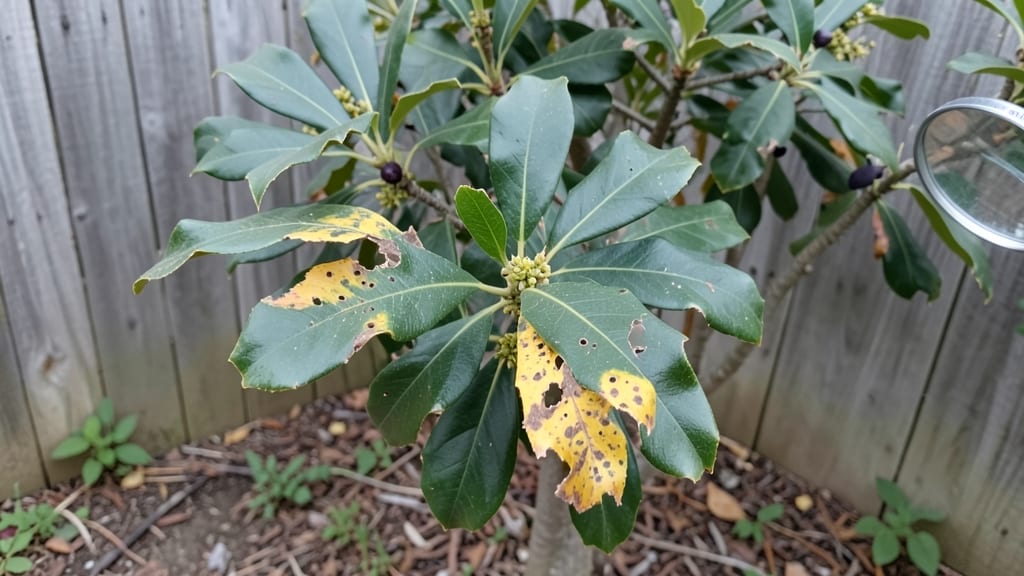
Bay laurel tree diseases turn vibrant green leaves into sad, spotted messes—until you know what you're dealing with. 🌿 I've nursed my own bay laurels back from powdery mildew and leaf spot, and the key is catching problems early when treatments actually work.
The worst part? Many symptoms look identical at first glance, so misdiagnosis just wastes time and money.
Most issues start with environmental stress—too much shade, poor drainage, or sudden temperature swings—that weakens the tree and invites fungal or bacterial invaders. Powdery mildew leaves that chalky white residue on undersides, while leaf spot shows up as brown, dead patches with yellow halos.
Bacterial blight? Look for blackened veins and wilting that happens overnight. The good news? All of these respond to the same basic fixes once you know what you're up against.
You'll be able to revive even severely affected trees with the right mix of pruning, fungicides, and cultural adjustments. I've seen bay laurels bounce back from near-death conditions when I removed infected leaves, improved airflow, and applied neem oil or copper spray at the first sign of trouble.
The foliage goes from ragged to lush again—it just takes persistence and knowing what to watch for.
This works for both container-grown laurels and in-ground specimens, though larger trees may need more aggressive treatment. The secret is consistency: check your trees weekly during growing season, and you'll catch issues before they spiral. Let's get those leaves healthy again.
Root Causes of Bay Laurel Struggles
Bay laurel trees (Laurus nobilis) are hardy and elegant, but their health can decline due to a mix of environmental, biological, and cultural factors. Understanding why these issues arise is the first step to prevention and treatment.
Below, we break down the key culprits behind common bay laurel diseases and decline, explained in clear, actionable terms.
Bay laurels thrive in specific conditions, and when these are disrupted, stress sets in—making them vulnerable to pests and diseases. Here’s what triggers it:
- Poor Drainage or Waterlogging Bay laurels hate soggy roots.
If planted in clay-heavy soil or areas with standing water, their roots suffocate, leading to: - Root rot (caused by Phytophthora fungi). - Chlorosis (yellowing leaves due to oxygen deprivation). - Weakened immunity, making them prone to fungal infections like anthracnose. Actionable fix: Amend soil with compost or perlite and ensure well-draining beds or raised planters.
- Extreme Temperature Swings These Mediterranean natives struggle with:
- Frost damage (below 20°F/-7°C) causing leaf scorch or dieback.
- Heat stress (above 90°F/32°C) leading to leaf curl or wilting.
- Sudden cold snaps after warm spells, shocking the tree. Actionable fix: Plant in sheltered microclimates, mulch heavily in winter, and avoid late-season fertilizing (which encourages tender new growth).
- Improper Light Exposure Too much direct sun (especially in hot climates) causes: - Leaf burn (brown, crispy edges). - Stunted growth due to water loss.
Too little sunlight (below 6 hours/day) leads to: - Leggy, weak stems. - Pale, sparse foliage (chlorosis). Actionable fix: Provide dappled shade in hot zones and full sun in cooler regions.
Diseases often hitch a ride via pathogens or insect vectors. Here’s how they exploit bay laurels:
- Fungal Infections (Anthracnose, Powdery Mildew, Root Rot) Fungi like Colletotrichum (anthracnose) or Erysiphe (powdery mildew) thrive when:
- Leaves stay wet (from overhead watering or humidity).
- Air circulation is poor (crowded plantings or dense foliage).
- Nutrient deficiencies (weakened trees can’t fight off spores). Actionable fix:
- Prune for airflow (remove crowded branches).
- Water at the base (avoid wetting leaves).
- Apply fungicides (copper-based or neem oil) at first signs of black spots or white powder.
- Bacterial Leaf Spot (Xanthomonas campestris) Bacteria spread via: - Rain splashes or contaminated pruning tools. - Wounded leaves (from hail, pests, or rough handling).
Symptoms: Water-soaked spots that turn brown/yellow with yellow halos. Actionable fix: - Sterilize tools with 70% alcohol between cuts. - Remove infected leaves immediately (don’t compost them!). - Improve drainage to reduce bacterial survival in soil.
- Insect Vectors (Scale, Spider Mites, Aphids) Pests like scale insects weaken trees by:
- Sucking sap, causing sticky honeydew (a fungal magnet).
- Transmitting viruses (e.g., laurel wilt, fatal in some regions). Actionable fix:
- Inspect undersides of leaves weekly for white cottony masses (scale) or fine webbing (mites).
- Blast off pests with water spray (disrupts their grip).
- Use horticultural oil (safe for mature trees) to smother eggs.
Even the hardiest bay laurels suffer from gardeners’ oversights. Common blunders include:
- Over-Fertilizing Too much nitrogen leads to:
- Rapid, weak growth (susceptible to breakage/disease).
- Salt buildup in soil (toxic to roots). Actionable fix: Use a balanced 10-10-10 fertilizer sparingly (once in early spring).
- Incorrect Pruning
- Topping (cutting back to stubs) causes suckering and weak regrowth.
- Pruning in wet weather (spreads fungal spores). Actionable fix: Prune in dry, mild weather, using clean, sharp tools, and shape naturally (avoid harsh cuts).
- Transplant Shock Bay laurels hate being moved. Stress from:
- Root disturbance during transplanting.
- Improper soil pH (they prefer slightly acidic to neutral, 6.0–7.0). Leads to leaf drop or stunted growth. Actionable fix: Amend soil before planting and water deeply post-transplant to reduce shock.
Healthy soil = healthy bay laurels. Deficiencies or excesses trigger problems:
| Nutrient Issue | Symptoms | Cause | Fix |
|---|---|---|---|
| Iron Deficiency | Yellow leaves with green veins | Alkaline soil (pH >7.0) | Apply chelated iron or sulfur. |
| Magnesium Deficiency | Interveinal chlorosis (yellow between veins) | Over-fertilizing with nitrogen | Use Epsom salt (magnesium sulfate). |
| Potassium Deficiency | Brown leaf edges, weak stems | Poor soil quality | Add wood ash or potassium-rich compost. |
Pro Tip: Test soil every 2–3 years to catch imbalances early! 💡
Revive Your Bay Laurel Tree
Once you’ve identified the issue plaguing your bay laurel, it’s time to roll up your sleeves and take action! Below are practical, step-by-step solutions tailored to each common disease or stressor, along with prevention tips to keep your tree thriving for years to come.
Fungal infections like powdery mildew (white, powdery patches) and root rot (yellowing leaves, wilting, or mushy stems) can be tricky, but they’re beatable with the right approach.
🔥 Treat Powdery Mildew
- Prune Infected Branches 🌿
- Use sterilized pruners to remove heavily affected leaves and stems. Dispose of them in the trash (not compost) to prevent reinfection.
- Thin out foliage to improve airflow—fungi love damp, crowded spaces.
- Apply Fungicide 💊
- Spray with a copper-based fungicide or neem oil solution (1 tbsp neem oil + 1 tsp mild soap per quart of water).
- Reapply every 7–10 days until symptoms disappear.
- Adjust Watering Habits 💧
- Water early in the morning to allow leaves to dry quickly.
- Avoid overhead sprinkling—use drip irrigation or soaker hoses instead.
🌡️ Fix Root Rot
- Check the Soil 🏺
- Gently dig around the base to inspect for dark, mushy roots. Healthy roots are firm and light-colored.
- Improve Drainage 🚿
- If soil is compacted or waterlogged, amend it with:
- Perlite or coarse sand (20% of the soil mix)
- Compost (to improve structure without retaining too much moisture)
- Consider raising the planting bed slightly if your yard has poor drainage.
- If soil is compacted or waterlogged, amend it with:
- Reduce Water & Fungus 🍄
- Let the top 1–2 inches of soil dry out between waterings.
- Apply a fungicidal drench (like Mycorrhizal fungi or hydrogen peroxide spray—3% solution) to kill root pathogens.
✨ Prevention Tips
- Space trees properly (3–5 feet apart) for airflow.
- Mulch lightly (2–3 inches) with gravel or bark chips (not thick organic mulch, which traps moisture).
- Avoid overhead watering—stick to base watering.
Bacterial infections (like leaf spot or stem cankers) show as dark, water-soaked spots or oozing sores. Act fast—bacteria spread quickly!
🍳 Clean & Sterilize
- Remove All Infected Parts 🗑️
- Prune every affected leaf, twig, or branch—even if it looks minor. Bag and trash them (don’t compost).
- Sterilize pruners with rubbing alcohol between cuts.
- Apply Copper Spray 🛡️
- Use a copper fungicide (like Copper Sulfate) every 10–14 days for 3–4 weeks.
- For organic options, try a baking soda spray (1 tbsp baking soda + 1 tsp soap + 1 gallon water).
- Boost Tree Health 💪
- Feed with a balanced fertilizer (10-10-10) in early spring to strengthen immunity.
- Avoid wounding the tree (e.g., rough pruning) to prevent bacterial entry.
🎯 Prevention Tips
- Water at the base—never the leaves.
- Sanitize tools after every use.
- Plant in well-draining soil to reduce bacterial survival.
Yellowing leaves (chlorosis) or stunted growth often mean your bay laurel is nutrient-deficient or stressed from poor care.
🥗 Fix Iron & Nitrogen Deficiencies
- Test Your Soil 📊
- Use a home soil test kit to check pH (ideal: 6.0–7.5) and nutrient levels.
- Bay laurels prefer slightly acidic to neutral soil.
- Apply Targeted Fertilizer 🌱
- For yellowing leaves (iron/chlorophyll issues):
- Sprinkle chelated iron around the root zone and water deeply.
- For slow growth (nitrogen):
- Use a low-nitrogen fertilizer (like 5-10-10) in early spring.
- For yellowing leaves (iron/chlorophyll issues):
- Mulch Correctly 🍂
- Spread 2–3 inches of mulch (wood chips or pine straw) away from the trunk to retain moisture and nutrients.
💡 Prevention Tips
- Fertilize lightly—bay laurels are low-maintenance; over-fertilizing burns roots.
- Monitor soil moisture—drought stress mimics deficiencies.
- Avoid heavy clay soil—amend with compost or sand if needed.
Pests like scale insects (white bumps), spider mites (fine webbing), or borers (sawdust-like frass) weaken trees by sucking sap or tunneling into wood.
👨🍳 Treat Pests Naturally
- Blast Off Scale & Mites 💦
- Hose them down with a strong stream of water to dislodge pests.
- For scale, apply horticultural oil (dormant season) or insecticidal soap (active season).
- Trap Borers Early 🕷️
- Look for tiny holes, sawdust piles, or exit holes in bark.
- Drill out visible borers (use a 1/8-inch bit) and fill holes with caulk or wood putty.
- Beneficial nematodes (like Heterorhabditis bacteriophora) can be applied to soil to target larvae.
- Encourage Predators 🐞
- Ladybugs, lacewings, and parasitic wasps eat spider mites and scale. Attract them with native plants or companion planting.
🔪 Prevention Tips
- Inspect trees regularly—catch pests before they spread.
- Keep trees healthy—stressed trees attract pests.
- Avoid broad-spectrum pesticides, which kill beneficial insects.
Bay laurels are tough but can suffer from drought, frost, or harsh winds, leading to brown leaf tips, curling, or dieback.
🌡️ Adjust Care for Extreme Conditions
- Protect from Frost ❄️
- Mulch heavily (4–6 inches) in winter.
- Wrap young trees with burlap if temps drop below 20°F.
- Shield from Windburn 💨
- Plant in a sheltered spot (e.g., near a fence or building).
- Prune to improve shape—avoid "flagging" (one-sided growth).
- Deep Water in Drought 💧
- Water slowly and deeply (1–2 inches per week) to encourage deep root growth.
- Mulch to retain moisture—but keep it 2–3 inches away from the trunk.
🌿 Prevention Tips
- Choose the right location—bay laurels thrive in partial shade in hot climates.
- Water consistently—avoid cycles of drought and overwatering.
- Avoid pruning in late summer—new growth is more vulnerable to frost damage.
Final Pro Tip: 💡 When in doubt, prune smart! Always use clean, sharp tools and sterilize between cuts to prevent spreading diseases. A little prevention now saves hours of cleanup later.
Frequently asked questions
What are the most common signs of fungal infections on bay laurel leaves?
Look for powdery white residue (powdery mildew) or brown/yellow spots with yellow halos (leaf spot). Fungal issues often start on older leaves and spread upward. Check the undersides of leaves first—fungi love damp, shaded areas.
Can I use the same treatment for bacterial and fungal diseases?
No—bacterial issues (like leaf spot) need copper-based sprays, while fungi respond to neem oil or sulfur. Bacteria thrive in wet conditions, so improve drainage and sterilize tools between cuts. Fungi need airflow—prune for better circulation.
How do I know if my bay laurel has root rot?
Dig carefully around the base—mushy, dark roots with a foul smell confirm it. Above ground, you’ll see yellowing leaves, stunted growth, and wilting even when soil is wet. Fix it by amending soil with perlite and watering only when topsoil is dry.
Is it safe to prune infected branches myself?
Yes, but sterilize tools with rubbing alcohol between cuts to avoid spreading pathogens. Remove entire infected branches (don’t just trim spots)—bag them for trash, not compost. Prune in dry weather to reduce fungal spores in the air.
Why does my bay laurel keep getting pests like scale or spider mites?
Pests target stressed trees. Check for overwatering, poor drainage, or nutrient deficiencies first. Boost tree health with balanced fertilizer and horticultural oil sprays. Attract natural predators (like ladybugs) by planting companion flowers nearby.