
Pruning
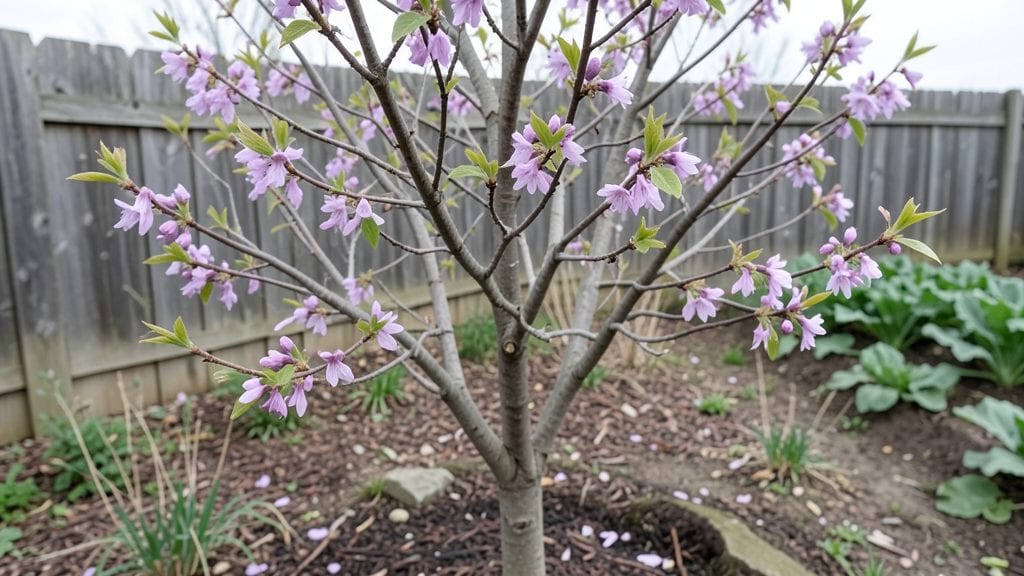
Identifying flowering trees starts with noticing when and how they bloom—because that first burst of color tells you everything. 🌸 I’ve spent years watching my neighborhood’s trees light up in spring, and I’ve learned that a tree’s flowers, leaves, and bark all whisper clues about what it is.
A dogwood’s horizontal branches and white bracts are unmistakable, while a magnolia’s large, cup-shaped blooms appear before its leaves even unfurl.
The real game-changer is combining bloom time with leaf shape—think of it like a puzzle. A redbud’s heart-shaped leaves and pink spring flowers are easy to spot, but a Bradford pear’s white clusters and serrated leaves need cross-checking with bark texture.
Most gardeners overlook bark, but rough, scaly bark often means an oak, while smooth, peeling bark signals a sycamore or birch.
Once you’ve narrowed it down, you’ll know exactly which trees to plant for year-round interest—early spring blooms like serviceberry, summer-long color from crape myrtle, or fall foliage from sweetgum.
The right tree can turn a dull corner into a pollinator paradise, and knowing its care needs (like watering young trees or pruning for shape) makes all the difference.
This isn’t just about naming trees—it’s about choosing the perfect one for your yard. Whether you want shade, wildlife support, or seasonal drama, the identification skills here will help you pick like a pro. Let’s get started with the visual clues that matter most.
Why Trees Bloom When They Do
Understanding why flowering trees bloom at specific times requires diving into their biology, environmental cues, and evolutionary strategies. Here’s a breakdown of the key factors that trigger—or delay—those stunning seasonal displays.
Every flowering tree carries an internal biological clock—a genetic program that dictates when buds will open. This timing is hardwired into the species based on: - Photoperiodism: Trees like dogwoods or magnolias rely on daylight length (measured in photoperiods).
As days lengthen in spring, their hormones shift from dormancy to bloom mode. 🌞 - Thermal Summation: Some trees (e.g., cherry blossoms) need a cumulative number of warm days (heat units) to trigger flowering.
Too little warmth = delayed blooms. - Dormancy Genes: Cold-sensitive trees (like Bradford pears) may skip blooming entirely if winters are too mild, confusing their "wake-up" signals.
Actionable Tip: 💡 If your tree blooms sporadically, check local climate trends—unseasonal warmth can disrupt its natural rhythm.
Flowering trees are sensitive to weather extremes, which can scramble their schedules:
- Late Freezes: A sudden cold snap after buds form (e.g., in peach trees) can blacken blossoms before they open. 🥶
- Drought Stress: Trees like crape myrtles may delay blooming if soil moisture drops below 30%—their energy goes to survival, not flowers.
- Humidity Shifts: High humidity can encourage fungal growth, causing buds to rot before opening (common in azaleas).
Pro Tip: ✨ Mulch heavily in late winter to insulate roots and reduce temperature swings near the soil.
Flowering is a metabolic gamble—trees divert energy from growth to reproduction. If they’re malnourished, blooms suffer: - Nitrogen Deficiency: Too little N = weak stems and few flowers (e.g., in Japanese maples).
Too much N = leafy growth at the expense of blooms. - Phosphorus Starvation: Critical for flower development; trees like wisteria may produce buds but abort them without enough P. - Potassium Imbalance: Weakens cell walls, leading to poor bud formation (check for yellowing leaf edges).
Quick Fix: 🌡️ Test soil in early spring. Amend with bone meal (P) or kelp meal (K) if blooms are sparse.
Hidden threats can sabotage flowering:
- Scale Insects/Aphids: Sap-sucking pests drain energy, causing buds to drop (e.g., in lilac trees). 🐜
- Fire Blight (Bacteria): Cankers on branches (like in crabapples) block nutrient flow to buds.
- Root Rot: Fungal infections (from overwatering) starve the tree, leading to no blooms at all.
Preventative Step: 🔥 Prune out infected branches in dormant season (late winter) to stop pathogen spread.
Young trees prioritize root and trunk growth over flowers. Only when they reach maturity (often 3–10 years) do they allocate energy to blooms.
Additionally: - Stressed Trees: Those recovering from transplant shock or compacted soil may skip flowering for 1–2 seasons. - Over-Pruning: Cutting back flowering branches (e.g., on hydrangeas) removes next year’s buds.
Key Insight: ⏰ Patience is critical—some heritage trees (like serviceberries) take a decade to hit peak bloom!
Not all parts of your yard are equal!
Factors like: - Sun Exposure: Shade-loving trees (e.g., Eastern redbuds) bloom poorly in full sun. - Urban Heat Islands: Pavement radiates heat, advancing bloom times in city trees by 1–2 weeks compared to rural areas. - Wind Patterns: High winds can physically damage buds (common in coastal regions for camellias).
Actionable Tip: 🎯 Plant sun-loving trees (e.g., crepe myrtles) in south-facing spots and mulch to moderate soil temps.
Some flowering trees are genetically modified for specific traits—often at the cost of reliability:
- Double-Flowering Varieties: Trees like ‘Bradford’ pear produce fewer viable seeds (and thus fewer next-year blooms) because their flowers are sterile.
- Dwarf Cultivars: Smaller trees (e.g., ‘Littleleaf Linden’) may bloom later or less abundantly due to limited energy reserves.
Fun Fact: ✨ Some hybrids (like ‘Autumn Royal’ red maple) were bred to bloom earlier—but this can make them vulnerable to late frosts.
Quick Fixes for Flowering Tree ID Struggles
Identifying flowering trees can feel like solving a puzzle—especially when blooms, leaves, and growth patterns seem to mix and match. But with the right approach, you can turn confusion into clarity. Here’s how to tackle common challenges and streamline your tree identification process.
If a tree’s flowers alone aren’t giving you answers, expand your detective work. Focus on these key traits:
- 🌿 Leaf Shape & Arrangement: Are leaves broad and lobed (like oak), needle-like (pine), or compound (with multiple leaflets)? - 🌱 Bark Texture: Smooth, rough, or peeling?
Bark can reveal age and species (e.g., silver birch has papery bark). - 🌳 Tree Size & Shape: Is it a towering canopy (like a tulip tree) or a compact shrub (like a flowering cherry)? - 🌸 Bloom Timing: Spring bloomers (e.g., dogwood) differ from summer/fall varieties (e.g., crape myrtle).
Pro Tip: 💡 Take photos of all parts—flowers, leaves, bark, and fruit/seeds (if present)—and compare them side by side with a tree ID app or guide.
Leaf keys are like treasure maps for botanists. Here’s how to use one:
- 🔥 Start Broad: Is the leaf simple (one blade) or compound (multiple leaflets)?
- 🍳 Narrow Down: Check margins (smooth, serrated, lobed) and veins (parallel or netted).
- 👨🍳 Match the Description: Compare your notes to a leaf key (try the USDA Plants Database or National Audubon Society Field Guide to Trees).
Example:
- Simple leaf → Lobed edges → Likely a maple or oak.
- Compound leaf → Pinnate (feather-like) → Could be a honey locust or black locust.
Timing is everything! Note when flowers appear:
- 🌸 Early Spring: Redbud, magnolia, or serviceberry.
- ☀️ Late Spring/Early Summer: Crape myrtle, lilac, or Bradford pear.
- 🍂 Fall: Japanese maple or sweet gum.
Prevention Tip: ✨ Keep a bloom journal with dates and photos. Over time, you’ll spot patterns and eliminate misidentifications.
Skip the guesswork with these user-friendly tools:
- 📱 PictureThis or PlantNet: Upload a photo for instant ID suggestions.
- 🌳 iNaturalist: Crowdsource IDs with a community of plant enthusiasts.
- 📖 Arboretum Websites: Local arboretums often have searchable databases (e.g., Arnold Arboretum).
Warning: ⚠️ Avoid over-relying on apps—cross-check with physical traits to avoid errors.
Seeing trees in person accelerates learning. Visit a local:
- 🌿 Arboretum: Labeled trails let you compare species up close.
- 🌱 Nursery: Staff can point out unique features (e.g., "This dogwood has horizontal branches").
Pro Tip: 🌡️ Go during peak bloom season—more flowers = easier ID!
Gather these resources for future reference:
- 📖 Books: The Tree Book by Allen Coombes or National Audubon Society Field Guide to Trees.
- 🖥️ Online: Dirr’s Trees and Shrubs (paid) or free guides like Missouri Botanical Garden’s PlantFinder.
- 📸 Your Own Photos: Create a digital album of local trees for quick comparisons.
- 🍄 Confusing flowers with buds: Some trees (like oaks) have flower clusters that look like buds. - 🌿 Ignoring leaf scars: The shape of leaf scars (where leaves attach) can ID species (e.g., maple vs. walnut). - 🌸 Relying on color alone: White flowers?
Could be dogwood, apple, or hawthorn—check other traits!
Before declaring a tree’s identity, ask:
- Does the leaf shape match the flower type?
- Is the bark consistent with the species?
- Does the bloom time align with known patterns?
- Have I ruled out look-alikes?
If you’re still stumped, consult a local forester or horticulturist—they’ve seen it all!
Remember: Identifying flowering trees is a skill that improves with practice. Start small, stay curious, and soon you’ll be spotting species like a pro. 🌳✨
Frequently asked questions
How can I tell the difference between a flowering tree and a shrub?
Look at the trunk and size. Trees have a single main trunk that grows to 15+ feet tall, while shrubs have multiple stems from the base and rarely exceed 10 feet. Also check the growth habit—trees develop a defined canopy, while shrubs stay bushy and rounded.
What’s the best time of year to identify flowering trees?
Spring is ideal because that’s when most trees bloom before leafing out, making flowers and branches easier to see. For summer-blooming varieties (like crape myrtle), late spring to early summer works best. Always check bark and leaf scars—these don’t change with seasons!
Can I identify a tree just by its flowers?
No—flowers alone are rarely enough! Many trees share similar bloom colors (like white flowers on dogwood, apple, or hawthorn). Always cross-check with leaf shape, bark texture, and branch patterns. Pro tip: Note whether flowers grow in clusters, single blooms, or along branches.
Why does my flowering tree have no blooms this year?
Common causes include stress from drought, over-pruning (cutting flowering branches), or nutrient deficiencies (like phosphorus). Young trees also prioritize root growth over blooms. Check for pests like aphids or fungal issues—these can drain energy from flower production.
Are there any apps that can help me identify flowering trees?
Yes! Try PictureThis or PlantNet—upload a photo of flowers, leaves, and bark for instant matches. For deeper learning, use iNaturalist to compare with expert-verified sightings. Always verify with a physical guidebook, though, as apps can misidentify similar species.