
Blooming
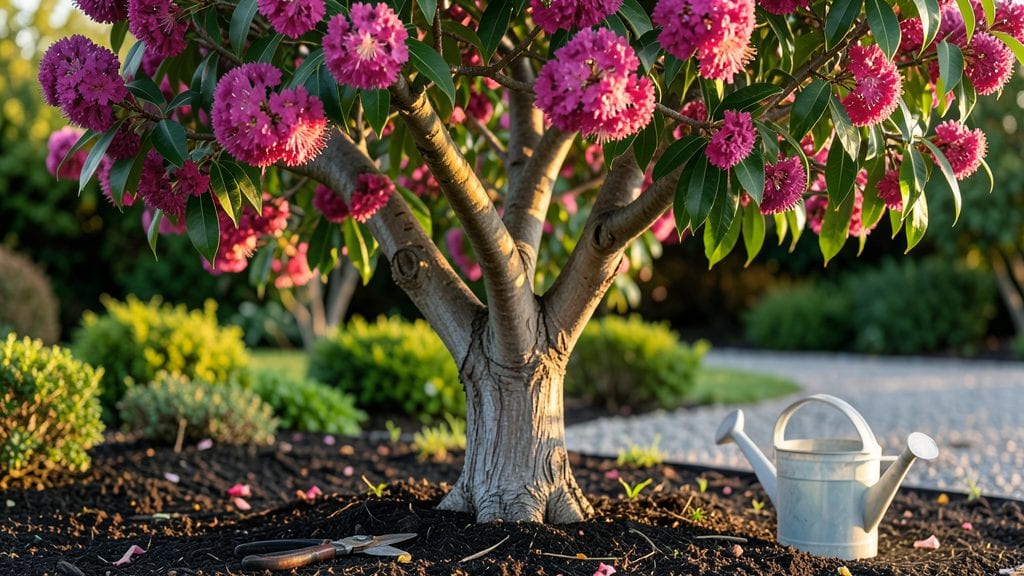
Purple tree blooming now transforms landscapes across the Pacific Northwest, Southern California, and the Southeast, with standout species like Jacaranda, Royal Paulownia, and Purple Smoke Tree dominating the seasonal spectacle. Peak bloom windows shift slightly by region, usually unfolding from late spring through early summer.
Right now, these vibrant displays are nature's way of signaling warmer days ahead—purple blossoms thrive when temperatures consistently hit 60-75°F and daylight stretches beyond 12 hours. 🌸 In Southern California, Jacarandas often burst into color by April, while Pacific Northwest varieties like Royal Paulownia may wait until May or June when coastal breezes moderate spring warmth.
The key difference? Southern climates trigger earlier blooms, while northern regions need that extra warmth to kickstart their floral shows.
What's fascinating is how these trees adapt: Jacarandas, for instance, demand full sun and well-draining soil to prevent root rot, while Purple Smoke Trees handle partial shade better—making them ideal for urban gardens.
Their varying bloom durations also create layered color effects, with some lasting 2-3 weeks and others stretching to 6 weeks.
💡 In This Article
- How Climate Affects Purple Tree Bloom Timing
- Best Purple-Blooming Trees for Your Garden
How climate affects purple tree bloom timing
Here's what's actually happening with those stunning purple blooms: trees rely on a precise balance of temperature and daylight to trigger flowering. The key factor is day-neutral photoperiodism—when trees detect consistent temperatures above 55°F paired with 12+ hours of daylight, their hormonal pathways activate.
Jacarandas, for example, need daytime highs of 70-80°F for 3-4 weeks straight to fully bloom, which is why Southern California's Mediterranean climate makes them early risers.
The science gets even more interesting with vernalization—some species like Royal Paulownia require a period of cooler temperatures (40-50°F) in winter to "reset" their biological clocks.
This explains why Pacific Northwest blooms often appear 2-3 weeks later than in Southern California: coastal fog and slower warming delay their cue. Microclimates play a role too—urban heat islands can push Jacarandas to bloom 1-2 weeks earlier than rural counterparts in the same region.
What most people don't realize is how humidity affects bloom duration. High humidity (like in the Southeast) can shorten Jacaranda blooms to just 2 weeks by accelerating petal drop, while drier climates (like Southern California) extend displays to 4-6 weeks.
The Purple Smoke Tree handles this better, thriving in both conditions because its blooms form on new wood—meaning it can rebloom if pruned correctly after the first flush.
Temperature swings also create dramatic differences. A sudden cold snap (below 45°F) can halt blooming entirely, while gradual warming preserves flower quality.
This is why gardeners in transitional zones (like Northern California) often see staggered blooms—some trees respond to early warmth while others wait for the heat to stabilize.
Consider these regional triggers for top species:
- Jacaranda: Needs consistent 70°F+ days for 3+ weeks (Southern California: April; Florida: February)
- Royal Paulownia: Requires vernalization (40-50°F winter) + 14+ daylight hours (Pacific Northwest: May-June)
- Purple Smoke Tree: Blooms with 60°F+ days but tolerates partial shade (Southeast: April-May; Midwest: May-June)
This climate sensitivity is why you'll never see full Jacaranda blooms in Boston—they simply can't meet the temperature requirements. But in ideal zones, their timing creates a cascading effect: early bloomers like Jacarandas set the stage, while later species like Royal Paulownia take center stage as summer approaches. 💫