
Plants
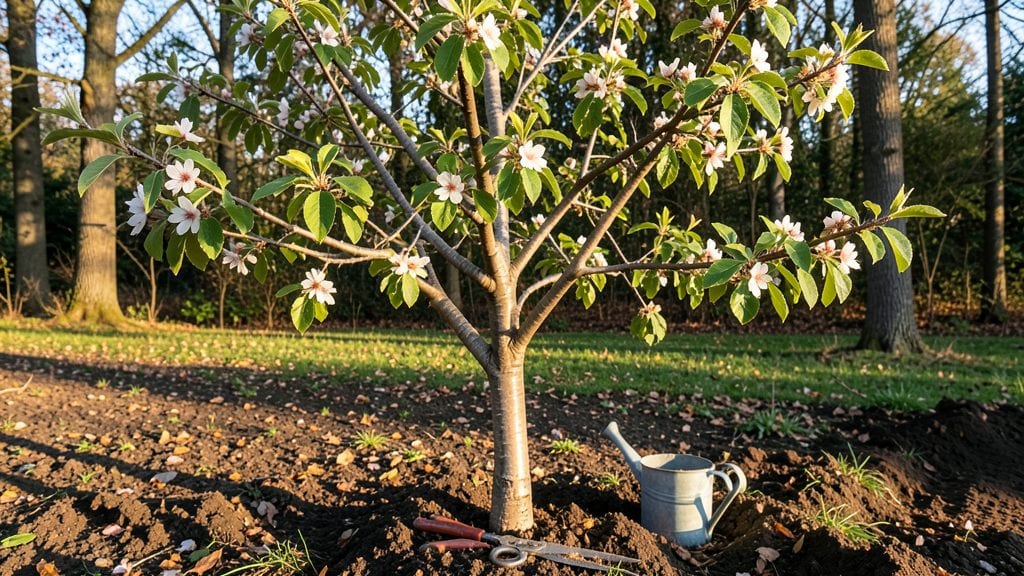
An apricot tree looks like a cross between a peach and a plum—if those two had a showy, sun-loving baby. 🌸 The branches start out silvery-gray and smooth, but as they age, they develop a rugged, scaly texture that tells you it’s been around.
In spring, it bursts into clusters of delicate pink blossoms that smell like candy, while its leaves unfurl a soft, fuzzy green that smooths out by summer.
The real giveaway? Its fruit—smaller than a peach but bigger than a plum, with velvety orange skin that blushes to red when ripe. Unlike peaches, apricots cling to their stems even when soft, and their pits are smoother, almost egg-shaped.
The leaves also stay a brighter green longer than peach leaves, which yellow and drop faster in heat.
Mature trees top out at 20-30 feet tall, with a rounded canopy that spreads just as wide. They thrive in full sun, where their bark turns a rich amber in winter, making them a year-round star.
Plant one where you can watch it go from blossom to fruit in just 60 days—it’s the fastest tree in the orchard.
Confusing it with a peach? Look closer: apricot leaves are slightly narrower, and the fruit’s skin doesn’t get as fuzzy. Plums? Their branches are usually thinner, and the fruit hangs in tighter clusters. This tree’s bold, cheerful presence makes it a standout in any sunny yard.
📚 In This Guide
- What you need
- Instructions
- Tips and common mistakes
- Wrapping up and next steps
What you need
- ● Apricot Tree Seedlings or Saplings: 1-2 healthy Prunus armeniaca saplings (dwarf or standard varieties, depending on space)
- ● Age: 1-3 years old for best establishment (avoid bare-root if planting in warm climates)
- ● Soil & Fertilizers: Well-draining loamy soil (pH 6.0–7.0)
- ● Compost or aged manure (5–10 lbs per planting hole)
- ● Balanced 10-10-10 fertilizer (1 cup per tree, applied in early spring)
- ● Planting Tools: Shovel or trowel (for digging holes 12–18 inches wide/deep)
- ● Garden gloves (to protect hands from thorns)
- ● Mulch (straw, wood chips, or pine needles; 2–3 inches thick)
- ● Watering Supplies: Hose with adjustable nozzle or watering can (1–2 gallons per watering for young trees)
- ○ Drip irrigation kit (optional, for consistent moisture)
- ● Tree support stakes (2–3 ft tall) for young saplings
- ● Pruning shears (for shaping and removing dead branches)
- ● Pest control: Neem oil or insecticidal soap (for aphids or spider mites)
- ● Tree guard or wire mesh (to deter animals from bark)
- ● Soil test kit (to check nutrient levels before planting)
Identifying an apricot tree: key visual features to spot
Here's how to recognize one in person—no gardening experience needed.
🌿 Step 1: Examine the Leaves for Shape and Color
Apricot tree leaves are oval with rounded tips, about 2-4 inches long, and have a slightly fuzzy texture when young. They emerge bright green in spring, maturing to a rich, deep green by summer. The edges are smooth but may have tiny serrations near the tip—run your fingers along one and you'll feel those subtle teeth.
This fuzzy coating (called pubescence) is your best clue—it disappears as leaves age, but new growth always shows it. Compare it to peach leaves, which are smoother and more elongated. Apricot leaves also have a slightly glossy sheen when healthy, especially on the underside.
☀️ Step 2: Look for the Signature Flower Clusters
In early spring, apricot trees burst into pinkish-white blossoms arranged in clusters of 2-4 flowers. Each bloom is about 1 inch wide with five delicate petals and a prominent yellow center. The flowers appear before leaves fully unfurl, creating a stunning contrast against bare branches.
Here's the thing—these blossoms are highly fragrant, even from 10 feet away. If you smell sweet, almond-like perfume in early spring, you're likely near an apricot tree. The flowers also attract bees early in the season, which you'll notice buzzing around the tree before other fruit trees bloom.
🌱 Step 3: Identify the Fruit as It Develops
Apricots start as small, fuzzy green spheres about the size of a marble. As they mature, they turn yellow-orange with a velvety texture that disappears as they ripen. Mature fruit is 2-3 inches long with a slightly pointed end where the stem attaches.
Don't confuse them with peaches—they're smaller, rounder, and lack the peach's classic fuzzy skin. Apricots also have a distinctive orange blush that deepens as they ripen. When fully ripe, they'll detach easily from the tree with a gentle twist, leaving a small stem scar.
🪴 Step 4: Observe the Tree Structure and Bark
Young apricot trees have smooth, grayish-brown bark that develops shallow furrows as the tree ages. Mature trees grow to 20-30 feet tall with a rounded, spreading canopy. The branches are moderately thick with a slightly zigzag pattern where new growth emerges.
Look for thornless branches—this is a key difference from plum trees, which often have sharp thorns. Apricot trees also have alternate branching, meaning leaves grow singly at different heights along the branch rather than in pairs. The overall shape is more open than a peach tree's dense growth habit.
⏰ Step 5: Time the Growth Stages Correctly
Apricot trees follow a predictable schedule: late winter blooms (February-March), fruit appears by May, and harvest occurs in June-July depending on your climate. In colder regions, fruit may not develop if winter was harsh—this is called "cold damage" and affects flowering.
You'll see new leaves emerge after flowers fade, and fruit will grow rapidly during warm spring days. If you spot a tree with both flowers and mature fruit at the same time, it's likely been pruned to extend the harvest window—a common practice with commercial apricot trees.
Tips & tricks for identifying apricot trees with confidence
Spot an apricot tree like a pro—these little-known details make all the difference in your backyard or local park.
Leaf Texture Secret: That fuzzy coating on young apricot leaves (called pubescence) is your best friend. Run your fingers along the edges—you'll feel those tiny serrations near the tip that peach leaves lack. The fuzzy texture disappears as leaves mature, so focus on new growth. I've seen people mistake apricot leaves for peach leaves because they forget to check this detail, especially on older trees where the fuzz is gone.
Timing is Everything: Remember those February-March blooms? That's your window to spot apricot trees before other fruit trees bloom. The flowers appear before leaves fully unfurl, creating a stunning pinkish-white contrast. If you smell that sweet, almond-like perfume in early spring, you're likely near an apricot tree. This is when trees are most identifiable because they stand out against bare branches.
Fruit Development Clues: Those fuzzy green spheres in Step 3? They're about the size of a marble—smaller than peach pits. As they mature, watch for the distinctive orange blush that deepens as they ripen. A ripe apricot should detach easily with a gentle twist, leaving a small stem scar. I've seen people confuse them with plums because of the similar size, but apricots lack the plum's deep purple color and have that characteristic velvety texture that disappears as they ripen.
Bark and Branch Breakthrough: Young apricot trees have smooth, grayish-brown bark that develops shallow furrows as they age. Look for that slightly zigzag pattern where new growth emerges—it's a key difference from peach trees. And here's what nobody tells you: apricot trees are thornless, which sets them apart from plum trees. That open, rounded canopy is another giveaway, especially when comparing it to the denser growth habit of peach trees.
Pro Tips for What Does Apricot Tree Look Like
- Spot an apricot tree like a pro—these little-known details make all the difference in your backyard or local park.
- Leaf Texture Secret: That fuzzy coating on young apricot leaves (called pubescence) is your best friend.
- Timing is Everything: Remember those February-March blooms?
Frequently asked questions
Got questions about apricot trees?
Here are some of the most common ones—plus quick, practical answers to help you identify, grow, or troubleshoot your own!
What does a young apricot tree look like compared to a mature one?
A young apricot tree (1–3 years old) is slender with smooth, grayish-brown bark and sparse branches. As it matures (5+ years), the trunk thickens, bark develops fissures, and the tree grows round-topped with a spreading canopy (15–25 ft wide). Leaves start small and fuzzy but become 3–5 inches long, oval-shaped, and slightly serrated by adulthood.
How can I tell if my tree is an apricot vs. peach or plum?
Apricot trees have distinctive features to spot them:
- Leaves: Smooth edges (unlike peach’s toothed leaves) and a silvery underside when young.
- Fruit: Orange-yellow skin with velvety fuzz (peaches/plums are smoother). Apricots also split open easily when overripe.
- Flowers: Pinkish-white blooms appear before leaves in early spring (like peaches), but apricot blossoms are slightly smaller.
When do apricot trees bear fruit, and how long do they live?
Apricot trees typically bear fruit in 3–5 years (with proper care) and peak production at 5–15 years. With ideal conditions (full sun, well-drained soil), they can live 20–30 years or longer! Timing matters: Most varieties fruit in late spring to early summer (May–June in the U.S.).
Why aren’t my apricot tree’s leaves turning green, or are they curling?
Curling or pale leaves usually signal stress or pests. Check these fixes:
- Nutrient deficiency: Yellow leaves? Add iron or nitrogen (use a balanced fertilizer).
- Pests: Look for aphids (sticky residue) or mites (fine webbing). Spray with neem oil.
- Water issues: Too much = fungal spots; too little = crispy edges. Aim for 1–1.5 inches of water/week.
- Sunburn: Young leaves may scorch in hot afternoon sun. Use shade cloth if in a harsh climate.
Can I grow an apricot tree in my climate, or do I need a specific zone?
Apricot trees thrive in USDA Zones 5–9, but Zone 6+ is ideal (they’re sensitive to late frosts). Choose cold-hardy varieties like ‘Moongold’ (Zone 4) or ‘Tilton’ (Zone 5) for cooler areas. In hot climates (Zone 9+), provide afternoon shade to prevent fruit sunburn.
Do apricot trees need pruning, and how often?
Yes! Prune annually in late winter to:
- Remove dead/diseased branches (cut at the branch collar).
- Thin out crowded growth for airflow (aim for an open vase shape).
- Shorten water sprouts (vertical shoots) to redirect energy to fruit.
Wrapping up and next steps
Now that you’ve explored the distinctive features and growth habits of an apricot tree—from its oval leaves and delicate blossoms to its sun-loving, drought-tolerant nature—you’re well-equipped to spot (or even grow!) one of your own. 🌿 Whether you’re admiring a tree in a park, planning a backyard orchard, or simply satisfying your curiosity, recognizing these key traits makes the experience even more rewarding.
Ready to take the next step? Visit a local nursery to see apricot trees in person, or check out care guides to bring one home. Happy tree-spotting—and may your apricot adventures be as sweet as the fruit itself! 🍑✨